
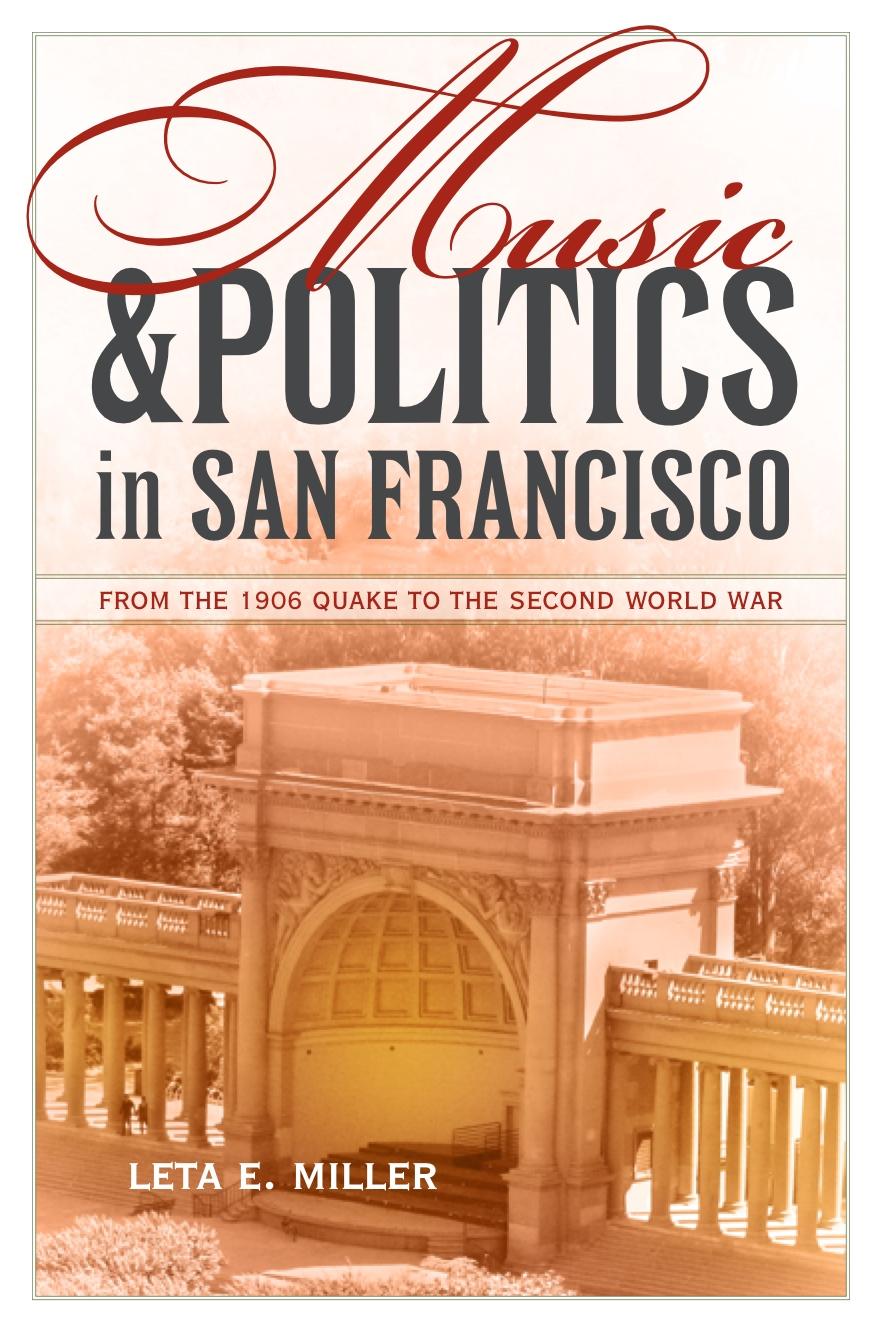
This lively history immerses the reader in San Francisco’s musical life during the first half of the twentieth century, showing how a fractious community overcame virulent partisanship to establish cultural monuments such as the San Francisco Symphony (1911) and Opera (1923). Leta E. Miller draws on primary source material and first-hand knowledge of the music to argue that a utopian vision counterbalanced partisan interests and inspired cultural endeavors, including the San Francisco Conservatory, two world fairs, and America’s first municipally owned opera house. Miller demonstrates that rampant racism, initially directed against Chinese laborers (and their music), reappeared during the 1930s in the guise of labor unrest as WPA music activities exploded in vicious battles between administrators and artists, and African American and white jazz musicians competed for jobs in nightclubs.
Betala smidigt med kort, Klarna, Apple Pay eller Google Pay. Är du inte nöjd har du alltid 14 dagars ångerrätt. Läs mer i våra villkor. Har du några frågor, mejla oss på hello@memmo.org.
Memmo gör det enklare att plugga – var du än är i världen. Hos oss samlar du kursböcker och smarta studieverktyg på ett och samma ställe: sammanfattningar, quiz, poddar och flashcards. Och så Ted, din studiekompis som svarar på allt du undrar. Över 50 000 studenter pluggar redan här – byggt för att du ska lära dig snabbare och stressa mindre.
Du kanske också gillar
Köp boken0