
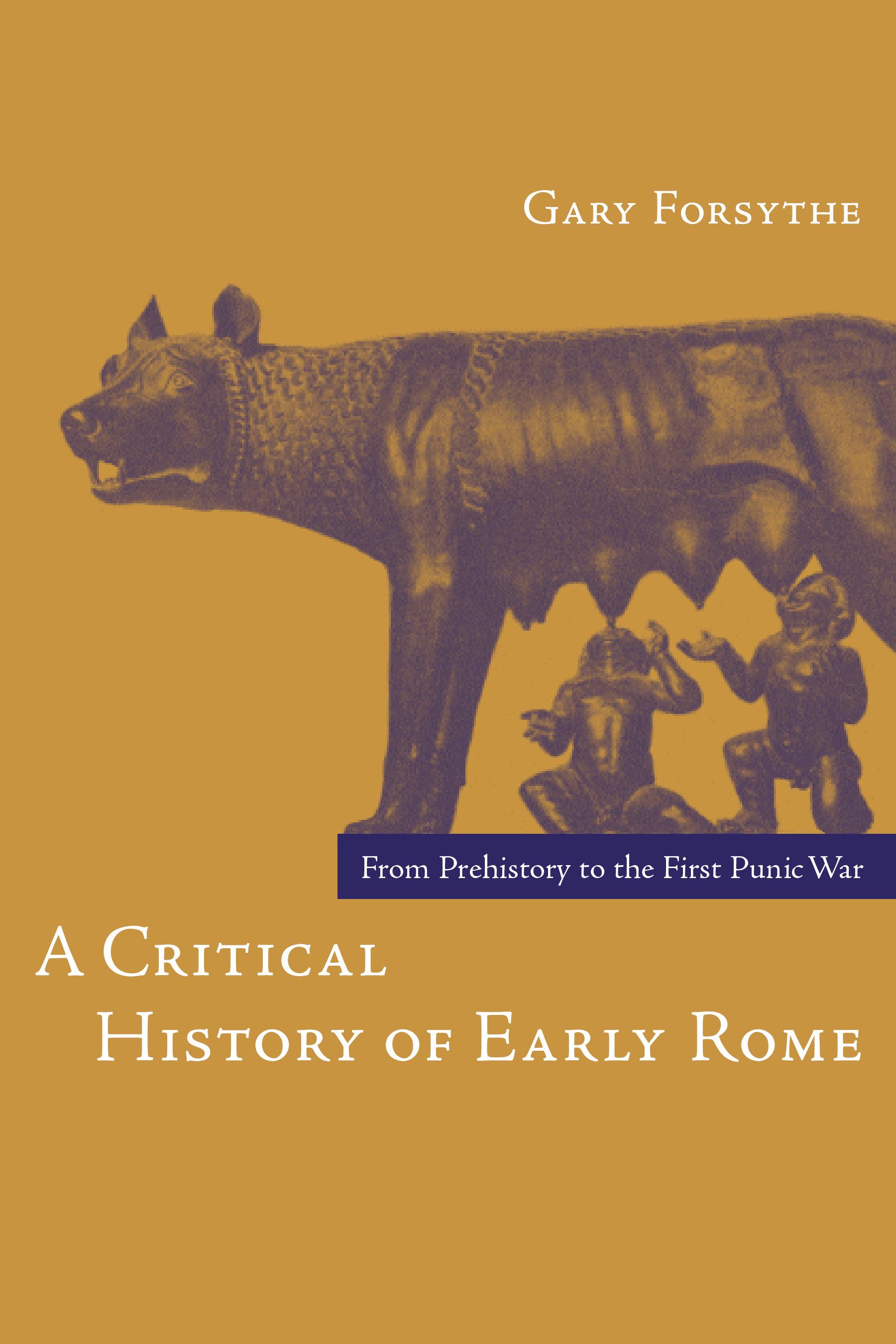
During the period from Rome's Stone Age beginnings on the Tiber River to its conquest of the Italian peninsula in 264 B.C., the Romans in large measure developed the social, political, and military structure that would be the foundation of their spectacular imperial success. In this comprehensive and clearly written account, Gary Forsythe draws extensively from historical, archaeological, linguistic, epigraphic, religious, and legal evidence as he traces Rome's early development within a multicultural environment of Latins, Sabines, Etruscans, Greeks, and Phoenicians. His study charts the development of the classical republican institutions that would eventually enable Rome to create its vast empire, and provides fascinating discussions of topics including Roman prehistory, religion, and language.
In addition to its value as an authoritative synthesis of current research, A Critical History of Early Rome offers a revisionist interpretation of Rome's early history through its innovative use of ancient sources. The history of this period is notoriously difficult to uncover because there are no extant written records, and because the later historiography that affords the only narrative accounts of Rome's early days is shaped by the issues, conflicts, and ways of thinking of its own time. This book provides a groundbreaking examination of those surviving ancient sources in light of their underlying biases, thereby reconstructing early Roman history upon a more solid evidentiary foundation.
In addition to its value as an authoritative synthesis of current research, A Critical History of Early Rome offers a revisionist interpretation of Rome's early history through its innovative use of ancient sources. The history of this period is notoriously difficult to uncover because there are no extant written records, and because the later historiography that affords the only narrative accounts of Rome's early days is shaped by the issues, conflicts, and ways of thinking of its own time. This book provides a groundbreaking examination of those surviving ancient sources in light of their underlying biases, thereby reconstructing early Roman history upon a more solid evidentiary foundation.
Betala smidigt med kort, Klarna, Apple Pay eller Google Pay. Är du inte nöjd har du alltid 14 dagars ångerrätt. Läs mer i våra villkor. Har du några frågor, mejla oss på hello@memmo.org.
Memmo gör det enklare att plugga – var du än är i världen. Hos oss samlar du kursböcker och smarta studieverktyg på ett och samma ställe: sammanfattningar, quiz, poddar och flashcards. Och så Ted, din studiekompis som svarar på allt du undrar. Över 50 000 studenter pluggar redan här – byggt för att du ska lära dig snabbare och stressa mindre.
Du kanske också gillar
Köp boken0