
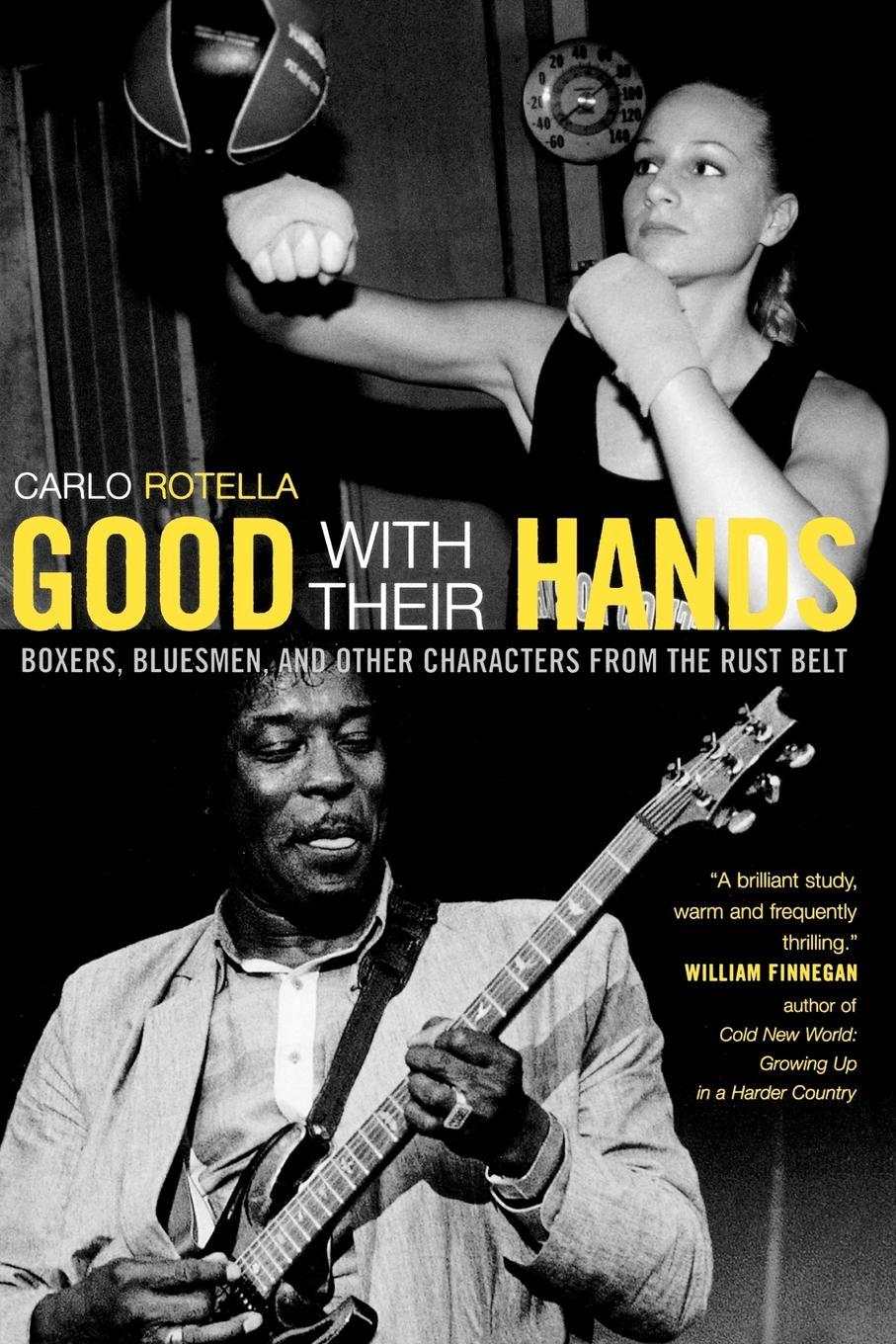
This eloquent, streetwise book is a paean to America's Rust Belt and a compelling exploration of four milieus caught up in a great transformation of city life. With loving attention to detail and a fine sense of historical context, Carlo Rotella explores women's boxing in Erie, Pennsylvania; Buddy Guy and the blues scene in Chicago; police work and crime stories in New York City, especially as they converged in the making of the movie The French Connection; and attempts at urban renewal in the classic mill city of Brockton, Massachusetts. Navigating through accrued layers of cultural, economic, and personal history, Rotella shows how stories of city life can be found in a boxing match, a guitar solo, a chase scene in a movie, or a landscape. The stories he tells dramatize the coming of the postindustrial era in places once defined by their factories, a sweeping set of changes that has remade the form and meaning of American urbanism.
A native of the Rust Belt whose own life resonates with these stories, Rotella has gone to the home turfs of his characters, hanging out in boxing gyms and blues clubs, riding along with cops and moviemakers, discussing the future of Brockton with a visionary artist and a pitbull-fancying janitor who both plan to save the city's soul. These people make culture with their hands, and hands become an expressive metaphor for Rotella as he traces the links between their individual talents and the urban scenes in which they flourish. His writing elegantly connects what happens on the street to the larger story of urban transformation, especially the shift from a way of life that demanded individuals be "good with their hands" to one that depends on the intellectual and social skills fostered by formal education and service work.
Strong feelings emerge in this book about what has been lost and gained in the long, slow aging-out of the industrial city. But Rotella's journey through the streets has its ultimate reward in discovering deep-rooted instances of what he calls "truth and beauty in the Rust Belt."
A native of the Rust Belt whose own life resonates with these stories, Rotella has gone to the home turfs of his characters, hanging out in boxing gyms and blues clubs, riding along with cops and moviemakers, discussing the future of Brockton with a visionary artist and a pitbull-fancying janitor who both plan to save the city's soul. These people make culture with their hands, and hands become an expressive metaphor for Rotella as he traces the links between their individual talents and the urban scenes in which they flourish. His writing elegantly connects what happens on the street to the larger story of urban transformation, especially the shift from a way of life that demanded individuals be "good with their hands" to one that depends on the intellectual and social skills fostered by formal education and service work.
Strong feelings emerge in this book about what has been lost and gained in the long, slow aging-out of the industrial city. But Rotella's journey through the streets has its ultimate reward in discovering deep-rooted instances of what he calls "truth and beauty in the Rust Belt."
Betala smidigt med kort, Klarna, Apple Pay eller Google Pay. Är du inte nöjd har du alltid 14 dagars ångerrätt. Läs mer i våra villkor. Har du några frågor, mejla oss på hello@memmo.org.
Memmo gör det enklare att plugga – var du än är i världen. Hos oss samlar du kursböcker och smarta studieverktyg på ett och samma ställe: sammanfattningar, quiz, poddar och flashcards. Och så Ted, din studiekompis som svarar på allt du undrar. Över 50 000 studenter pluggar redan här – byggt för att du ska lära dig snabbare och stressa mindre.
Du kanske också gillar
Köp boken0