
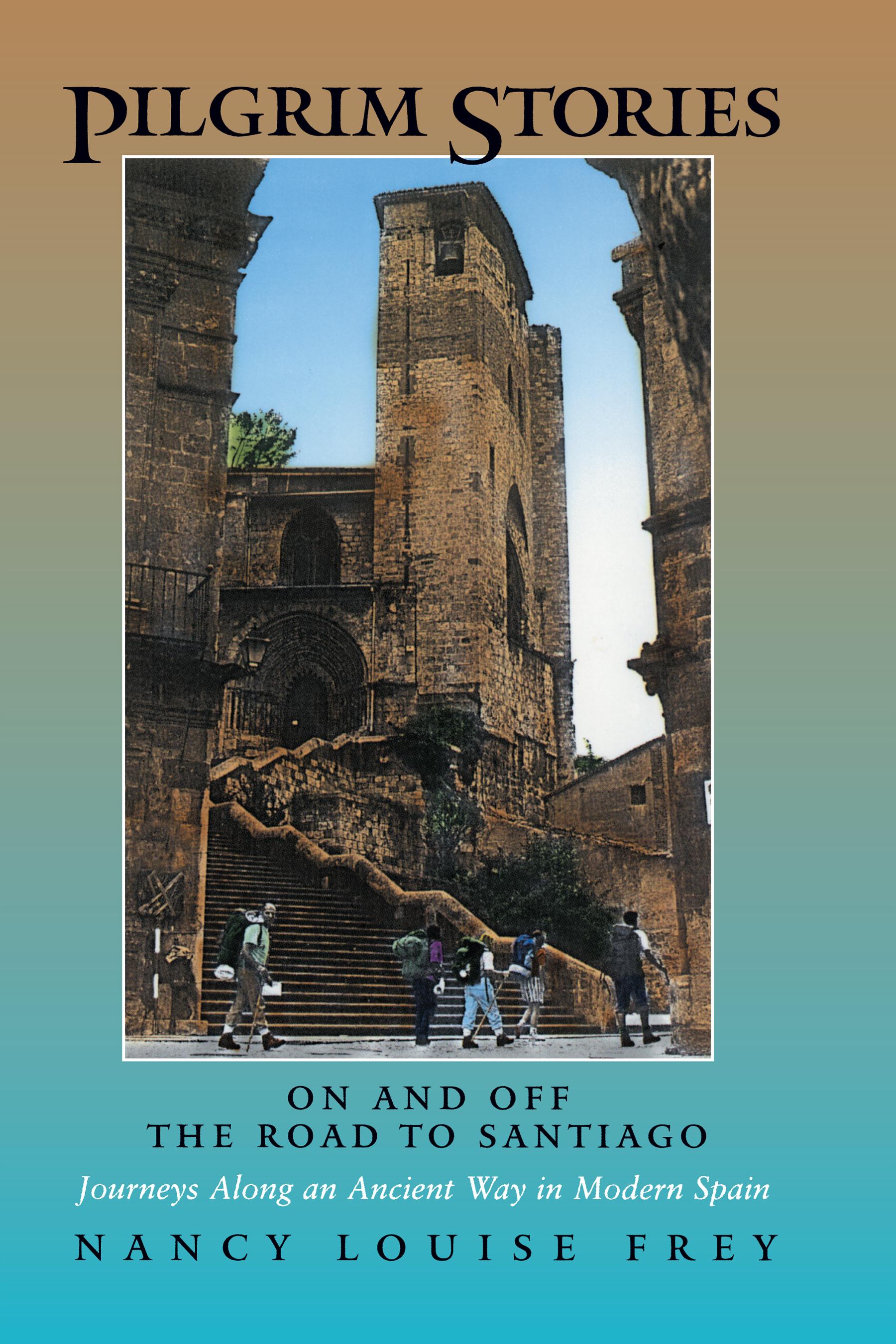
Each year thousands of men and women from more than sixty countries journey by foot and bicycle across northern Spain, following the medieval pilgrimage road known as the Camino de Santiago. Their destination is Santiago de Compostela, where the remains of the apostle James are said to be buried. These modern-day pilgrims and the role of the pilgrimage in their lives are the subject of Nancy Louise Frey's fascinating book.
Unlike the religiously-oriented pilgrims who visit Marian shrines such as Lourdes, the modern Road of St. James attracts an ecumenical mix of largely well-educated, urban middle-class participants. Eschewing comfortable methods of travel, they choose physically demanding journeys, some as long as four months, in order to experience nature, enjoy cultural and historical patrimony, renew faith, or cope with personal trauma.
Frey's anthropological study focuses on the remarkable reanimation of the Road that has gained momentum since the 1980s. Her intensive fieldwork (including making the pilgrimage several times herself) provides a colorful portrayal of the pilgrimage while revealing a spectrum of hopes, discontents, and desires among its participants, many of whom feel estranged from society. The Camino's physical and mental journey offers them closer community, greater personal knowledge, and links to the past and to nature.
But what happens when pilgrims return home? Exploring this crucial question Frey finds that pilgrims often reflect deeply on their lives and some make significant changes: an artistic voice is discovered, a marriage is ended, meaningful work is found. Other pilgrims repeat the pilgrimage or join a pilgrims' association to keep their connection to the Camino alive. And some only remain pilgrims while on the road. In all, Pilgrim Stories is an exceptional prism through which to understand the desires and dissatisfactions of contemporary Western life at the end of the millennium.
"Feet are touched, discussed, massaged, [and] become signs of a journey well traveled: 'I did it all on foot!' . . . Pilgrims give feet a power and importance not recognized in daily life, as a causeway and direct channel to the road, the past, meaningful relations, nature, and the self."
Unlike the religiously-oriented pilgrims who visit Marian shrines such as Lourdes, the modern Road of St. James attracts an ecumenical mix of largely well-educated, urban middle-class participants. Eschewing comfortable methods of travel, they choose physically demanding journeys, some as long as four months, in order to experience nature, enjoy cultural and historical patrimony, renew faith, or cope with personal trauma.
Frey's anthropological study focuses on the remarkable reanimation of the Road that has gained momentum since the 1980s. Her intensive fieldwork (including making the pilgrimage several times herself) provides a colorful portrayal of the pilgrimage while revealing a spectrum of hopes, discontents, and desires among its participants, many of whom feel estranged from society. The Camino's physical and mental journey offers them closer community, greater personal knowledge, and links to the past and to nature.
But what happens when pilgrims return home? Exploring this crucial question Frey finds that pilgrims often reflect deeply on their lives and some make significant changes: an artistic voice is discovered, a marriage is ended, meaningful work is found. Other pilgrims repeat the pilgrimage or join a pilgrims' association to keep their connection to the Camino alive. And some only remain pilgrims while on the road. In all, Pilgrim Stories is an exceptional prism through which to understand the desires and dissatisfactions of contemporary Western life at the end of the millennium.
"Feet are touched, discussed, massaged, [and] become signs of a journey well traveled: 'I did it all on foot!' . . . Pilgrims give feet a power and importance not recognized in daily life, as a causeway and direct channel to the road, the past, meaningful relations, nature, and the self."
Betala smidigt med kort, Klarna, Apple Pay eller Google Pay. Är du inte nöjd har du alltid 14 dagars ångerrätt. Läs mer i våra villkor. Har du några frågor, mejla oss på hello@memmo.org.
Memmo gör det enklare att plugga – var du än är i världen. Hos oss samlar du kursböcker och smarta studieverktyg på ett och samma ställe: sammanfattningar, quiz, poddar och flashcards. Och så Ted, din studiekompis som svarar på allt du undrar. Över 50 000 studenter pluggar redan här – byggt för att du ska lära dig snabbare och stressa mindre.
Du kanske också gillar
Köp boken0