
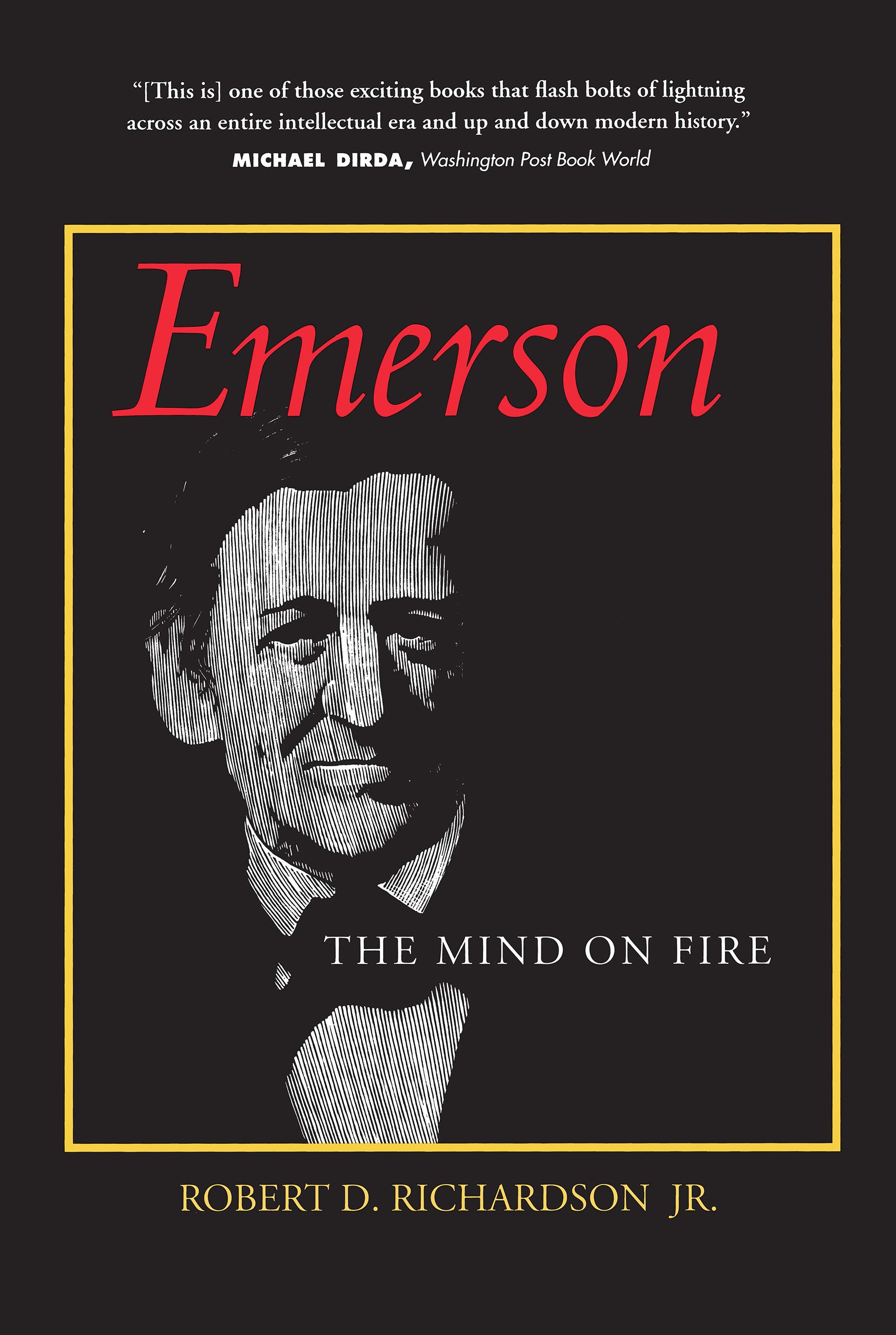
Recipient of the Francis Parkman Prize from the Society of American Historians
Ralph Waldo Emerson is one of the most important figures in the history of American thought, religion, and literature. The vitality of his writings and the unsettling power of his example continue to influence us more than a hundred years after his death. Now Robert D. Richardson Jr. brings to life an Emerson very different from the old stereotype of the passionless Sage of Concord. Drawing on a vast amount of new material, including correspondence among the Emerson brothers, Richardson gives us a rewarding intellectual biography that is also a portrait of the whole man.
These pages present a young suitor, a grief-stricken widower, an affectionate father, and a man with an abiding genius for friendship. The great spokesman for individualism and self-reliance turns out to have been a good neighbor, an activist citizen, a loyal brother. Here is an Emerson who knew how to laugh, who was self-doubting as well as self-reliant, and who became the greatest intellectual adventurer of his age.
Richardson has, as much as possible, let Emerson speak for himself through his published works, his many journals and notebooks, his letters, his reported conversations. This is not merely a study of Emerson's writing and his influence on others; it is Emerson's life as he experienced it. We see the failed minister, the struggling writer, the political reformer, the poetic liberator.
The Emerson of this book not only influenced Thoreau, Fuller, Whitman, Dickinson, and Frost, he also inspired Nietzsche, William James, Baudelaire, Marcel Proust, Virginia Woolf, and Jorge Luis Borges. Emerson's timeliness is persistent and striking: his insistence that literature and science are not separate cultures, his emphasis on the worth of every individual, his respect for nature.
Richardson gives careful attention to the enormous range of Emerson's readings—from Persian poets to George Sand—and to his many friendships and personal encounters—from Mary Moody Emerson to the Cherokee chiefs in Boston—evoking both the man and the times in which he lived. Throughout this book, Emerson's unquenchable vitality reaches across the decades, and his hold on us endures.
Ralph Waldo Emerson is one of the most important figures in the history of American thought, religion, and literature. The vitality of his writings and the unsettling power of his example continue to influence us more than a hundred years after his death. Now Robert D. Richardson Jr. brings to life an Emerson very different from the old stereotype of the passionless Sage of Concord. Drawing on a vast amount of new material, including correspondence among the Emerson brothers, Richardson gives us a rewarding intellectual biography that is also a portrait of the whole man.
These pages present a young suitor, a grief-stricken widower, an affectionate father, and a man with an abiding genius for friendship. The great spokesman for individualism and self-reliance turns out to have been a good neighbor, an activist citizen, a loyal brother. Here is an Emerson who knew how to laugh, who was self-doubting as well as self-reliant, and who became the greatest intellectual adventurer of his age.
Richardson has, as much as possible, let Emerson speak for himself through his published works, his many journals and notebooks, his letters, his reported conversations. This is not merely a study of Emerson's writing and his influence on others; it is Emerson's life as he experienced it. We see the failed minister, the struggling writer, the political reformer, the poetic liberator.
The Emerson of this book not only influenced Thoreau, Fuller, Whitman, Dickinson, and Frost, he also inspired Nietzsche, William James, Baudelaire, Marcel Proust, Virginia Woolf, and Jorge Luis Borges. Emerson's timeliness is persistent and striking: his insistence that literature and science are not separate cultures, his emphasis on the worth of every individual, his respect for nature.
Richardson gives careful attention to the enormous range of Emerson's readings—from Persian poets to George Sand—and to his many friendships and personal encounters—from Mary Moody Emerson to the Cherokee chiefs in Boston—evoking both the man and the times in which he lived. Throughout this book, Emerson's unquenchable vitality reaches across the decades, and his hold on us endures.
Betala smidigt med kort, Klarna, Apple Pay eller Google Pay. Är du inte nöjd har du alltid 14 dagars ångerrätt. Läs mer i våra villkor. Har du några frågor, mejla oss på hello@memmo.org.
Memmo gör det enklare att plugga – var du än är i världen. Hos oss samlar du kursböcker och smarta studieverktyg på ett och samma ställe: sammanfattningar, quiz, poddar och flashcards. Och så Ted, din studiekompis som svarar på allt du undrar. Över 75 000 studenter pluggar redan här – byggt för att du ska lära dig snabbare och stressa mindre.
Du kanske också gillar
Köp boken0