
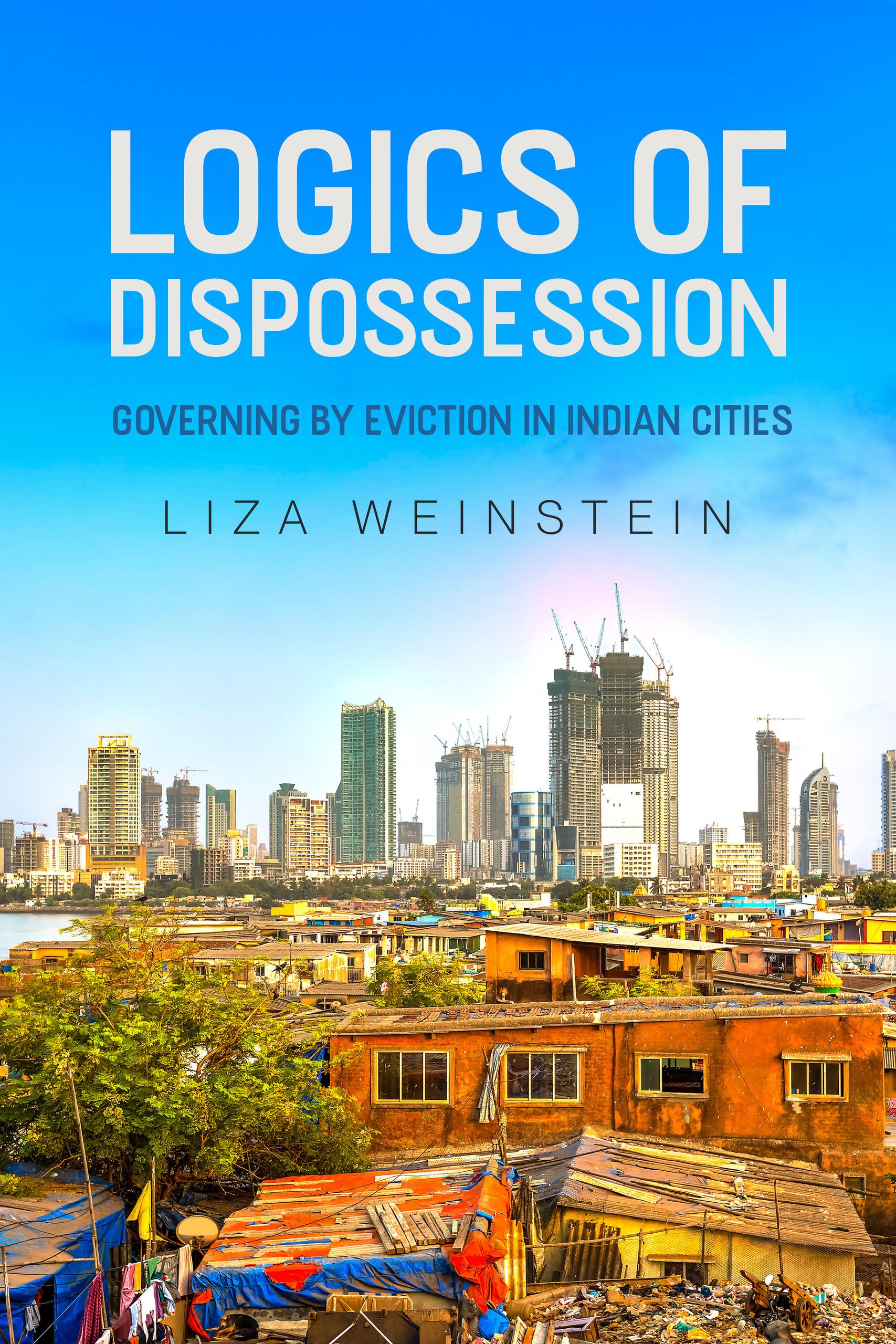
A new "bulldozer politics" has taken hold in many Indian cities, destroying neighborhoods and displacing city residents as it pursues a global city aesthetic. Presentist accounts might explain these evictions as emergent modes of capital accumulation, but Logics of Dispossession challenges that story and situates these acts in a longer historical durée.
Employing a comparative genealogical approach to historical analysis, Liza Weinstein traces the Indian government’s power to evict—from its beginnings in the colonial capitals of the British Raj, to developmental state-building projects and the rise of ethnonationalist politics, up to the present neoliberal conjuncture. Drawing on multicity fieldwork, archival research, and a database of more than a thousand eviction cases, Weinstein argues that evictions constitute a historically entrenched tool of city governance, motivated by a shifting set of intersecting, often contradictory logics that have accumulated over time and in locally specific ways across Indian cities aspiring to be world-class.
Betala smidigt med kort, Klarna, Apple Pay eller Google Pay. Är du inte nöjd har du alltid 14 dagars ångerrätt. Läs mer i våra villkor. Har du några frågor, mejla oss på hello@memmo.org.
Memmo gör det enklare att plugga – var du än är i världen. Hos oss samlar du kursböcker och smarta studieverktyg på ett och samma ställe: sammanfattningar, quiz, poddar och flashcards. Och så Ted, din studiekompis som svarar på allt du undrar. Över 75 000 studenter pluggar redan här – byggt för att du ska lära dig snabbare och stressa mindre.