
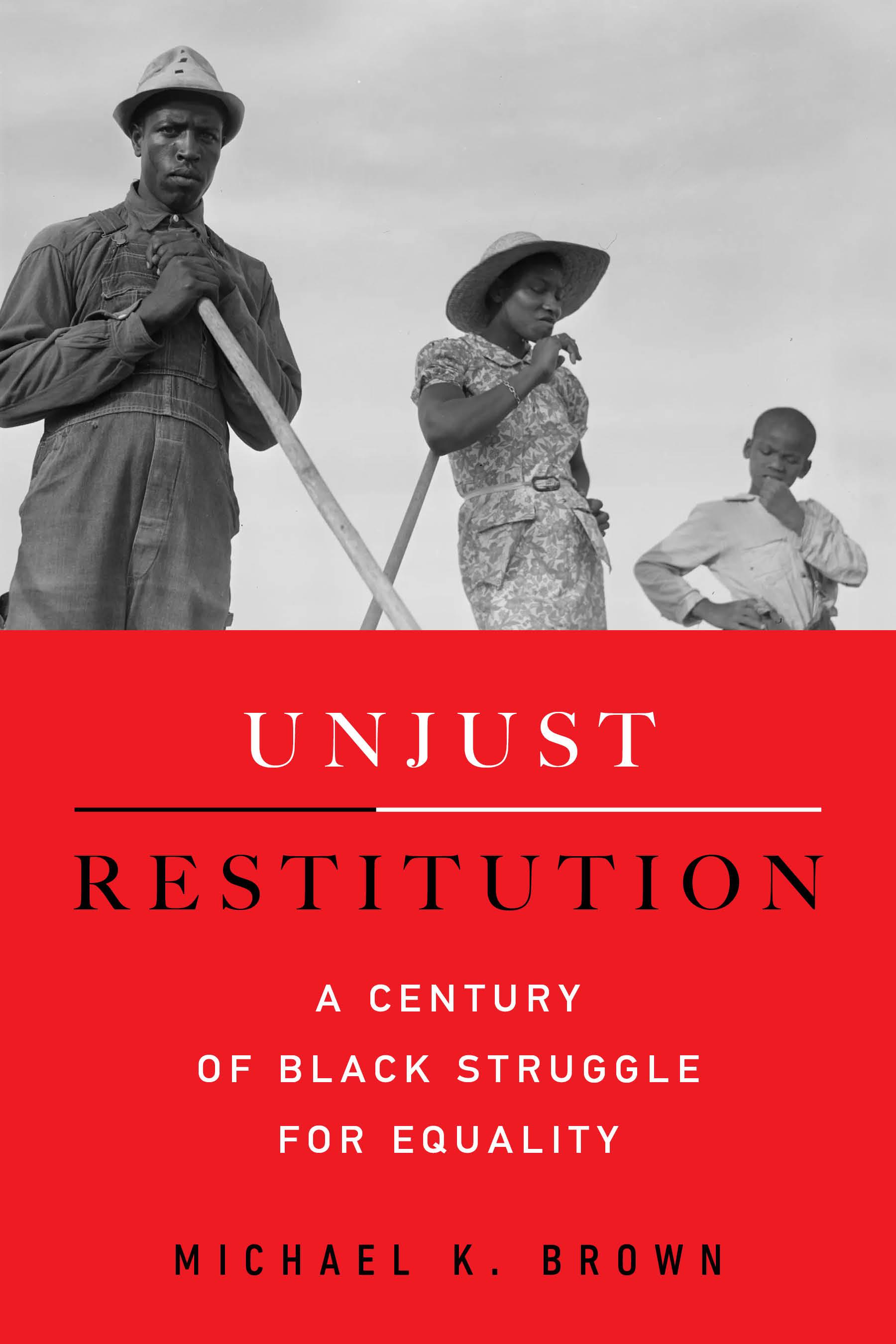
The question of economic justice for Black Americans continues to be the subject of contentious political debate. Here, Michael K. Brown examines the meaning of racial equality during three transformative periods when economic opportunity appeared to be a real possibility: Reconstruction, the New Deal, and the Great Society. Political leaders who believed slavery and Jim Crow degraded Black people enacted policies to rehabilitate formerly subjugated individuals. Black Americans, on the other hand, repudiated the idea that they were damaged people in need of repair. Repeatedly, Black people’s vision of economic justice was based on antiprivilege egalitarianism, the idea that a just restitution for their oppression required abolishing the political and legal privileges whites had acquired. Black opposition reveals what was at stake at each historical moment and what might constitute economic justice in the twenty-first century.
Betala smidigt med kort, Klarna, Apple Pay eller Google Pay. Är du inte nöjd har du alltid 14 dagars ångerrätt. Läs mer i våra villkor. Har du några frågor, mejla oss på hello@memmo.org.
Memmo gör det enklare att plugga – var du än är i världen. Hos oss samlar du kursböcker och smarta studieverktyg på ett och samma ställe: sammanfattningar, quiz, poddar och flashcards. Och så Ted, din studiekompis som svarar på allt du undrar. Över 50 000 studenter pluggar redan här – byggt för att du ska lära dig snabbare och stressa mindre.
Du kanske också gillar
Köp boken0