
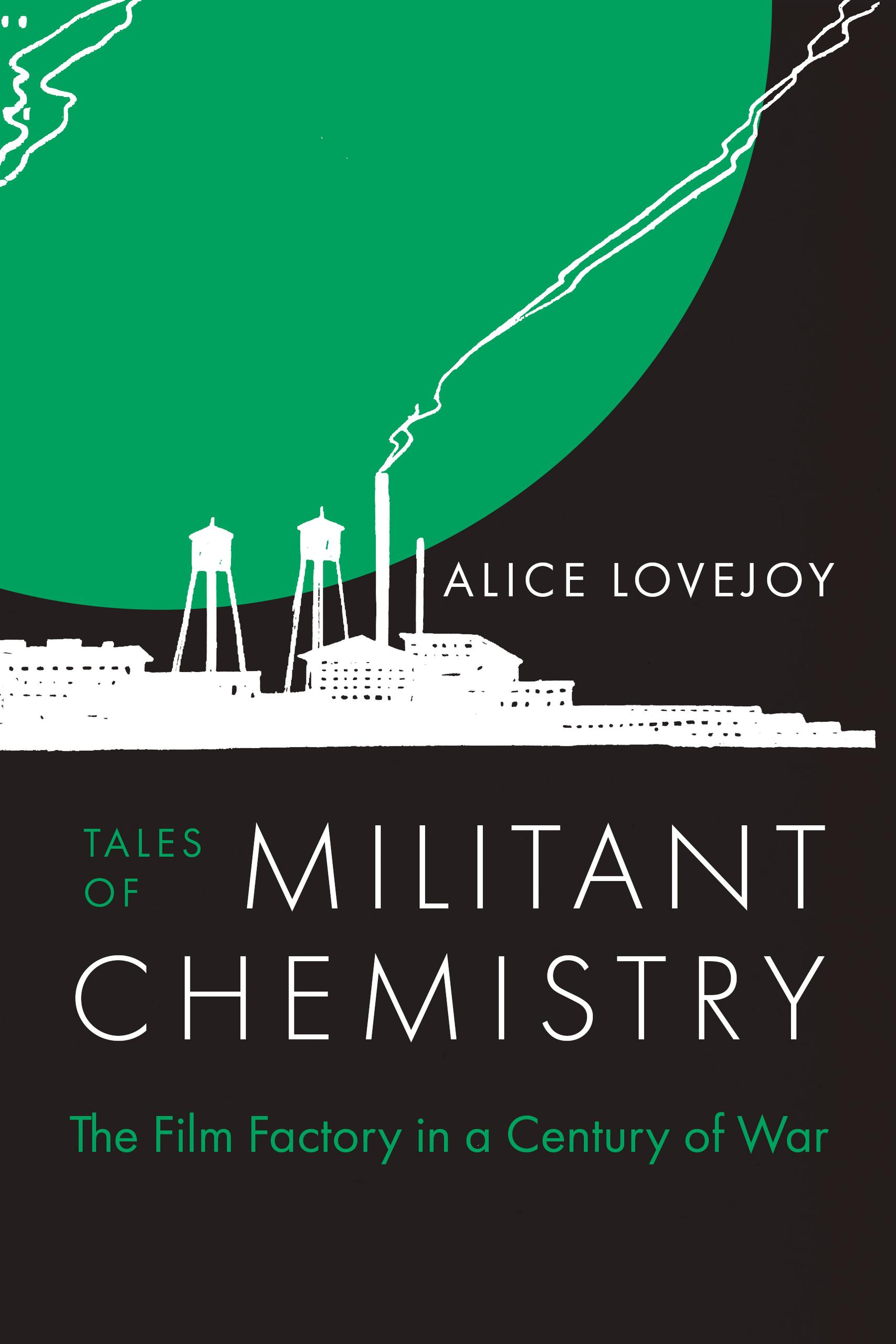
The untold story of film as a chemical cousin to poison gas and nuclear weapons, shaped by centuries of violent extraction.
The history of film calls to mind unforgettable photographs, famous directors, and the glitz and hustle of the media business. But there is another tale to tell that connects film as a material to the twentieth century’s history of war, destruction, and cruelty.
This story comes into focus during World War II at the factories of Tennessee Eastman, where photographic giant Kodak produced the rudiments of movie magic. Not far away, at Oak Ridge, Kodak was also enriching uranium for the Manhattan Project—uranium mined in the Belgian Congo and destined for the bomb that fell on Hiroshima. While the world’s largest film manufacturer transformed into a formidable military contractor, across the ocean its competitor Agfa grew entangled with Nazi Germany’s machinery of war. After 1945, Kodak’s film factories stood at the front lines of a new, colder war, as their photosensitive products became harbingers of the dangers of nuclear fallout.
Following scientists, soldiers, prisoners, and spies through Kodak’s and Agfa’s global empires, Alice Lovejoy links the golden age of cinema and photography to colonialism, the military-industrial complex, radioactive dust, and toxic waste. Revelatory and chilling,Tales of Militant Chemistry shows how film became a weapon whose chemistry irrevocably shaped the world we live in today.
The history of film calls to mind unforgettable photographs, famous directors, and the glitz and hustle of the media business. But there is another tale to tell that connects film as a material to the twentieth century’s history of war, destruction, and cruelty.
This story comes into focus during World War II at the factories of Tennessee Eastman, where photographic giant Kodak produced the rudiments of movie magic. Not far away, at Oak Ridge, Kodak was also enriching uranium for the Manhattan Project—uranium mined in the Belgian Congo and destined for the bomb that fell on Hiroshima. While the world’s largest film manufacturer transformed into a formidable military contractor, across the ocean its competitor Agfa grew entangled with Nazi Germany’s machinery of war. After 1945, Kodak’s film factories stood at the front lines of a new, colder war, as their photosensitive products became harbingers of the dangers of nuclear fallout.
Following scientists, soldiers, prisoners, and spies through Kodak’s and Agfa’s global empires, Alice Lovejoy links the golden age of cinema and photography to colonialism, the military-industrial complex, radioactive dust, and toxic waste. Revelatory and chilling,Tales of Militant Chemistry shows how film became a weapon whose chemistry irrevocably shaped the world we live in today.
Sidor: 256
Kategori: Film- & Medievetenskap
e-ISBN: 9780520402959
Fraktvikt: 1.2 kg
Skickas inom: 1-2 dagar
Betala smidigt med kort, Klarna, Apple Pay eller Google Pay. Är du inte nöjd har du alltid 14 dagars ångerrätt. Läs mer i våra villkor. Har du några frågor, mejla oss på hello@memmo.org.
Memmo gör det enklare att plugga – var du än är i världen. Hos oss samlar du kursböcker och smarta studieverktyg på ett och samma ställe: sammanfattningar, quiz, poddar och flashcards. Och så Ted, din studiekompis som svarar på allt du undrar. Över 50 000 studenter pluggar redan här – byggt för att du ska lära dig snabbare och stressa mindre.
Du kanske också gillar
Köp boken0