
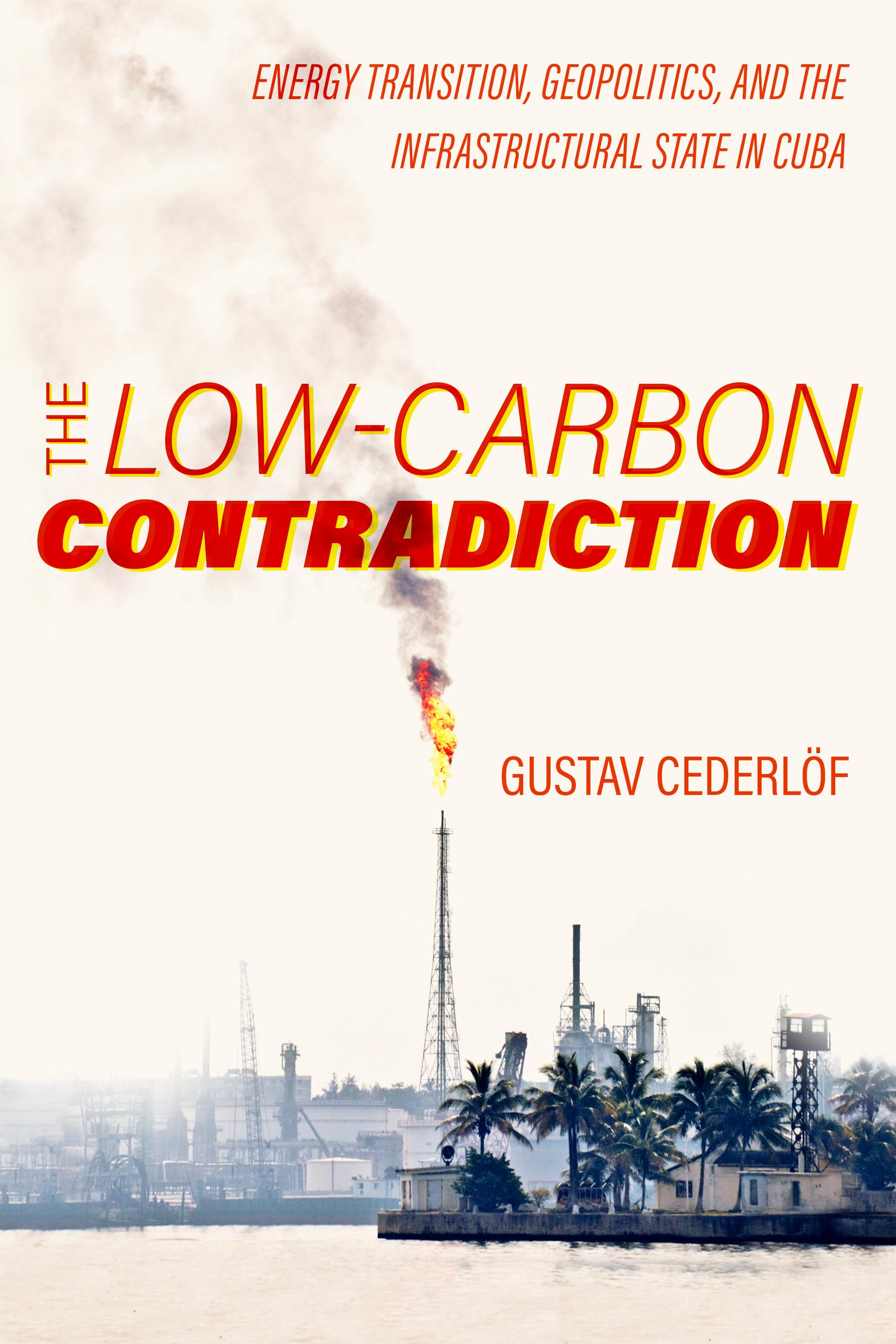
In the pursuit of socialism, Cuba became Latin America’s most oil-dependent economy. When the Soviet Union collapsed, the country lost 86 percent of its crude oil supplies, resulting in a severe energy crisis. In the face of this shock, Cuba started to develop a low-carbon economy based on economic and social reform rather than high-tech innovation. The Low-Carbon Contradiction examines this period of rapid low-carbon energy transition, which many have described as a “Cuban miracle” or even a real-life case of successful “degrowth.” Working with original research from inside households, workplaces, universities, and government offices, Gustav Cederlöf retells the history of the Cuban Revolution as one of profound environmental and infrastructural change. In doing so, he opens up new questions about energy transitions, their politics, and the conditions of a socially just low-carbon future. The Cuban experience shows how a society can transform itself while rapidly cutting carbon emissions in the search for sustainability.
Sidor: 260
Kategori: Miljövetenskap & Klimat
e-ISBN: 9780520393141
Fraktvikt: 1.2 kg
Skickas inom: 1-2 dagar
Betala smidigt med kort, Klarna, Apple Pay eller Google Pay. Är du inte nöjd har du alltid 14 dagars ångerrätt. Läs mer i våra villkor. Har du några frågor, mejla oss på hello@memmo.org.
Memmo gör det enklare att plugga – var du än är i världen. Hos oss samlar du kursböcker och smarta studieverktyg på ett och samma ställe: sammanfattningar, quiz, poddar och flashcards. Och så Ted, din studiekompis som svarar på allt du undrar. Över 50 000 studenter pluggar redan här – byggt för att du ska lära dig snabbare och stressa mindre.
Du kanske också gillar
Köp boken0