
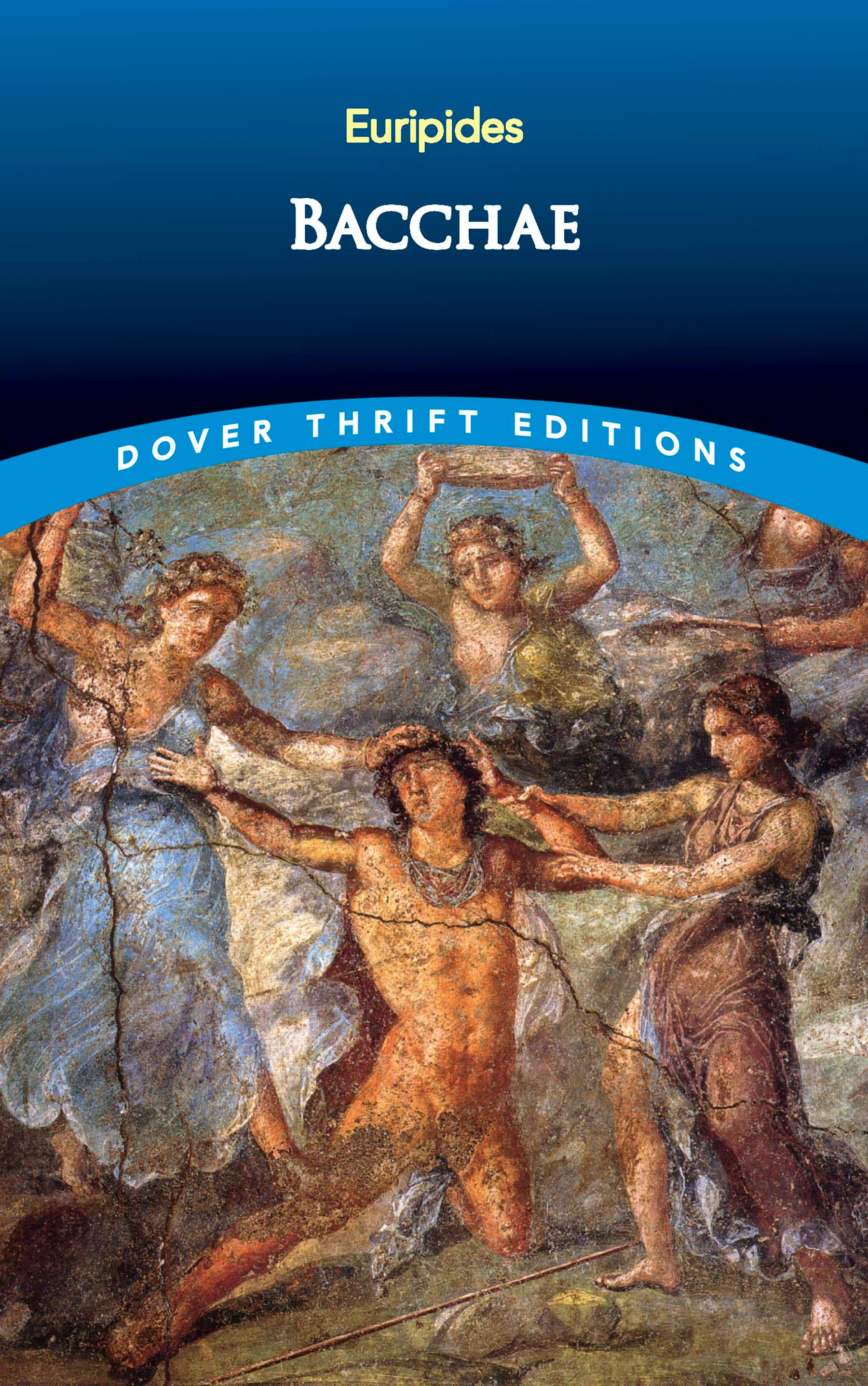
The youngest of the three great Greek tragedians, following Aeschylus and Sophocles, Euripides (ca. 484–406 B.C.) is reputed to have written ninety-two plays, nineteen of which survive. The Bacchae, a late play staged posthumously, concerns the cult of Dionysus, god of wine, whose worship hinged largely on orgiastic and frenzied nature rites.
When Dionysus (in disguise) attempts to spread his cult among the people (especially the women) of Thebes, their king, Pentheus, imprisons Dionysus and tries to suppress his cult. The king's misguided attempt to thwart the will of a god leads to catastrophe. Full of striking scenes, frenzied emotion, and choral songs of great power and beauty, the play is a fine example of Euripides' ability to exploit and manipulate traditional Greek myth to serve his own ends in probing man's psychological makeup and understanding of himself.
Betala smidigt med kort, Klarna, Apple Pay eller Google Pay. Är du inte nöjd har du alltid 14 dagars ångerrätt. Läs mer i våra villkor. Har du några frågor, mejla oss på hello@memmo.org.
Memmo gör det enklare att plugga – var du än är i världen. Hos oss samlar du kursböcker och smarta studieverktyg på ett och samma ställe: sammanfattningar, quiz, poddar och flashcards. Och så Ted, din studiekompis som svarar på allt du undrar. Över 50 000 studenter pluggar redan här – byggt för att du ska lära dig snabbare och stressa mindre.