
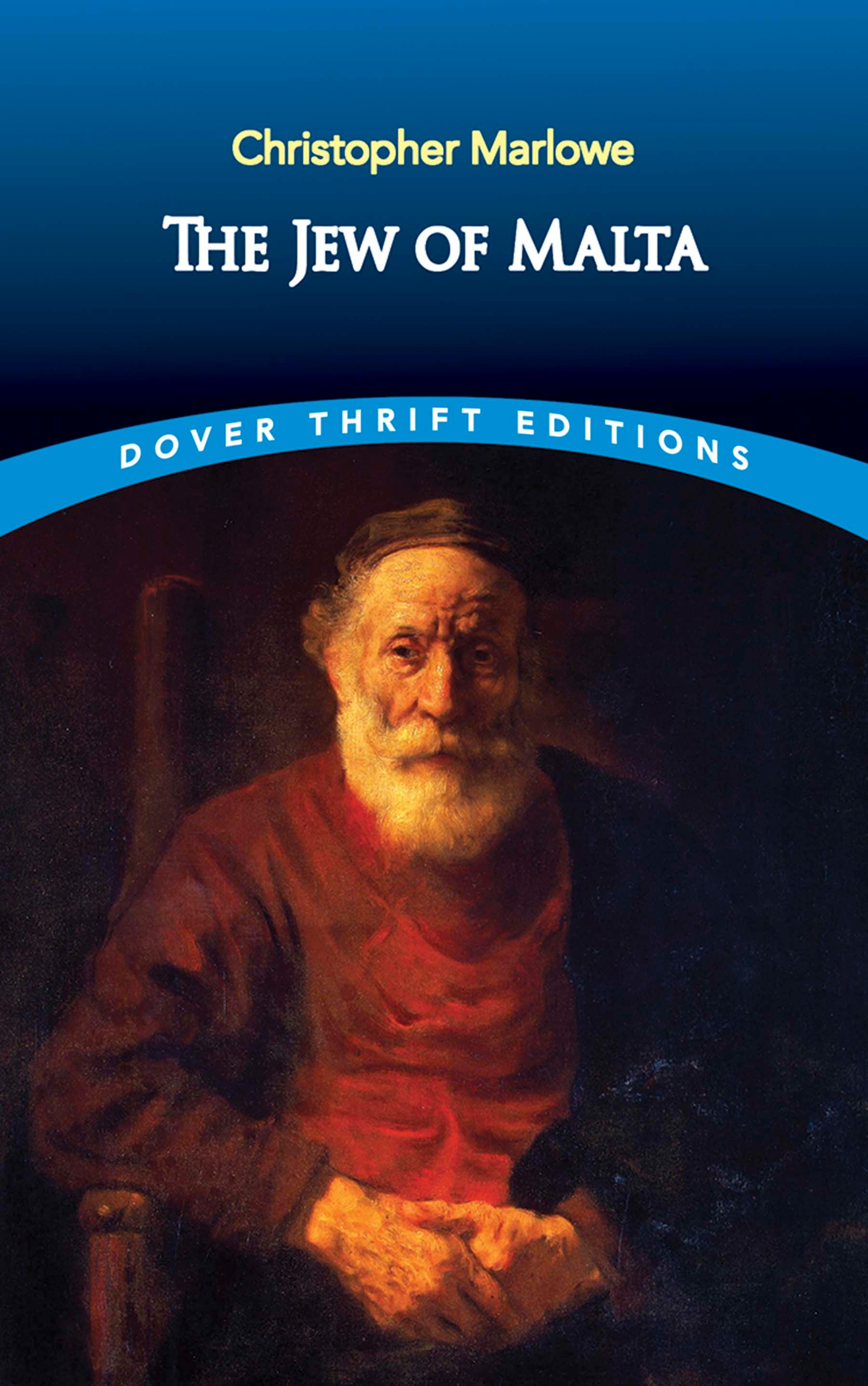
The spirit of Machiavelli presides over The Jew of Malta, in which the title character relentlessly plots to maintain and extend his political influence and wealth. A paragon of remorseless evil, Barabas befriends and betrays the Turkish invaders and native Maltese alike, incites a duel between the suitors for his daughter's hand, and takes lethal revenge upon a convent of nuns.
Both tragedy and farce, this masterpiece of Elizabethan theater reflects the social and political complexities of its age. Christopher Marlowe's dramatic hybrid resonates with racial tension, religious conflict, and political intrigue — all of which abounded in 16th-century England. The playwright, who infused each one of his plays with cynical humor and a dark world view, draws upon stereotypes of Muslim and Christian as well as Jewish characters to cast an ironic perspective on all religious beliefs.
The immediate success of The Jew of Malta on the Elizabethan stage is presumed to have influenced Marlowe's colleague, William Shakespeare, to draw upon the same source material for The Merchant of Venice. The character of Barabas is the prototype for the well-known Shylock, and this drama of his villainy remains a satirical gem in its own right.
Betala smidigt med kort, Klarna, Apple Pay eller Google Pay. Är du inte nöjd har du alltid 14 dagars ångerrätt. Läs mer i våra villkor. Har du några frågor, mejla oss på hello@memmo.org.
Memmo gör det enklare att plugga – var du än är i världen. Hos oss samlar du kursböcker och smarta studieverktyg på ett och samma ställe: sammanfattningar, quiz, poddar och flashcards. Och så Ted, din studiekompis som svarar på allt du undrar. Över 50 000 studenter pluggar redan här – byggt för att du ska lära dig snabbare och stressa mindre.