
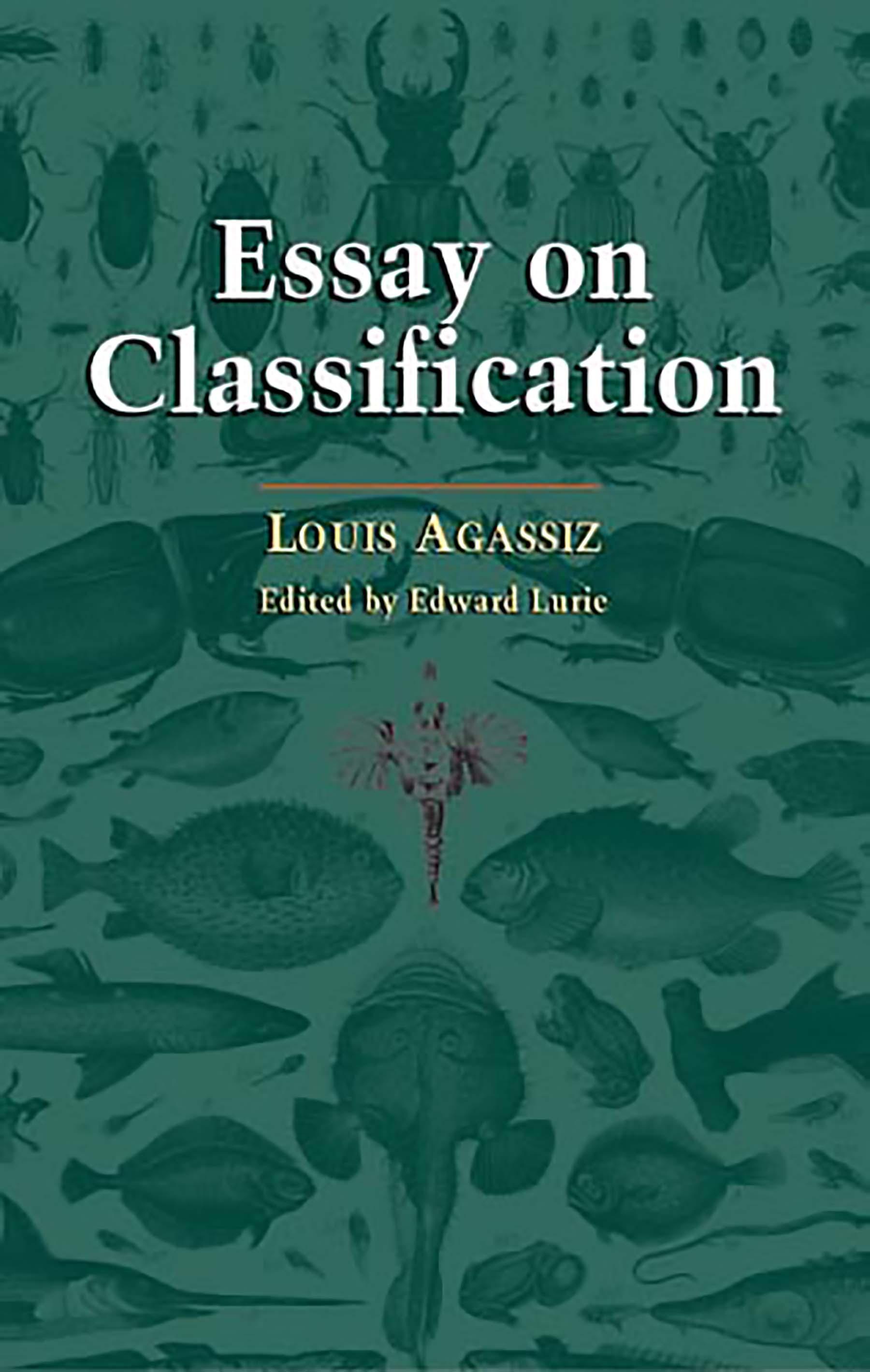
A major influence on the development of American scientific culture, Swiss-born Louis Agassiz (1807–73) was one of the great scientists of his day. A student of anatomist Georges Cuvier, Agassiz adapted his teacher's pioneering techniques of comparative anatomy to paleontology, and he rose to prominence as a distinguished systematist, paleontologist, and educator. Agassiz introduced science to ordinary citizens to an unprecedented degree; people around the world read his books, sent him specimens, and consulted his opinion.
Agassiz was also a staunch opponent of the theory of evolution, and he was among the last of the reputable scientists who continued to reject the concept after the publication of The Origin of the Species. All of nature bore testimony to a divine plan, Agassiz believed, and he could not reconcile himself to a theory that did not invoke God's design. Ironically, his 1851 Essay on Classification provided Darwin and other evolutionists with evidence from the fossil record to support the theory of natural selection.
A treasure of historically valuable insights that contributed to the development of evolutionary biology, this volume introduced the landmark contention that paleontology, embryology, ecology, and biogeography are inextricably linked in classifications that reveal the true relationships between organisms. Its emphasis on advanced and original work gave major impetus to the study of science directly from nature, and it remains a classic of American scientific literature.
Agassiz was also a staunch opponent of the theory of evolution, and he was among the last of the reputable scientists who continued to reject the concept after the publication of The Origin of the Species. All of nature bore testimony to a divine plan, Agassiz believed, and he could not reconcile himself to a theory that did not invoke God's design. Ironically, his 1851 Essay on Classification provided Darwin and other evolutionists with evidence from the fossil record to support the theory of natural selection.
A treasure of historically valuable insights that contributed to the development of evolutionary biology, this volume introduced the landmark contention that paleontology, embryology, ecology, and biogeography are inextricably linked in classifications that reveal the true relationships between organisms. Its emphasis on advanced and original work gave major impetus to the study of science directly from nature, and it remains a classic of American scientific literature.
Betala smidigt med kort, Klarna, Apple Pay eller Google Pay. Är du inte nöjd har du alltid 14 dagars ångerrätt. Läs mer i våra villkor. Har du några frågor, mejla oss på hello@memmo.org.
Memmo gör det enklare att plugga – var du än är i världen. Hos oss samlar du kursböcker och smarta studieverktyg på ett och samma ställe: sammanfattningar, quiz, poddar och flashcards. Och så Ted, din studiekompis som svarar på allt du undrar. Över 50 000 studenter pluggar redan här – byggt för att du ska lära dig snabbare och stressa mindre.
Du kanske också gillar
Köp boken0