
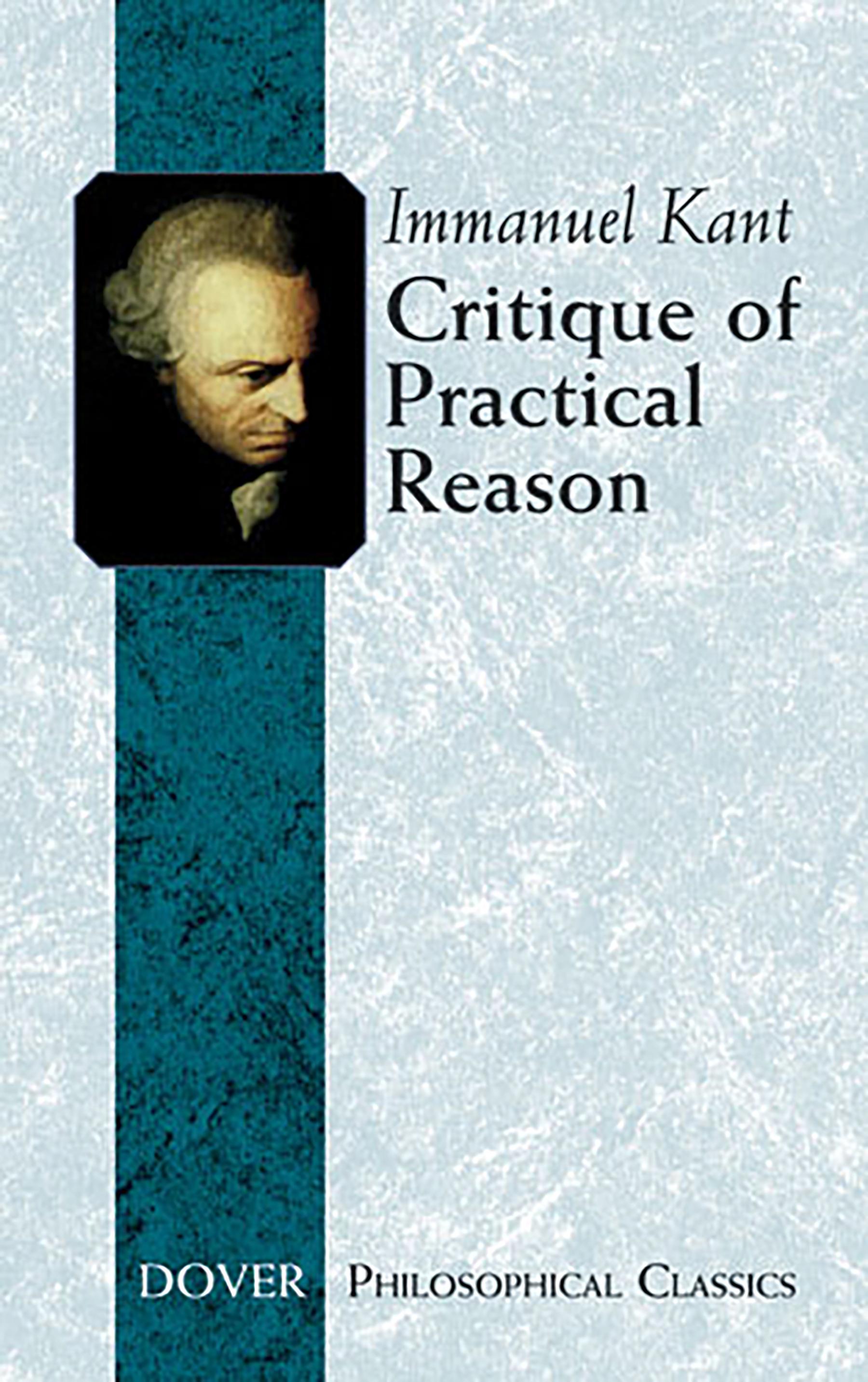
The second of Kant's three critiques, Critique of Practical Reason forms the center of Kantian philosophy; published in 1788, it is bookended by his Critique of Pure Reason and Critique of Judgement. With this work Kant establishes his role as a vindicator of the truth of Christianity; he approaches his proof by presenting positive affirmation of the immortality of the soul and the existence of God. The philosopher offers an argument concerning the summum bonum of life: people should not simply search after happiness, but follow the moral law and seek to become worthy of the happiness that God can bestow.
This Critique comprises three sections: the Analytic, the Dialectic, and the Doctrine of Method. The Analytic defines the ultimate moral principle, the categorical imperative, and argues that to obey it is to exercise a freedom. The Dialectic make the assumption that immortality and God exist, arguing that pure practical reason falls into error when it expects perfection in this world; we should anticipate finding perfection in the next world, with God's help. The final section, the Doctrine of Method, offers suggestions in educating people in the use of pure practical reason.
A seminal text in the history of moral philosophy, this volume offers the most complete statement of Kant's theory of free will and a full development of his practical metaphysics.
This Critique comprises three sections: the Analytic, the Dialectic, and the Doctrine of Method. The Analytic defines the ultimate moral principle, the categorical imperative, and argues that to obey it is to exercise a freedom. The Dialectic make the assumption that immortality and God exist, arguing that pure practical reason falls into error when it expects perfection in this world; we should anticipate finding perfection in the next world, with God's help. The final section, the Doctrine of Method, offers suggestions in educating people in the use of pure practical reason.
A seminal text in the history of moral philosophy, this volume offers the most complete statement of Kant's theory of free will and a full development of his practical metaphysics.
Betala smidigt med kort, Klarna, Apple Pay eller Google Pay. Är du inte nöjd har du alltid 14 dagars ångerrätt. Läs mer i våra villkor. Har du några frågor, mejla oss på hello@memmo.org.
Memmo gör det enklare att plugga – var du än är i världen. Hos oss samlar du kursböcker och smarta studieverktyg på ett och samma ställe: sammanfattningar, quiz, poddar och flashcards. Och så Ted, din studiekompis som svarar på allt du undrar. Över 50 000 studenter pluggar redan här – byggt för att du ska lära dig snabbare och stressa mindre.
Du kanske också gillar
Köp boken0