
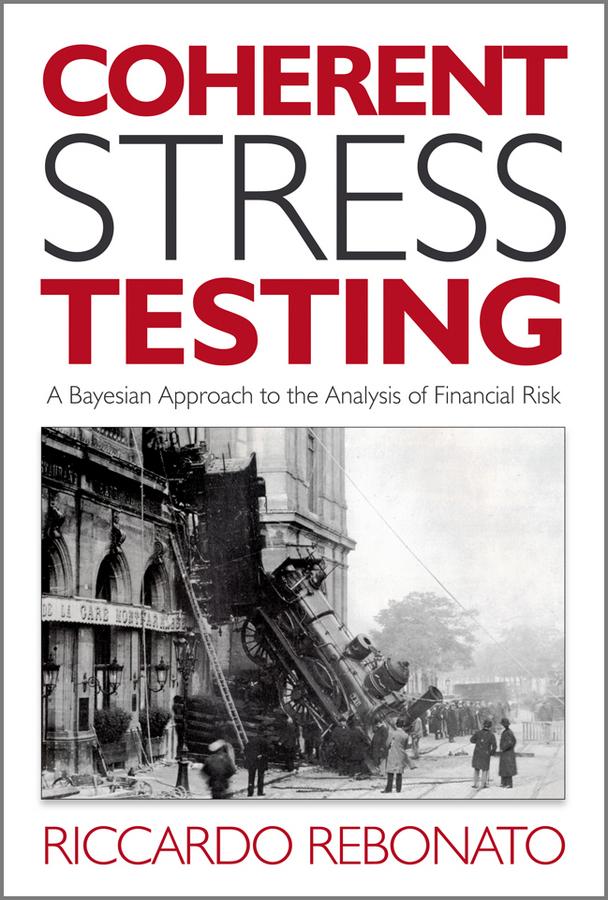
Based on the author's extensive work, research and presentations in the area, the book fills a gap in quantitative risk management by introducing a new and very intuitively appealing approach to stress testing based on expert judgement and Bayesian networks. It constitutes a radical departure from the traditional statistical methodologies based on Economic Capital or Extreme-Value-Theory approaches.
The book is split into four parts. Part I looks at stress testing and at its role in modern risk management. It discusses the distinctions between risk and uncertainty, the different types of probability that are used in risk management today and for which tasks they are best used. Stress testing is positioned as a bridge between the statistical areas where VaR can be effective and the domain of total Keynesian uncertainty. Part II lays down the quantitative foundations for the concepts described in the rest of the book. Part III takes readers through the application of the tools discussed in part II, and introduces two different systematic approaches to obtaining a coherent stress testing output that can satisfy the needs of industry users and regulators. In part IV the author addresses more practical questions such as embedding the suggestions of the book into a viable governance structure.
Betala smidigt med kort, Klarna, Apple Pay eller Google Pay. Är du inte nöjd har du alltid 14 dagars ångerrätt. Läs mer i våra villkor. Har du några frågor, mejla oss på hello@memmo.org.
Memmo gör det enklare att plugga – var du än är i världen. Hos oss samlar du kursböcker och smarta studieverktyg på ett och samma ställe: sammanfattningar, quiz, poddar och flashcards. Och så Ted, din studiekompis som svarar på allt du undrar. Över 50 000 studenter pluggar redan här – byggt för att du ska lära dig snabbare och stressa mindre.