
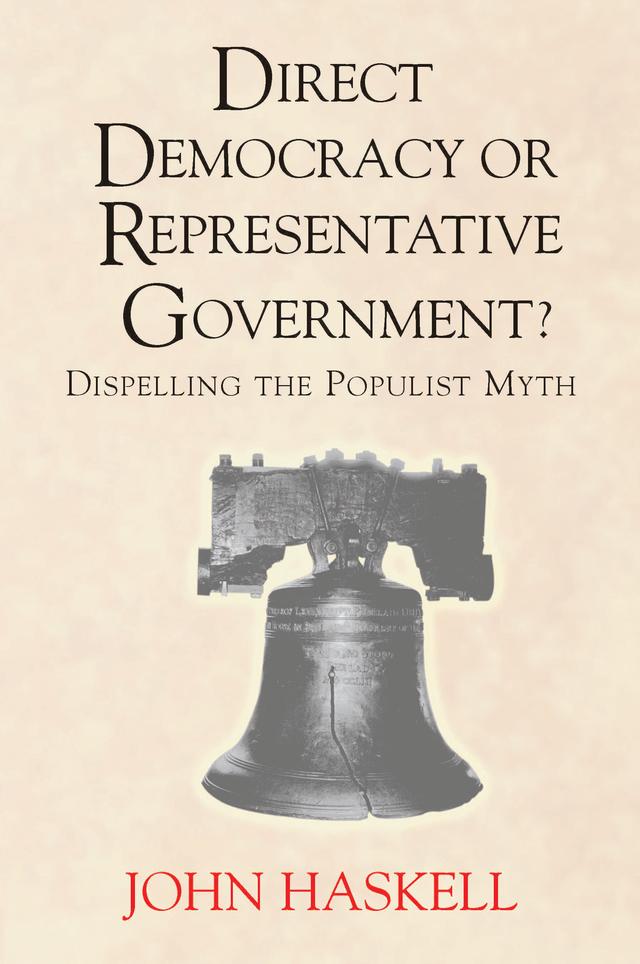
In Direct Democracy or Representative Government? John Haskell develops a devastating critique of direct democracy by exposing the central flaw in populist thinking. Contrary to the beliefs of populist advocates of direct democracy, the popular will cannot be interpreted from the results of the plebiscite. John Haskell presents a defense of representative institutions that brings to bear, in an understandable way, the findings of public choice scholars. Haskell covers the clash of ideas between populists and constitutionalists throughout American history. He follows the development of direct democracy during the twentieth century, especially the dramatically increased use of initiatives and referenda in the last decade. As Americans become increasingly frustrated with the workings of the institutions of government at the state and national levels, and as populist ideas gain greater currency, new forms of direct and participatory democracy making use of the latest computer technology appeal to more people. Haskell speculates as to the likely future direction of direct democracy in the U.S. He describes in clear language the fundamental problem with the premise of populist thinking and explains why direct democracy presents a threat to minority rights and only promises irresponsible and unaccountable governance.
Betala smidigt med kort, Klarna, Apple Pay eller Google Pay. Är du inte nöjd har du alltid 14 dagars ångerrätt. Läs mer i våra villkor. Har du några frågor, mejla oss på hello@memmo.org.
Memmo gör det enklare att plugga – var du än är i världen. Hos oss samlar du kursböcker och smarta studieverktyg på ett och samma ställe: sammanfattningar, quiz, poddar och flashcards. Och så Ted, din studiekompis som svarar på allt du undrar. Över 50 000 studenter pluggar redan här – byggt för att du ska lära dig snabbare och stressa mindre.
Du kanske också gillar
Köp boken0