
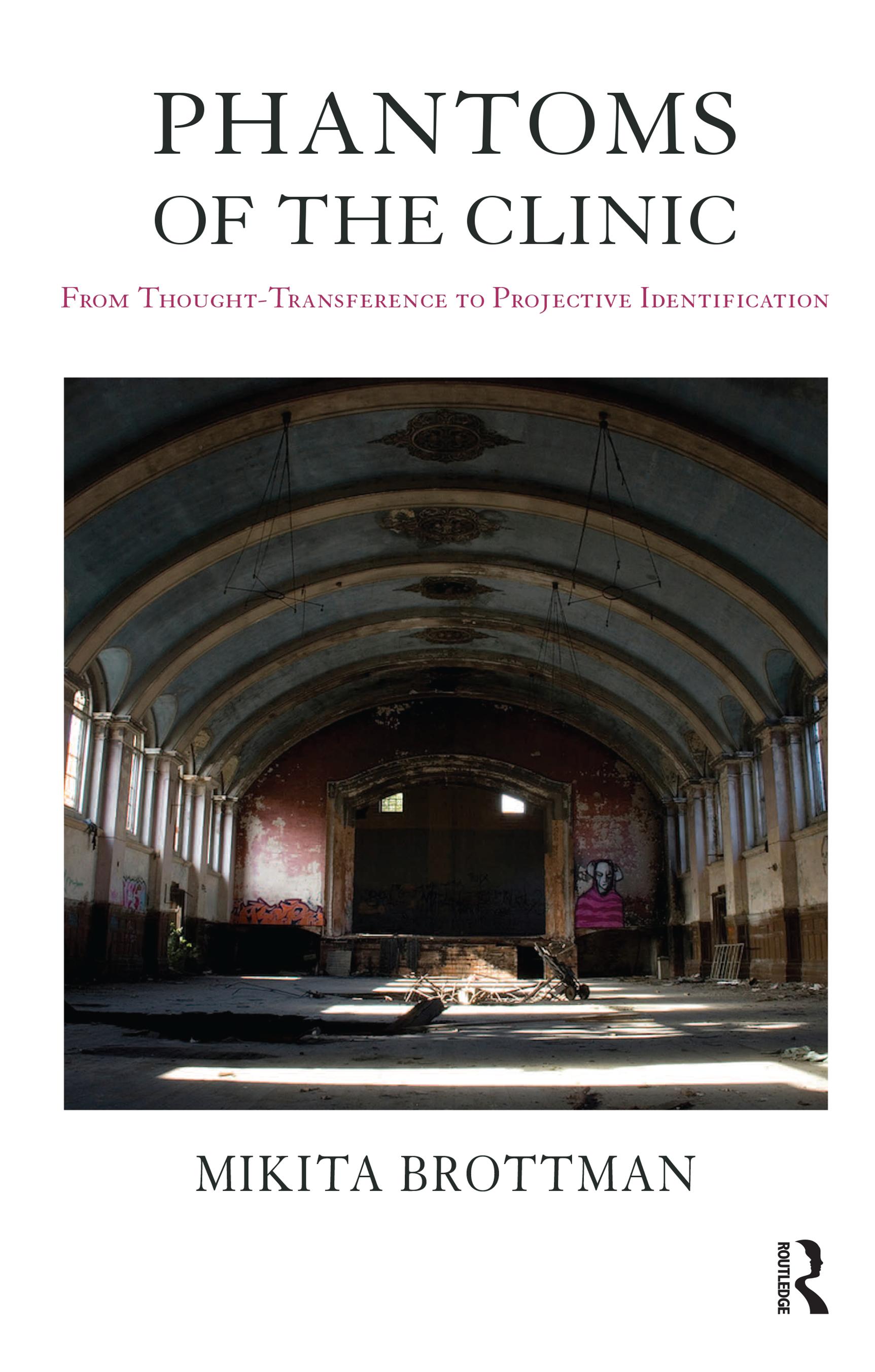
As Freud predicted, there has always been great anxiety about the place of psychoanalysis in contemporary life, particularly in relation to its ambiguous and complicated relationship to the realm of science. There is also a long history of widespread resistance, in both academia and medicine, to anything associated with the world of the supernatural; very few people, in their professional lives, at least, are willing to admit a serious interest in occult phenomena. As a result, paranormal traces have all but vanished from the psychoanalytic process - though not without leaving a residue. This residue remains, the author argues, in the acceptably "clinical" guise of projective identification, a concept first formulated by Melanie Klein, and widely used in contemporary psychoanalysis to suggest a different variety of transference and transference-like phenomena between patient and analyst that seem to occur outside the normal range of the sensory process.
Betala smidigt med kort, Klarna, Apple Pay eller Google Pay. Är du inte nöjd har du alltid 14 dagars ångerrätt. Läs mer i våra villkor. Har du några frågor, mejla oss på hello@memmo.org.
Memmo gör det enklare att plugga – var du än är i världen. Hos oss samlar du kursböcker och smarta studieverktyg på ett och samma ställe: sammanfattningar, quiz, poddar och flashcards. Och så Ted, din studiekompis som svarar på allt du undrar. Över 50 000 studenter pluggar redan här – byggt för att du ska lära dig snabbare och stressa mindre.
Du kanske också gillar
Köp boken0