
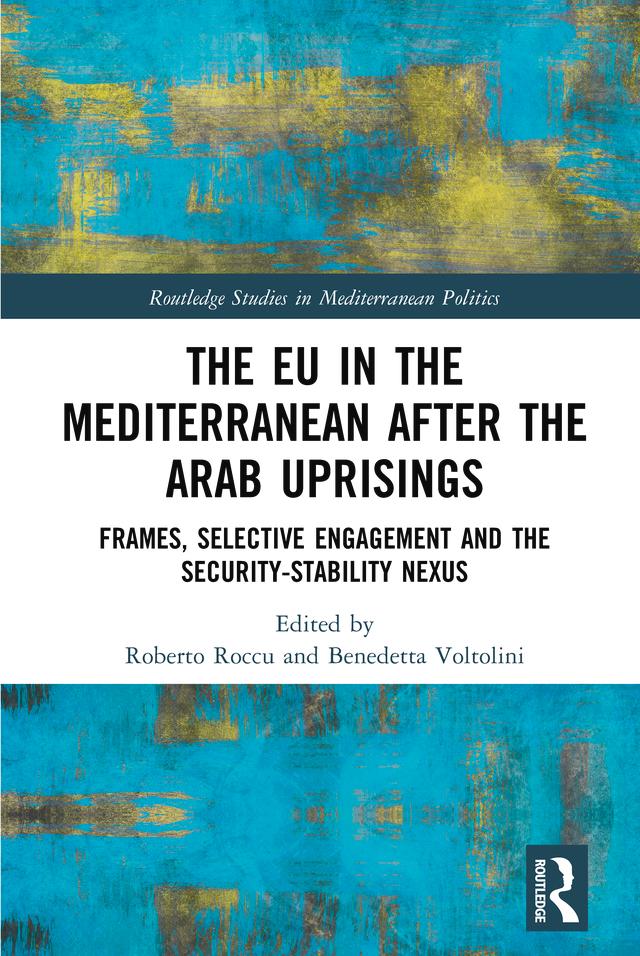
By examining a range of policy areas, this book aims to assess and qualify the claim that EU policies towards the Arab Mediterranean after the uprisings are predominantly marked by continuity with the past. This is attributed to the fact that the EU still acts with the aim of maximising its own security by preserving stability in the region. The book explores how security, stability and the link between them – the security-stability nexus – are better understood as the master frame shaping the EU’s approach towards the Southern Mediterranean and how this affects policy enactment. The book shows that the security-stability nexus has at least been reframed in the wake of the uprisings, but also that more change has occurred in the redefinition of the master frame than in its actual enactment. The framing and reframing of the security-stability nexus, before and after the Arab uprisings, depends on the policy area under consideration, the variety of actors involved, and the forms of their involvement. This is also crucially because of the different disposition towards the EU of prominent actors in Arab Mediterranean partner countries, which points towards the EU’s increasing difficulties to achieve its goals in its near abroad.
This book was originally published as a special issue of Mediterranean Politics.
Betala smidigt med kort, Klarna, Apple Pay eller Google Pay. Är du inte nöjd har du alltid 14 dagars ångerrätt. Läs mer i våra villkor. Har du några frågor, mejla oss på hello@memmo.org.
Memmo gör det enklare att plugga – var du än är i världen. Hos oss samlar du kursböcker och smarta studieverktyg på ett och samma ställe: sammanfattningar, quiz, poddar och flashcards. Och så Ted, din studiekompis som svarar på allt du undrar. Över 50 000 studenter pluggar redan här – byggt för att du ska lära dig snabbare och stressa mindre.