
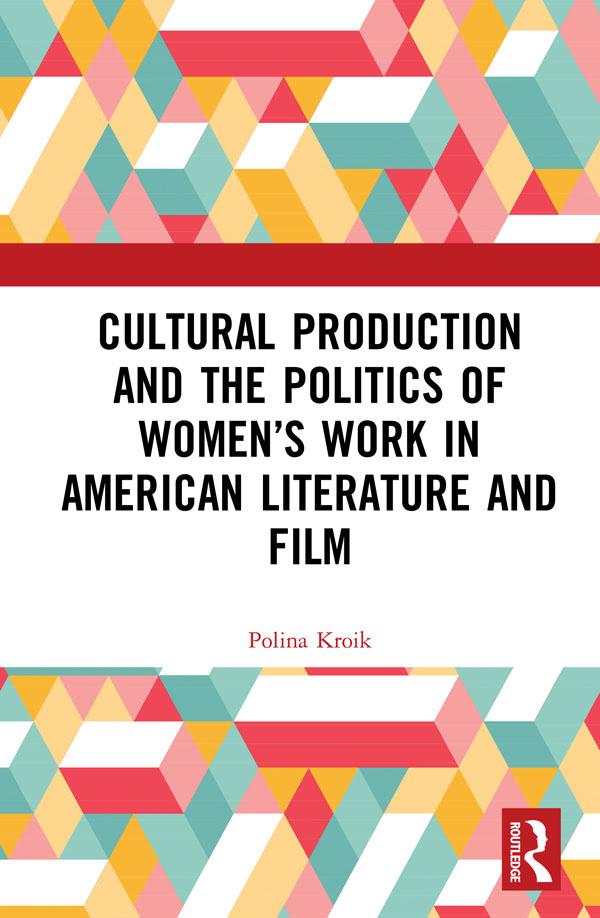
Cultural Production and the Politics of Women’s Work in American Literature and Film emphasizes the interrelation among women’s workplace roles, modes of authorship, and processes of subject-formation, pointing to some of the reasons for the persistence of limiting gender roles and occupational hierarchies that arose during the first 60 years of the 20th century.
The book interrogates three common narratives: The rise of Fordism as a "masculine" mode of production and the transition to an era of "feminized" work; women’s liberation through the sexual revolutions; and the rise of a new form of literary authorship. Conversely, it suggests that women’s labor was integral to the operations of the Fordist business sphere, where, unlike at the factory, the white-collar office proletarian work was casualized and feminized. This book argues that this workplace was an important site of subject formation, affirming dominant ideologies through economic practices.
Analyzing work by Sinclair Lewis, Nella Larsen, Anita Loos, and Sylvia Plath, the book presents an alternative history of American modernism, one that is more attuned to gendered discourses of labor and class. By looking at the micropolitics of power within cultural institutions, this study moves beyond the dichotomies of exclusion/inclusion to interrogate the terms on which women and minorities worked as producers, and the ideas and experiences that consequently entered the field of intelligibility.
Betala smidigt med kort, Klarna, Apple Pay eller Google Pay. Är du inte nöjd har du alltid 14 dagars ångerrätt. Läs mer i våra villkor. Har du några frågor, mejla oss på hello@memmo.org.
Memmo gör det enklare att plugga – var du än är i världen. Hos oss samlar du kursböcker och smarta studieverktyg på ett och samma ställe: sammanfattningar, quiz, poddar och flashcards. Och så Ted, din studiekompis som svarar på allt du undrar. Över 50 000 studenter pluggar redan här – byggt för att du ska lära dig snabbare och stressa mindre.