
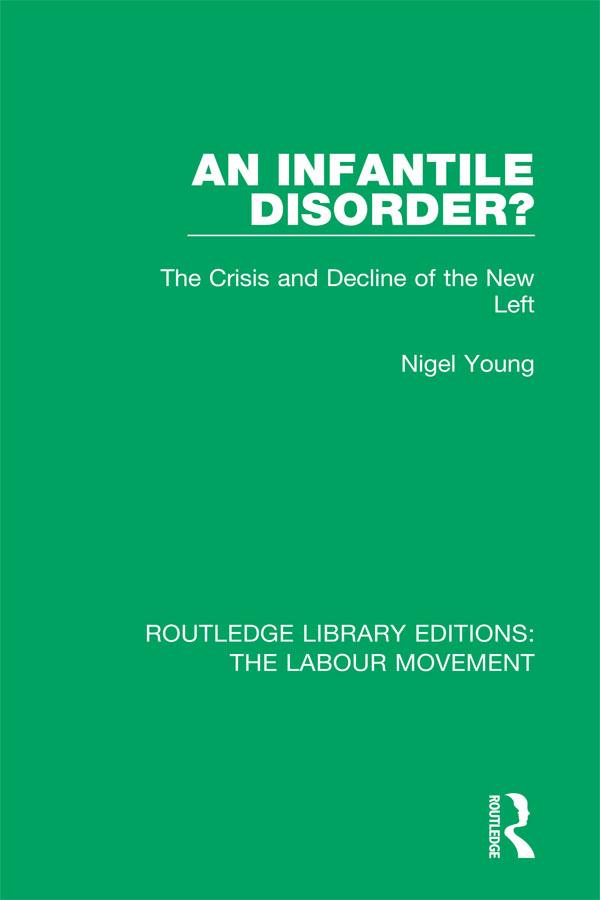
First published in 1977. The New Left, as an organised political phenomenon, came – and went – largely in the 1960s. Was the Movement that went into precipitate decline after 1969 the same New Left that had developed a decade earlier? Nigel Young’s thesis is that the core New Left, as it had evolved by the mid-1960s, had a unique identity that set it apart from other Old Left and Marxist groups. He believes that this was dissipated in the later developments of the black and student movements, and in the opposition to the Vietnam war. By 1968 – the watershed year – an acute ‘identity-crisis’ had set in within the Movement and became the major source of the New Left’s disintegration.
Nigel Young traces the Movement’s growth and crisis mainly in Britain and America, where it reached its greater strength, but attention is also paid to parallel developments in similar movements elsewhere. He analyses the crisis in terms of the interrelationship between dilemmas of strategy and ideas, and the external events which tend to reinforce the tendencies toward elitism, intolerance and violence, and produce organisational breakdown.
Betala smidigt med kort, Klarna, Apple Pay eller Google Pay. Är du inte nöjd har du alltid 14 dagars ångerrätt. Läs mer i våra villkor. Har du några frågor, mejla oss på hello@memmo.org.
Memmo gör det enklare att plugga – var du än är i världen. Hos oss samlar du kursböcker och smarta studieverktyg på ett och samma ställe: sammanfattningar, quiz, poddar och flashcards. Och så Ted, din studiekompis som svarar på allt du undrar. Över 50 000 studenter pluggar redan här – byggt för att du ska lära dig snabbare och stressa mindre.