
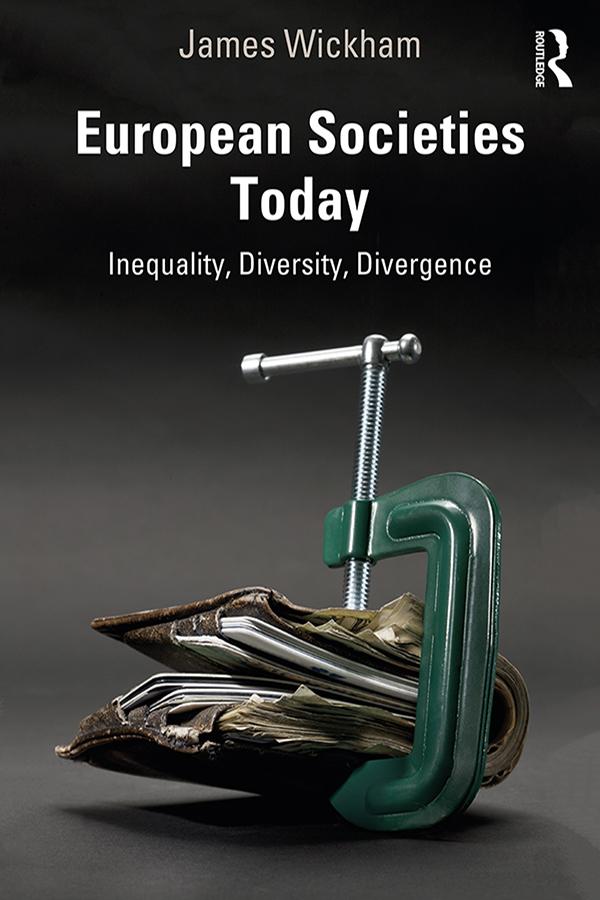
This accessible new text introduces students to contemporary European societies by examining structures of inequality, making sense of the empirical and historical contexts.
Focusing on seven differing European societies (France, Germany, Ireland, Italy, Poland, Sweden and the UK), it examines the different ways in which sociology and political economy understand the social structure of contemporary Europe. Separate chapters outline key aspects of inequality, beginning with income, wealth and poverty, followed by occupation and social class, gender, regional inequality, ethnicity, and migration. By focusing on the role of the national welfare states of Europe in restraining economic inequality, the book enables a realistic appraisal of the ‘European Social Model’.
Key features:
- Examines European ‘distinctiveness’ and difference;
- Visual presentation of data accessibly informs the reader about distinctive features of specific societies;
- Comparative approach extends to evaluate the extent to which Europe differs from the USA;
- Illustrates how the UK’s half-hearted relationship to ‘Europe’ is not just a matter of history or politics but also of contemporary social structure;
- Key in-text features include discussion topics and key readings.
This textbook will be essential reading for students of European studies, European politics, European societies, social inequality/structure, European welfare and policy and more broadly to sociology and public policy and administration.
Betala smidigt med kort, Klarna, Apple Pay eller Google Pay. Är du inte nöjd har du alltid 14 dagars ångerrätt. Läs mer i våra villkor. Har du några frågor, mejla oss på hello@memmo.org.
Memmo gör det enklare att plugga – var du än är i världen. Hos oss samlar du kursböcker och smarta studieverktyg på ett och samma ställe: sammanfattningar, quiz, poddar och flashcards. Och så Ted, din studiekompis som svarar på allt du undrar. Över 50 000 studenter pluggar redan här – byggt för att du ska lära dig snabbare och stressa mindre.