
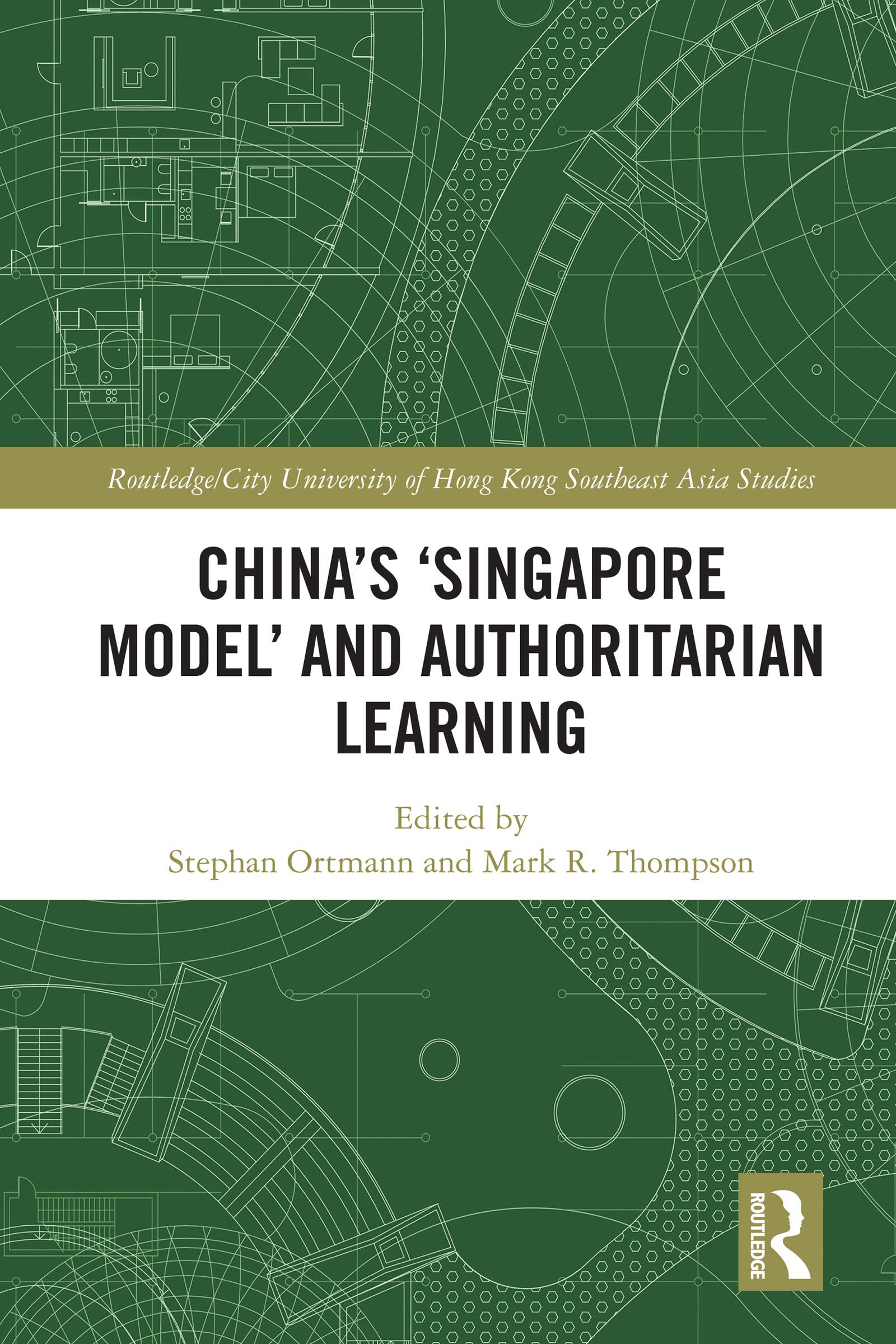
This book explores to what extent China has drawn lessons from Singapore, both in terms of its ruling ideology and through the policy-specific learning process. In so doing, it provides insights into the opportunities but also the challenges of this long-term learning process, focusing attention to how non-democratic regimes deal with modernization.
The stellar line-up of international contributors, from China, Singapore, Europe, and the US, offer a variety of perspectives on Singapore as a model of "authoritarian modernism" for China. The book discusses how the small Southeast Asian city-state became a major reference point for China, how mainland observers often misunderstood the nature of Singapore’s governance and instrumentalized it to bolster the CCP’s legitimacy, and why the Singapore model appears to be in decline under Xi Jinping. The chapters also analyze policy-specific learning processes, including bilateral mechanisms of policy exchange, the Chinese "mayor’s class" in Singapore, and joint industrial projects and lessons in social welfare provision.
The book will be of interest to academics working on Chinese politics; development in China; state society and economy in the Asia-Pacific; international relations in the Asia-Pacific; and Southeast Asian politics.
Betala smidigt med kort, Klarna, Apple Pay eller Google Pay. Är du inte nöjd har du alltid 14 dagars ångerrätt. Läs mer i våra villkor. Har du några frågor, mejla oss på hello@memmo.org.
Memmo gör det enklare att plugga – var du än är i världen. Hos oss samlar du kursböcker och smarta studieverktyg på ett och samma ställe: sammanfattningar, quiz, poddar och flashcards. Och så Ted, din studiekompis som svarar på allt du undrar. Över 50 000 studenter pluggar redan här – byggt för att du ska lära dig snabbare och stressa mindre.