
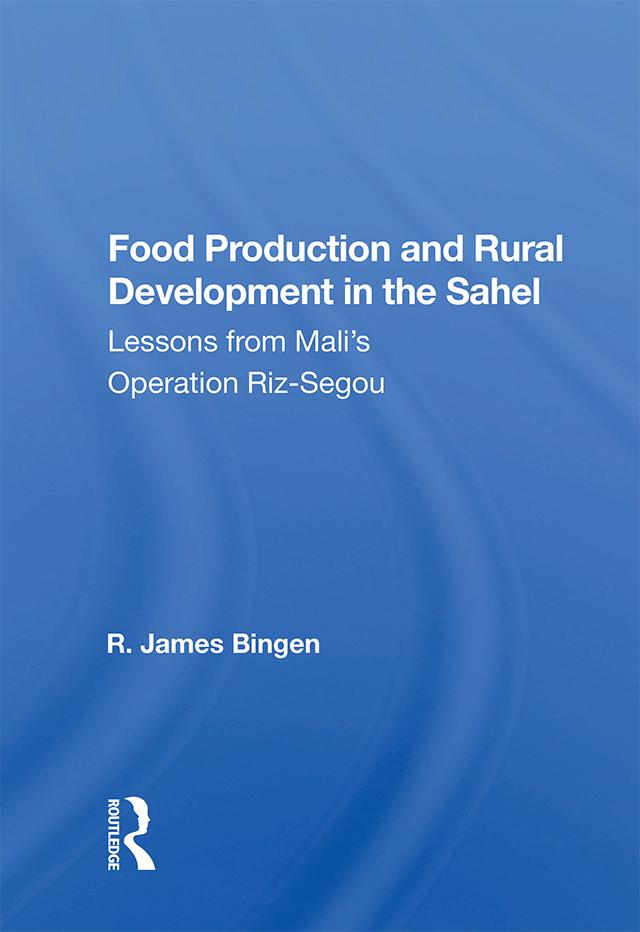
In Mali and throughout the Sahel, governments increasingly rely on parastatal organizations to overcome the problems of lagging food production and rural poverty. This book examines the political and economic consequences of the efforts of one organization, Operation Riz-Segou in Mali, to increase smallholder food and cash crop production. Drawing extensively on fieldwork in Mali, the author finds that significant investments in irrigation facilities, financed by foreign aid, have not reduced the smallholder's vulnerability to the risks posed by weather and uncertain flood levels of the Niger River. The extension system discourages smallholder investment for long-term agricultural development because of its preoccupation with supervision and administrative control. Moreover, the Operation engages in many popular rural development activities—literacy programs, farmer training, women's artisanal centers—that give the facade of grassroots participation but in reality do not provide villagers a critically needed voice in local program administration. Comparing Operation Riz-Segou to similar parastatal agricultural development programs in the Sahel, Dr. Bingen discusses why only those policies deliberately designed and carefully implemented to share power with the majority of the people can lay the political and economic foundation required to overcome rural poverty and resolve the food crisis in the Sahel.
Betala smidigt med kort, Klarna, Apple Pay eller Google Pay. Är du inte nöjd har du alltid 14 dagars ångerrätt. Läs mer i våra villkor. Har du några frågor, mejla oss på hello@memmo.org.
Memmo gör det enklare att plugga – var du än är i världen. Hos oss samlar du kursböcker och smarta studieverktyg på ett och samma ställe: sammanfattningar, quiz, poddar och flashcards. Och så Ted, din studiekompis som svarar på allt du undrar. Över 50 000 studenter pluggar redan här – byggt för att du ska lära dig snabbare och stressa mindre.
Du kanske också gillar
Köp boken0