
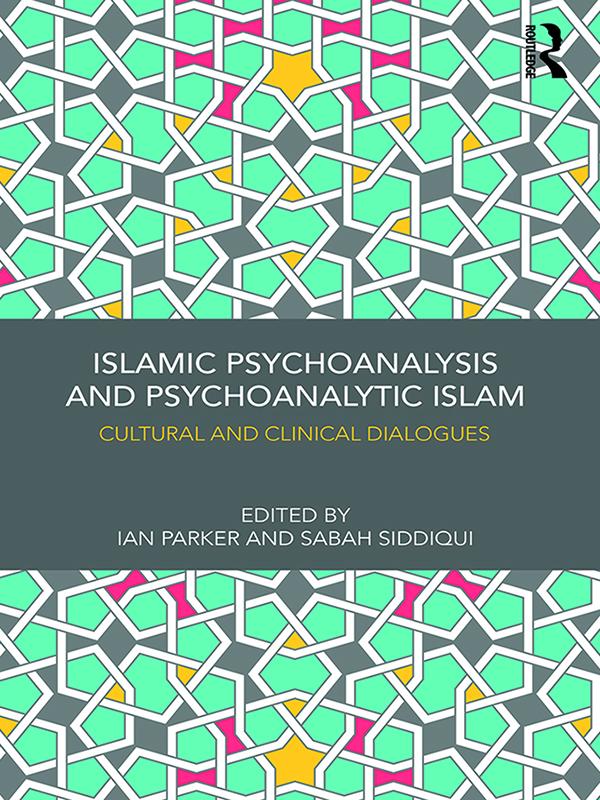
This pioneering volume brings together scholars and clinicians working at the intersection of Islam and psychoanalysis to explore both the connections that link these two traditions, as well as the tensions that exist between them.
Uniting authors from a diverse range of traditions and perspectives, including Freudian, Jungian, Lacanian, Object-Relations, and Group-Analytic, the book creates a dialogue through which several key questions can be addressed. How can Islam be rendered amenable to psychoanalytic interpretation? What might an ‘Islamic psychoanalysis’ look like that accompanies and questions the forms of psychoanalysis that developed in the West? And what might a ‘psychoanalytic Islam’ look like that speaks for, and perhaps even transforms, the forms of truth that Islam produces?
In an era of increasing Islamophobia in the West, this important book identifies areas where clinical practice can be informed by a deeper understanding of contemporary Islam, as well as what it means to be a Muslim today. It will appeal to trainees and practitioners of psychoanalysis and psychotherapy, as well as scholars interested in religion and Islamic studies.
Betala smidigt med kort, Klarna, Apple Pay eller Google Pay. Är du inte nöjd har du alltid 14 dagars ångerrätt. Läs mer i våra villkor. Har du några frågor, mejla oss på hello@memmo.org.
Memmo gör det enklare att plugga – var du än är i världen. Hos oss samlar du kursböcker och smarta studieverktyg på ett och samma ställe: sammanfattningar, quiz, poddar och flashcards. Och så Ted, din studiekompis som svarar på allt du undrar. Över 50 000 studenter pluggar redan här – byggt för att du ska lära dig snabbare och stressa mindre.