
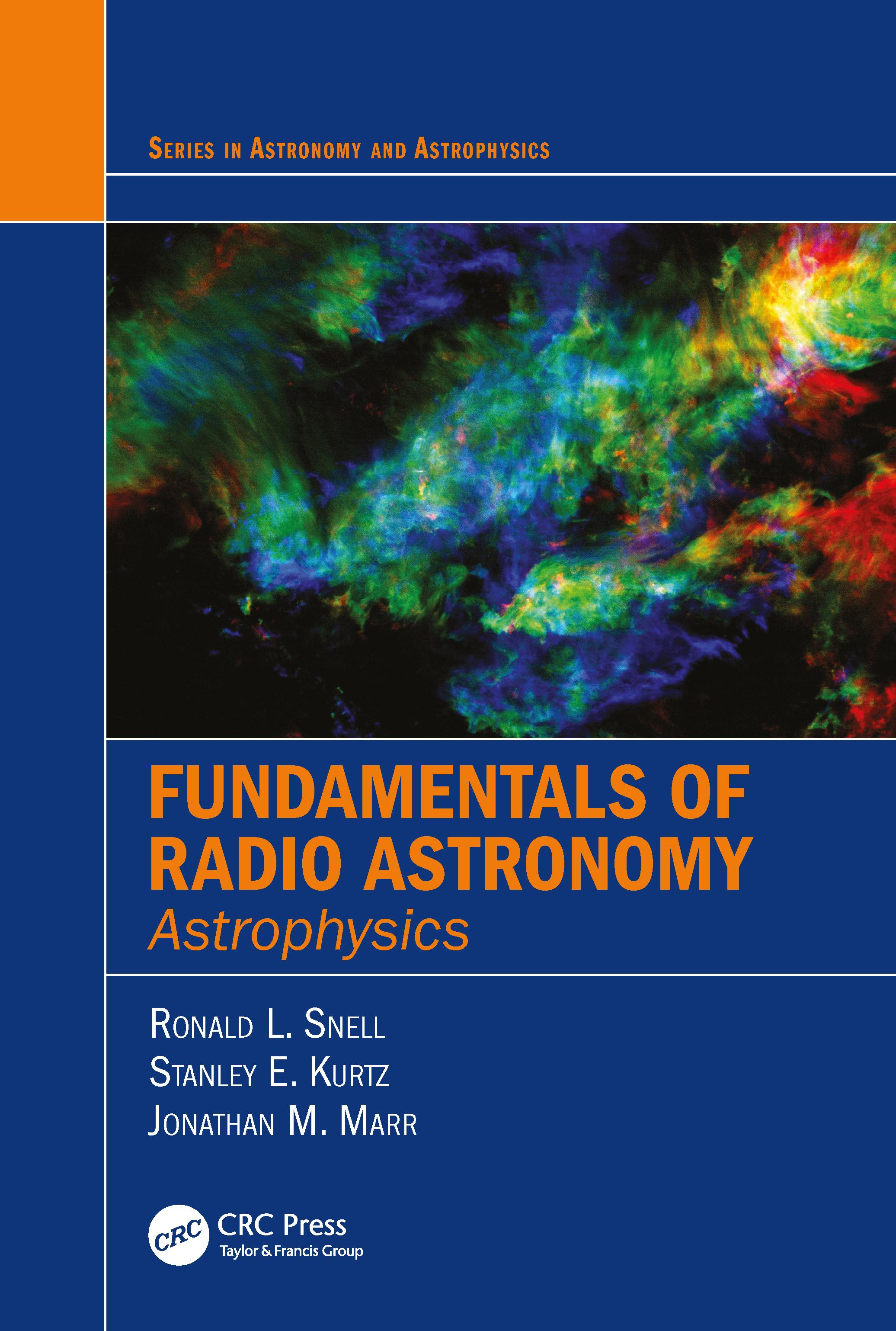
As demonstrated by five Nobel Prizes in physics, radio astronomy has contributed greatly to our understanding of the Universe. Courses covering this subject are, therefore, very important in the education of the next generation of scientists who will continue to explore the Cosmos.
This textbook, the second of two volumes, presents an extensive introduction to the astrophysical processes that are studied in radio astronomy. Suitable for undergraduate courses on radio astronomy, it discusses the physical phenomena that give rise to radio emissions, presenting examples of astronomical objects, and illustrating how the relevant physical parameters of astronomical sources can be obtained from radio observations.
Unlike other radio astronomy textbooks, this book provides students with an understanding of the background and the underlying principles, with derivations available for most of the equations used in the textbook.
Features:
- Presents a clear and concise discussion of the important astronomical concepts and physical processes that give rise to both radio continuum and radio spectral line emission
- Discusses radio emissions from a variety of astronomical sources and shows how the observed emissions can be used to derive the physical properties of these sources
-
Includes numerous examples using actual data from the literature
Betala smidigt med kort, Klarna, Apple Pay eller Google Pay. Är du inte nöjd har du alltid 14 dagars ångerrätt. Läs mer i våra villkor. Har du några frågor, mejla oss på hello@memmo.org.
Memmo gör det enklare att plugga – var du än är i världen. Hos oss samlar du kursböcker och smarta studieverktyg på ett och samma ställe: sammanfattningar, quiz, poddar och flashcards. Och så Ted, din studiekompis som svarar på allt du undrar. Över 50 000 studenter pluggar redan här – byggt för att du ska lära dig snabbare och stressa mindre.