
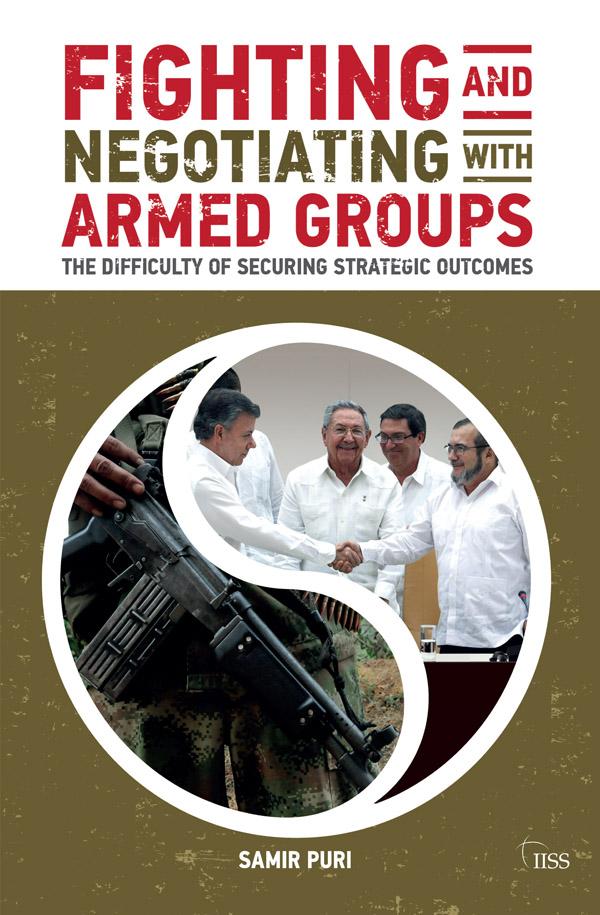
What constitutes an effective and realistic strategy for dealing with non-state armed groups? This question has bedevilled states the world over. From Colombia and FARC, Turkey and the PKK, the Taliban in Afghanistan and Pakistan, and the persistent insurgency in Iraq – the governments concerned struggle to either fight or negotiate their way to an end.
Fighting armed groups is an uncertain business, and so is negotiating. Doing both alternately, concurrently or selectively, is highly demanding. This book develops a framework to help analysts and policymakers understand the challenges of using a combination of coercion and diplomacy in dealing with armed groups. It considers which complexities have proved most inhibiting, and which have been worked around. What are the obvious traps that states fall into? What appear to be the smarter moves?
Thinking in terms or ‘military’ or ‘political’ solutions is unhelpful – to be genuinely strategic, a response must concern itself with managing the mix. Ten examples from around the world are worked through to examine this theme. The net is cast wide purposefully, so that the lessons for strategy can be made explicit, rather than lost amid a bloody contemporary history of wars involving armed groups.
Betala smidigt med kort, Klarna, Apple Pay eller Google Pay. Är du inte nöjd har du alltid 14 dagars ångerrätt. Läs mer i våra villkor. Har du några frågor, mejla oss på hello@memmo.org.
Memmo gör det enklare att plugga – var du än är i världen. Hos oss samlar du kursböcker och smarta studieverktyg på ett och samma ställe: sammanfattningar, quiz, poddar och flashcards. Och så Ted, din studiekompis som svarar på allt du undrar. Över 50 000 studenter pluggar redan här – byggt för att du ska lära dig snabbare och stressa mindre.