
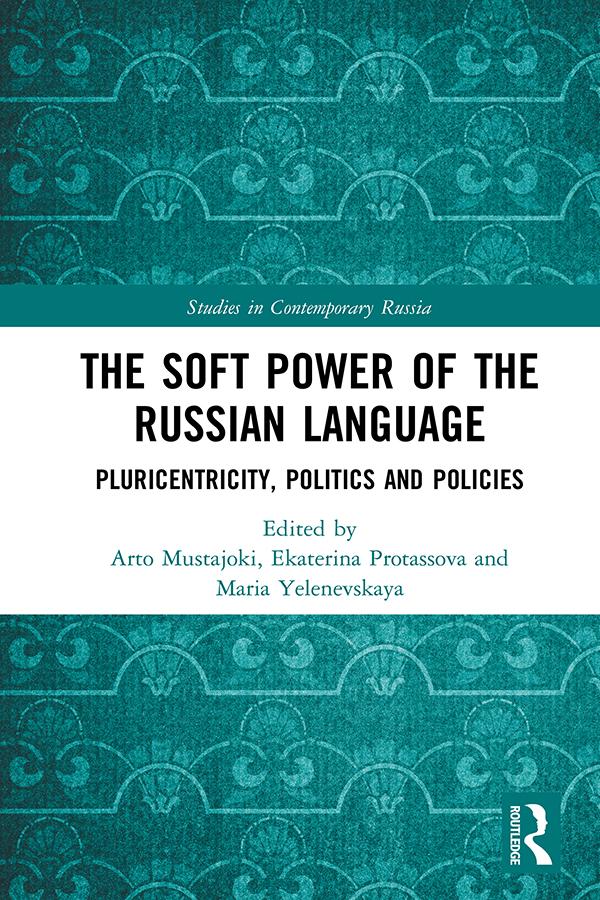
Exploring Russian as a pluricentric language, this book provides a panoramic view of its use within and outside the nation and discusses the connections between language, politics, ideologies, and cultural contacts.
Russian is widely used across the former Soviet republics and in the diaspora, but speakers outside Russia deviate from the metropolis in their use of the language and their attitudes towards it. Using country case studies from across the former Soviet Union and beyond, the contributors analyze the unifying role of the Russian language for developing transnational connections and show its value in the knowledge economy. They demonstrate that centrifugal developments of Russian and its pluricentricity are grounded in the language and education policies of their host countries, as well as the goals and functions of cultural institutions, such as schools, media, travel agencies, and others created by émigrés for their co-ethnics. This book also reveals the tensions between Russia’s attempts to homogenize the 'Russian world' and the divergence of regional versions of Russian reflecting cultural hybridity of the diaspora.
Interdisciplinary in its approach, this book will prove useful to researchers of Russian and post-Soviet politics, Russian studies, Russian language and culture, linguistics, and immigration studies. Those studying multilingualism and heritage language teaching may also find it interesting.
Betala smidigt med kort, Klarna, Apple Pay eller Google Pay. Är du inte nöjd har du alltid 14 dagars ångerrätt. Läs mer i våra villkor. Har du några frågor, mejla oss på hello@memmo.org.
Memmo gör det enklare att plugga – var du än är i världen. Hos oss samlar du kursböcker och smarta studieverktyg på ett och samma ställe: sammanfattningar, quiz, poddar och flashcards. Och så Ted, din studiekompis som svarar på allt du undrar. Över 75 000 studenter pluggar redan här – byggt för att du ska lära dig snabbare och stressa mindre.