
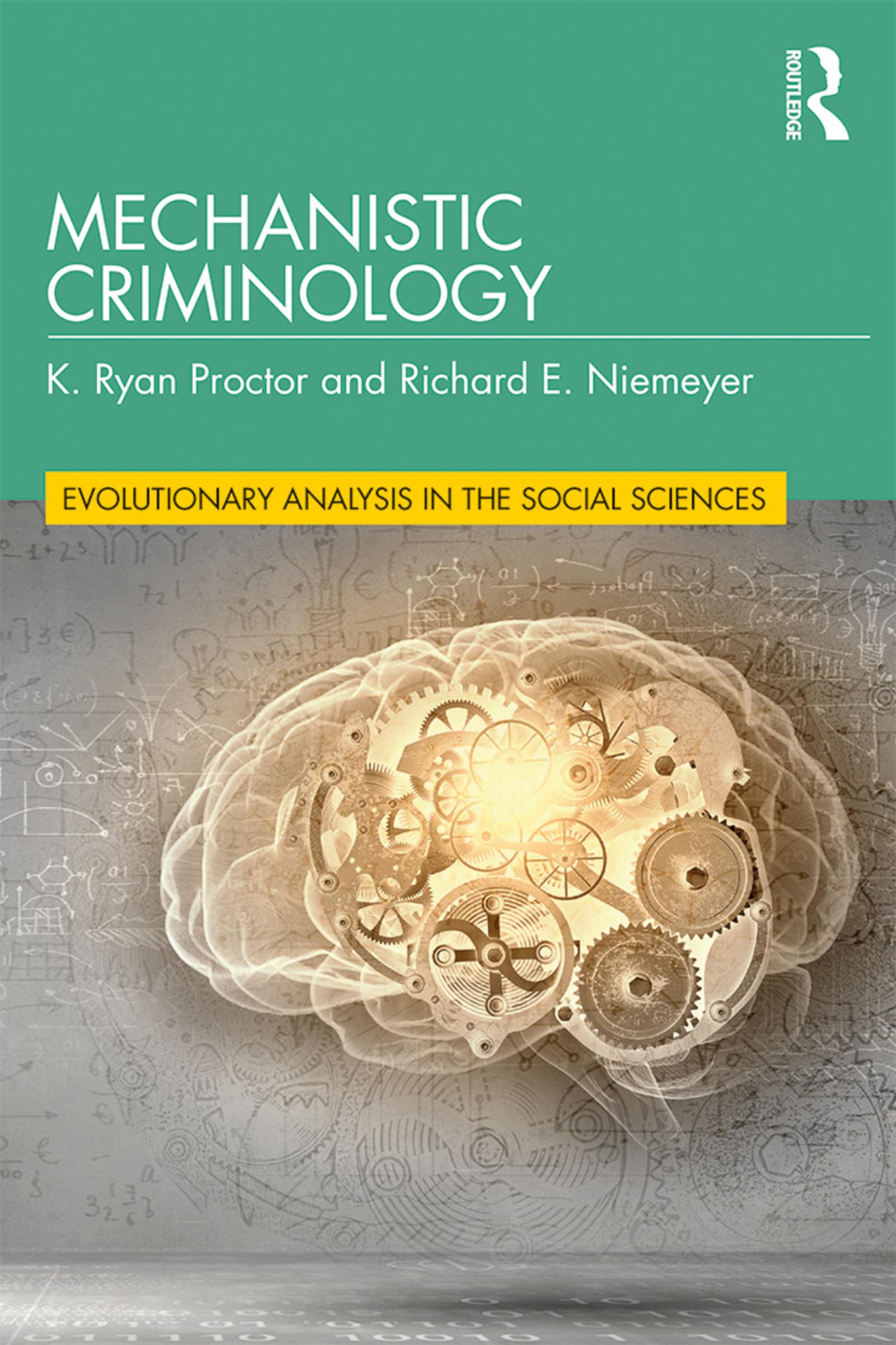
The science of criminology is at a crossroads. Despite accumulating a dizzying array of facts about crime, the field has yet to identify a body of theories that allows for the adequate prediction, explanation, and control of phenomena of central interest to criminologists. Mechanistic Criminology locates this problem within the field’s failure to conform to the expectations of scientific fields and reliance on antiquated methods of theory construction. The authors contend that this failure has resulted in an inability of criminologists to engage in theory falsification and competition—two central activities of science—that produce the forms of reliable knowledge that are unique to scientific fields.
Mechanistic Criminology advocates for the adoption of a mechanistic mode of theorizing to allow criminologists to engage in theory falsification and competition and ignite rapid scientific discovery in the field. The proposed method is the same one employed within the biological sciences, which is responsible for their rapid scientific progress in the late twentieth and early twenty-first centuries. Should criminologists adopt this mechanistic approach, criminology could experience the same scientific revolution that is occurring in the biological sciences, and criminologists would generate the knowledge necessary for the prediction, explanation, and control of crime.
Betala smidigt med kort, Klarna, Apple Pay eller Google Pay. Är du inte nöjd har du alltid 14 dagars ångerrätt. Läs mer i våra villkor. Har du några frågor, mejla oss på hello@memmo.org.
Memmo gör det enklare att plugga – var du än är i världen. Hos oss samlar du kursböcker och smarta studieverktyg på ett och samma ställe: sammanfattningar, quiz, poddar och flashcards. Och så Ted, din studiekompis som svarar på allt du undrar. Över 50 000 studenter pluggar redan här – byggt för att du ska lära dig snabbare och stressa mindre.