
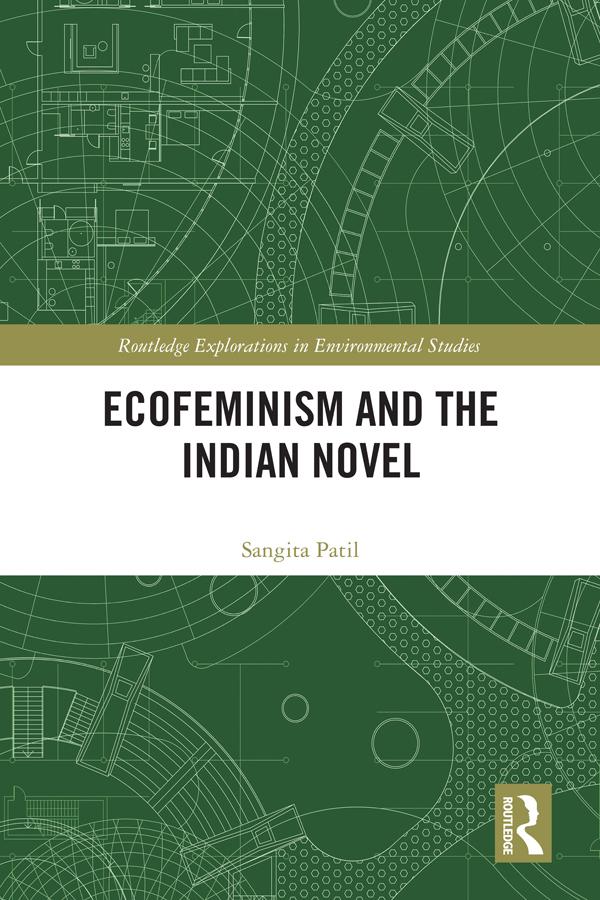
Ecofeminism and the Indian Novel tests the theories of ecofeminism against the background of India’s often different perceptions of environmental problems, challenging the hegemony of Western culture in thinking about human problems. This book moves beyond a simple application of the concepts of ecofeminism, instead explaining the uniqueness of Indian novels as narratives of ecofeminism and how they can contribute to the development of the theory of ecofeminism.
In examining a selection of novels, the author argues that Indian texts conceptualize the ecological crisis more as a human problem than as a gender problem. The book proposes that we should think of ecofeminism as ecohumanism instead, seeing human beings and nature as a part of a complex web. Novels analysed within the text include Kamala Markandaya’s Nectar in a Sieve (1954), Shivram Karanth’s Return to Earth (2002) and Na D’Souza’s Dweepa (2013).
Ecofeminism and the Indian Novel will be of great interest to students and scholars of ecofeminism, ecocriticism, ecological feminism, environmental humanities, gender studies, ecological humanities, feminist studies and Indian literature.
Betala smidigt med kort, Klarna, Apple Pay eller Google Pay. Är du inte nöjd har du alltid 14 dagars ångerrätt. Läs mer i våra villkor. Har du några frågor, mejla oss på hello@memmo.org.
Memmo gör det enklare att plugga – var du än är i världen. Hos oss samlar du kursböcker och smarta studieverktyg på ett och samma ställe: sammanfattningar, quiz, poddar och flashcards. Och så Ted, din studiekompis som svarar på allt du undrar. Över 50 000 studenter pluggar redan här – byggt för att du ska lära dig snabbare och stressa mindre.