
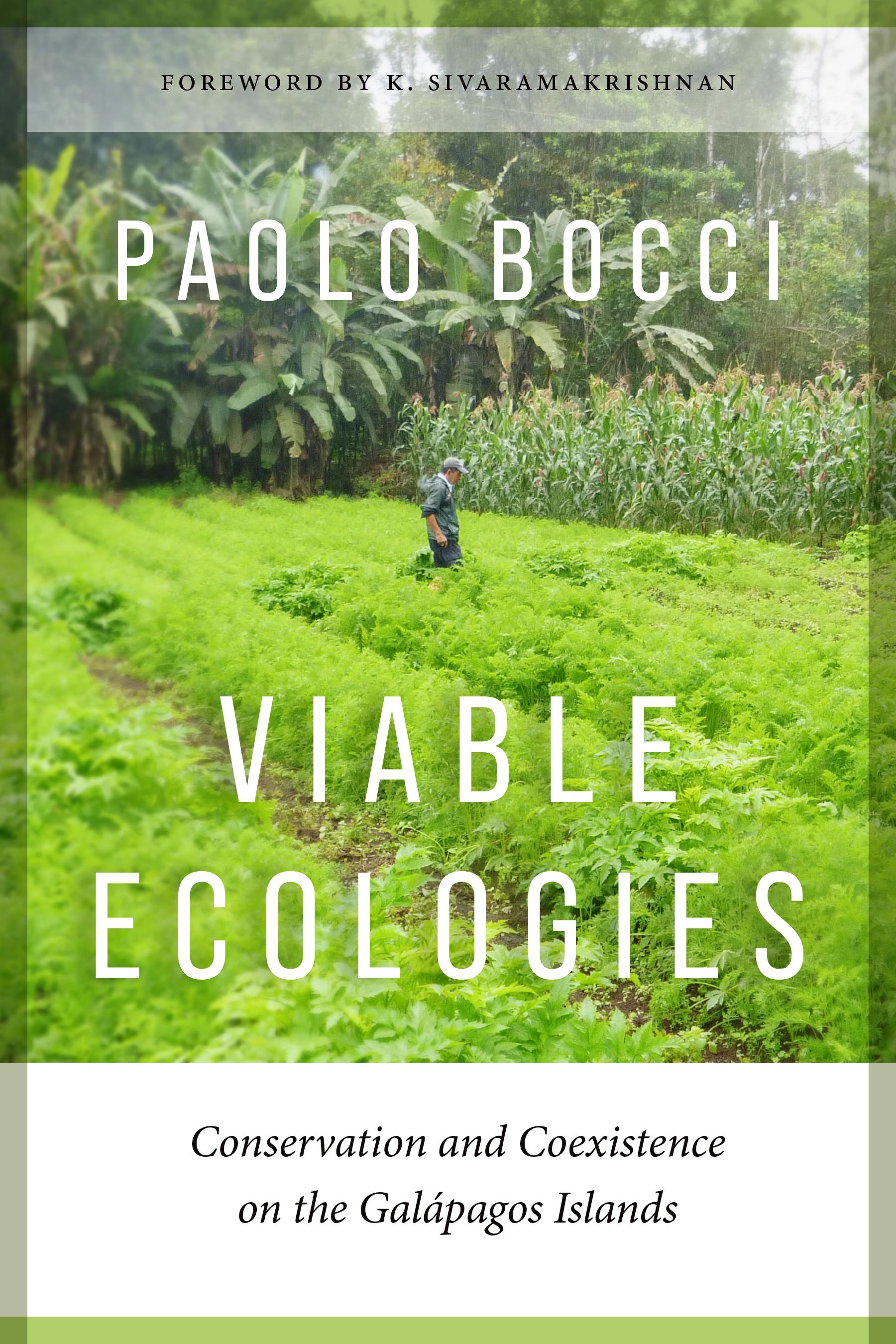
How humans living amid an abundance of diverse flora and fauna help us rethink conservation
Famous for their geographic isolation and high proportion of endemic species, the Galápagos Islands have long been promoted as the premier destination for tourists and scientists seeking to escape humanity's impact on the world. This idyllic vision dominates the islands' conservation policy, which, despite calls for a more integrated human-environment approach, continues to emphasize restoration. It ignores the people who call the Galápagos home, who must instead partner with their plant and animal neighbors to secure a thriving future for all.
Drawing on years of fieldwork, Paolo Bocci's Viable Ecologies brings attention to the farmers and other marginalized locals who enact their own ways of caring for, and living on, the islands. Through extended observation and experimentation, they craft conservation strategies based on mutual dependence and long-term accountability. They fuse their livelihoods to the ecosystems around them and, in doing so, challenge the image of the Galápagos as a place to be studied and visited but never inhabited. As Bocci argues, the farmers' methods of remediation and recuperation broaden the scope of what conservation can—and should—be.
Connecting environmental policy and science to matters of immigration and belonging, Viable Ecologies offers strategies for crafting a future in which humans and nonhumans may thrive.
Betala smidigt med kort, Klarna, Apple Pay eller Google Pay. Är du inte nöjd har du alltid 14 dagars ångerrätt. Läs mer i våra villkor. Har du några frågor, mejla oss på hello@memmo.org.
Memmo gör det enklare att plugga – var du än är i världen. Hos oss samlar du kursböcker och smarta studieverktyg på ett och samma ställe: sammanfattningar, quiz, poddar och flashcards. Och så Ted, din studiekompis som svarar på allt du undrar. Över 50 000 studenter pluggar redan här – byggt för att du ska lära dig snabbare och stressa mindre.