
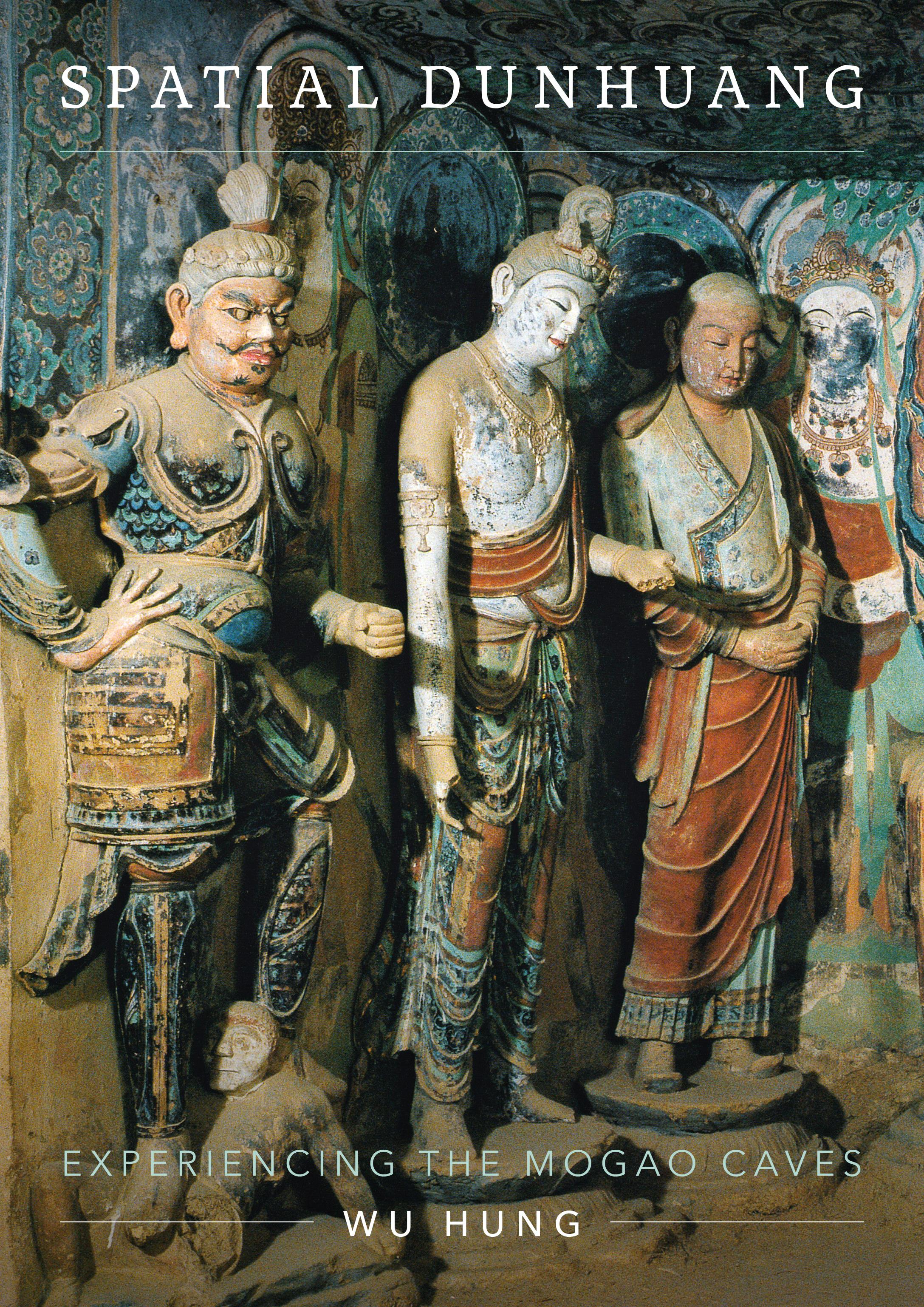
Constructed over a millennium from the fourth to fourteenth centuries CE near Dunhuang, an ancient border town along the Silk Road in northwest China, the Mogao Caves comprise the largest, most continuously created, and best-preserved treasure trove of Buddhist art in the world. Previous overviews of the art of Dunhuang have traced the caves' unilinear history. This book examines the caves from the perspective of space, treating them as physical and historical sites that can be approached, entered, and understood sensually. It prioritizes the actual experiences of the people of the past who built and used the caves.
Five spatial contexts provide rich material for analysis: Dunhuang as a multicultural historic place; the Mogao Cave complex as an evolving entity; the interior space of caves; interaction of the visual program with architectural space; and pictorial space within wall paintings that draws viewers into an otherworldly time. With its novel approach to this repository of religious art, Spatial Dunhuang will be a must-read for anyone interested in Buddhist art and for visitors to Dunhuang.
Betala smidigt med kort, Klarna, Apple Pay eller Google Pay. Är du inte nöjd har du alltid 14 dagars ångerrätt. Läs mer i våra villkor. Har du några frågor, mejla oss på hello@memmo.org.
Memmo gör det enklare att plugga – var du än är i världen. Hos oss samlar du kursböcker och smarta studieverktyg på ett och samma ställe: sammanfattningar, quiz, poddar och flashcards. Och så Ted, din studiekompis som svarar på allt du undrar. Över 50 000 studenter pluggar redan här – byggt för att du ska lära dig snabbare och stressa mindre.