
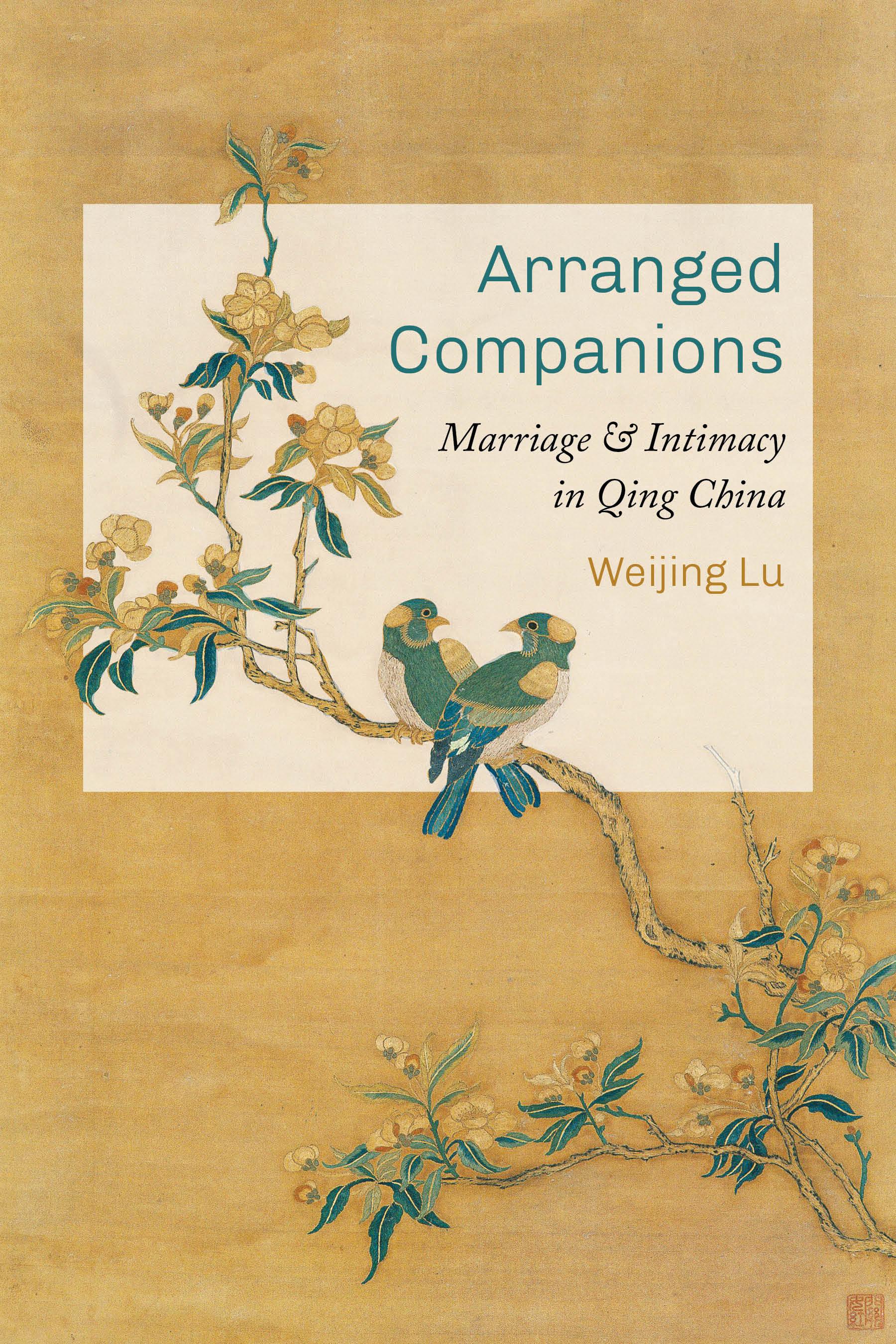
Questions conventional assumptions about premodern conjugal relationships
Although commonly associated with patriarchal oppression, arranged marriages have adapted over the centuries to changing cultural norms and the lived experiences of men and women. In Arranged Companions, historian Weijing Lu chronicles how marital behaviors during the early and High Qing (mid-seventeenth through mid-nineteenth centuries) were informed by rich and complex traditions and mediated by the historical conditions of the period, during which marital affection was celebrated as a basic ingredient of an ideal marriage.
Lu finds public representation and private communication of marital affection in personal records, including poetry, biographies, letters, and memoirs. During this unique historical moment, ideals of marital companionship and love came to fruition while social changes also created new tensions for couples and extended families. Offering surprising revelations about conjugal relations during this time of change, Arranged Companions raises provocative questions about the cultural construction of intimacy and the meaning of a “happy marriage.”
Betala smidigt med kort, Klarna, Apple Pay eller Google Pay. Är du inte nöjd har du alltid 14 dagars ångerrätt. Läs mer i våra villkor. Har du några frågor, mejla oss på hello@memmo.org.
Memmo gör det enklare att plugga – var du än är i världen. Hos oss samlar du kursböcker och smarta studieverktyg på ett och samma ställe: sammanfattningar, quiz, poddar och flashcards. Och så Ted, din studiekompis som svarar på allt du undrar. Över 50 000 studenter pluggar redan här – byggt för att du ska lära dig snabbare och stressa mindre.