
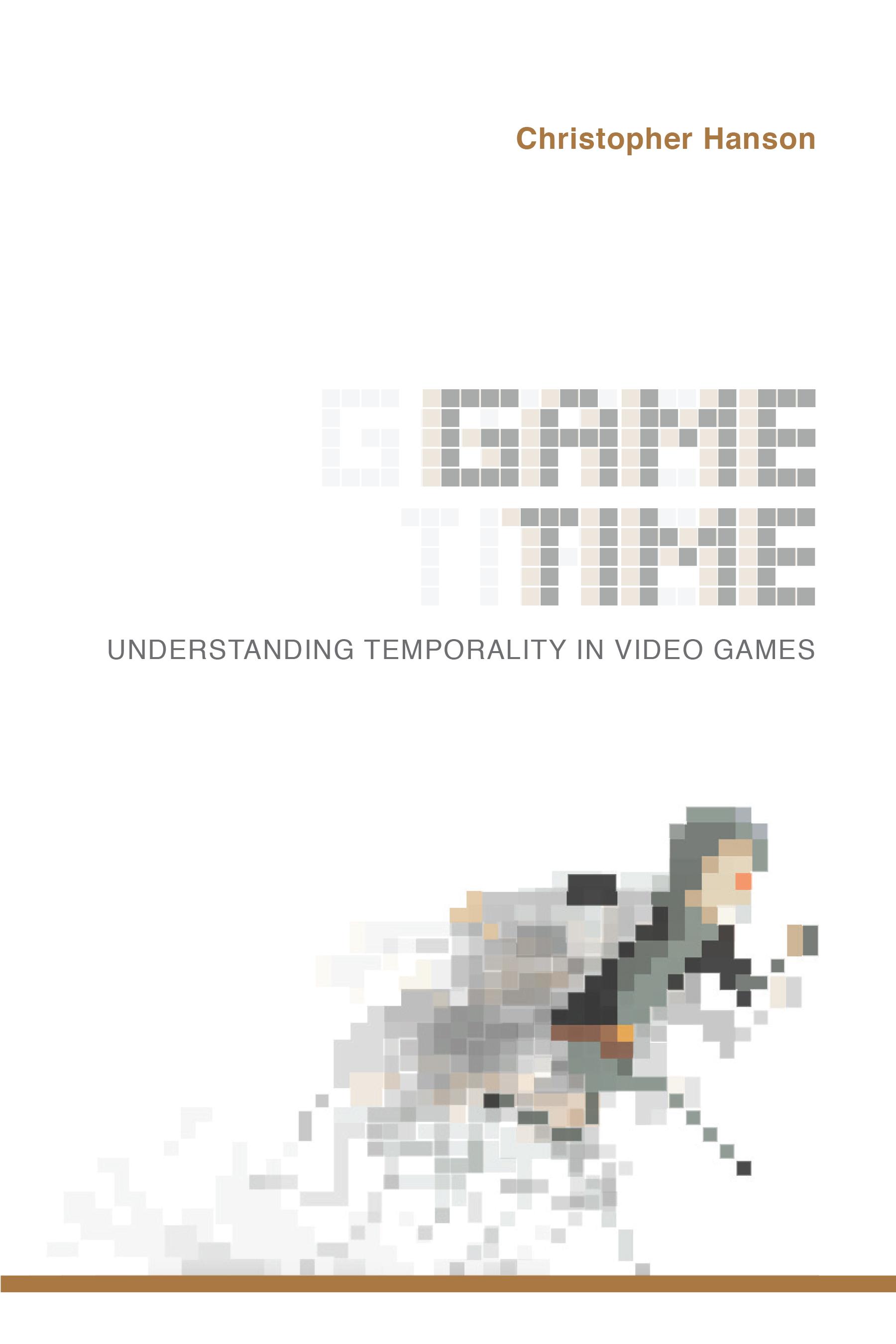
Preserving, pausing, slowing, rewinding, replaying, reactivating, reanimating Has the ability to manipulate video game timelines altered our cultural conceptions of time?
Video game scholar Christopher Hanson argues that the mechanics of time in digital games have presented a new model for understanding time in contemporary culture, a concept he calls "game time." Multivalent in nature, game time is characterized by apparent malleability, navigability, and possibility while simultaneously being highly restrictive and requiring replay and repetition. When compared to analog tabletop games, sports, film, television, and other forms of media, Hanson demonstrates that the temporal structures of digital games provide unique opportunities to engage players with liveness, causality, potentiality, and lived experience that create new ways of experiencing time
Featuring comparative analysis of key video games titles—including Braid, Quantum Break, Battle of the Bulge, Prince of Persia: The Sands of Time, Passage, The Legend of Zelda: The Ocarina of Time, Lifeline, and A Dark Room.
Betala smidigt med kort, Klarna, Apple Pay eller Google Pay. Är du inte nöjd har du alltid 14 dagars ångerrätt. Läs mer i våra villkor. Har du några frågor, mejla oss på hello@memmo.org.
Memmo gör det enklare att plugga – var du än är i världen. Hos oss samlar du kursböcker och smarta studieverktyg på ett och samma ställe: sammanfattningar, quiz, poddar och flashcards. Och så Ted, din studiekompis som svarar på allt du undrar. Över 50 000 studenter pluggar redan här – byggt för att du ska lära dig snabbare och stressa mindre.