
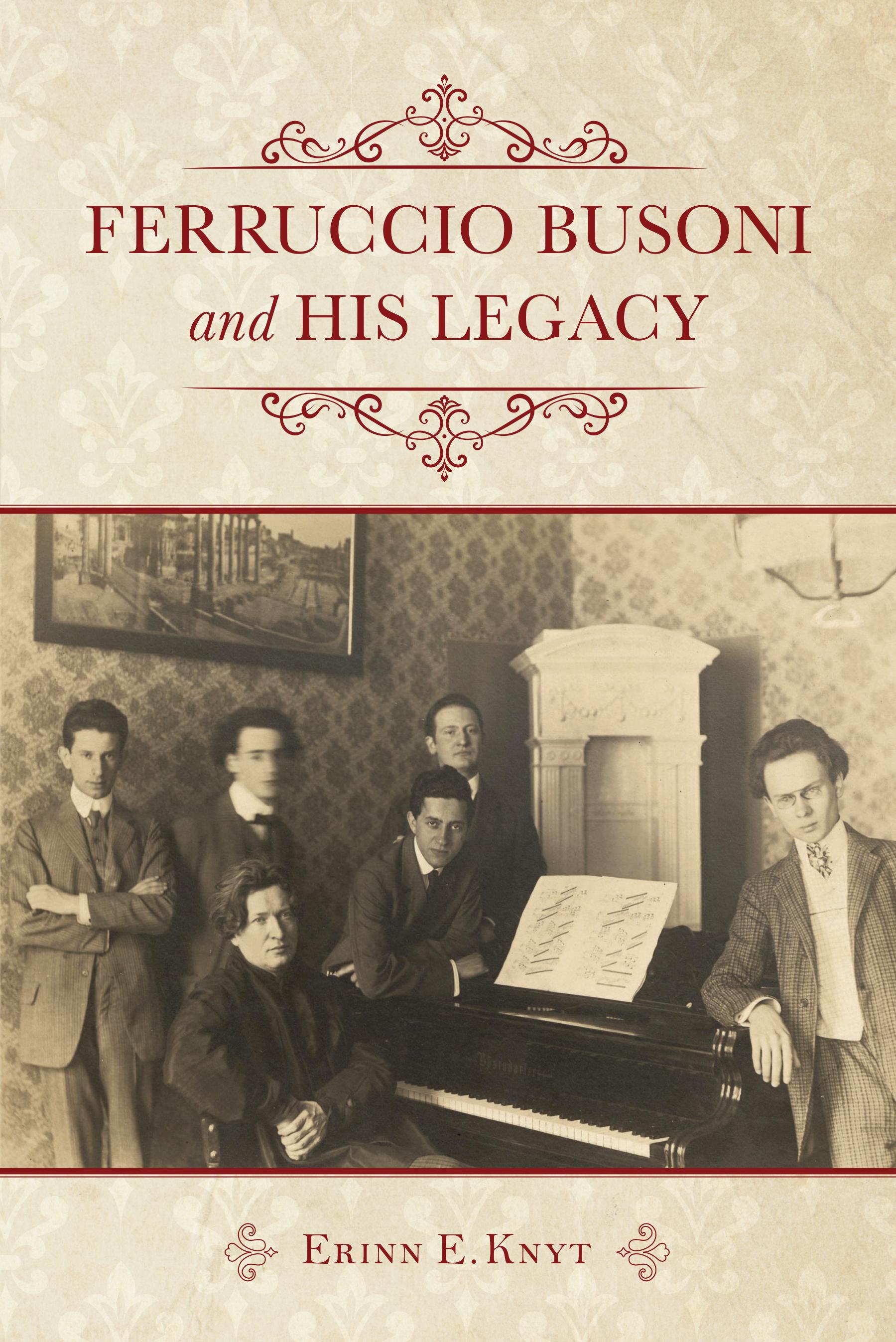
Many students of renowned composer, conductor, and teacher Ferruccio Busoni had illustrious careers of their own, yet the extent to which their mentor's influence helped shape their success was largely unexplored until now. Through rich archival research including correspondence, essays, and scores, Erinn E. Knyt presents an evocative account of Busoni's idiosyncratic pedagogy—focused on aesthetic ideals rather than methodologies or techniques—and how this teaching style and philosophy can be seen and heard in the Nordic-inspired musical works of Sibelius, the unusual soundscapes of Varèse, the polystylistic meldings of music and technology in Louis Gruenberg's radio operas and film scores, the electronic music of Otto Luening, and the experimentalism of Philip Jarnach. Equal parts critical biography and interpretive analysis, Knyt's work compels a reconsideration of Busoni's legacy and puts forth the notion of a "Busoni School" as one that shaped the trajectory of twentieth-century music.
Betala smidigt med kort, Klarna, Apple Pay eller Google Pay. Är du inte nöjd har du alltid 14 dagars ångerrätt. Läs mer i våra villkor. Har du några frågor, mejla oss på hello@memmo.org.
Memmo gör det enklare att plugga – var du än är i världen. Hos oss samlar du kursböcker och smarta studieverktyg på ett och samma ställe: sammanfattningar, quiz, poddar och flashcards. Och så Ted, din studiekompis som svarar på allt du undrar. Över 50 000 studenter pluggar redan här – byggt för att du ska lära dig snabbare och stressa mindre.