
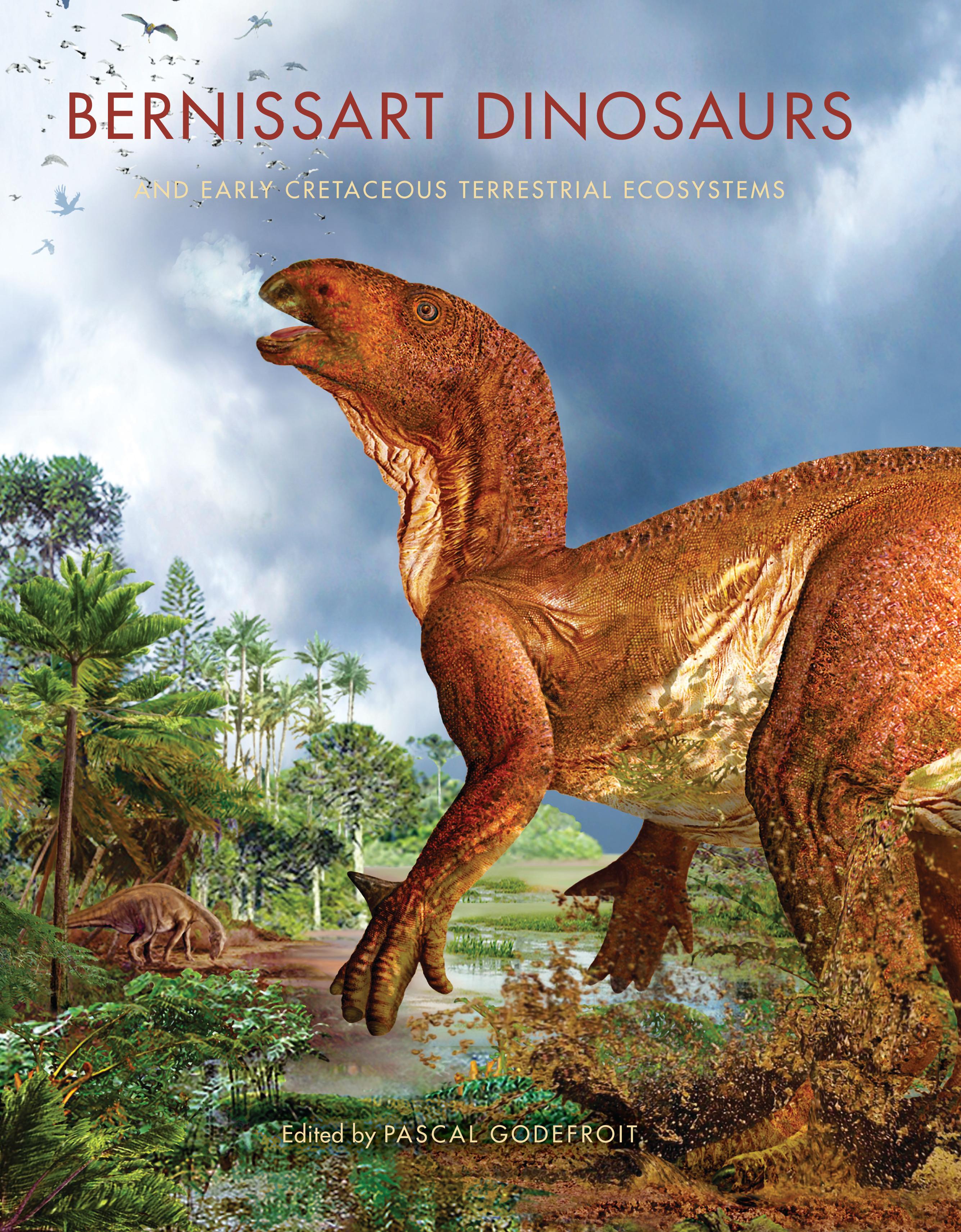
Bernissart Dinosaurs and Early Cretaceous Terrestrial Ecosystems
In 1878, the first complete dinosaur skeleton was discovered in a coal mine in Bernissart, Belgium. Iguanodon, first described by Gideon Mantell on the basis of fragments discovered in England in 1824, was initially reconstructed as an iguana-like reptile or a heavily built, horned quadruped. However, the Bernissart skeleton changed all that. The animal was displayed in an upright posture similar to a kangaroo, and later with its tail off the ground like the dinosaur we know of today. Focusing on the Bernissant discoveries, this book presents the latest research on Iguanodon and other denizens of the Cretaceous ecosystems of Europe, Asia, and Africa. Pascal Godefroit and contributors consider the Bernissart locality itself and the new research programs that are underway there. The book also presents a systematic revision of Iguanodon; new material from Spain, Romania, China, and Kazakhstan; studies of other Early Cretaceous terrestrial ecosystems; and examinations of Cretaceous vertebrate faunas.
Betala smidigt med kort, Klarna, Apple Pay eller Google Pay. Är du inte nöjd har du alltid 14 dagars ångerrätt. Läs mer i våra villkor. Har du några frågor, mejla oss på hello@memmo.org.
Memmo gör det enklare att plugga – var du än är i världen. Hos oss samlar du kursböcker och smarta studieverktyg på ett och samma ställe: sammanfattningar, quiz, poddar och flashcards. Och så Ted, din studiekompis som svarar på allt du undrar. Över 50 000 studenter pluggar redan här – byggt för att du ska lära dig snabbare och stressa mindre.