
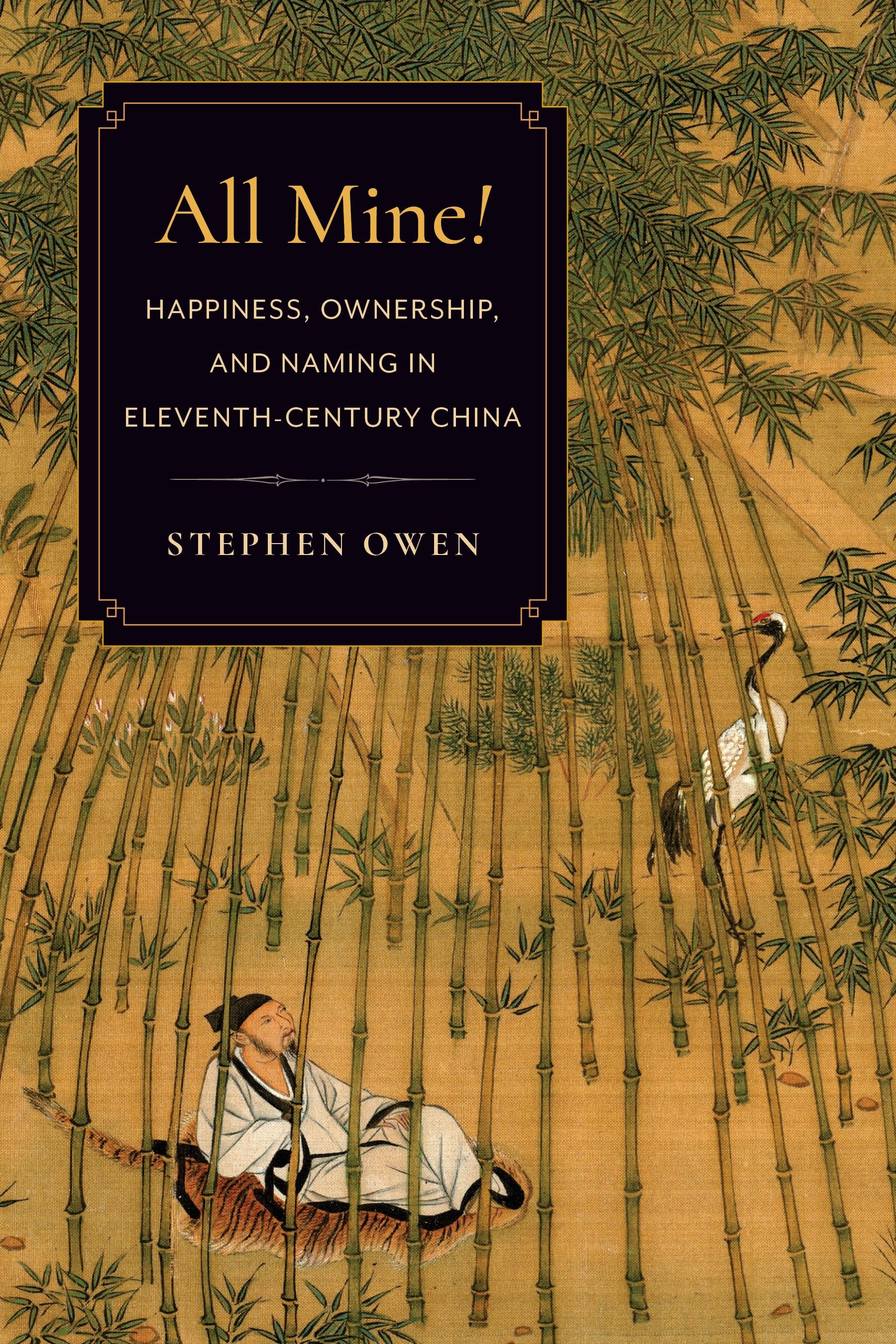
Under the Song Dynasty, China experienced rapid commercial growth and monetization of the economy. In the same period, the austere ethical turn that led to neo-Confucianism was becoming increasingly prevalent in the imperial bureaucracy and literati culture. Tracing the influences of these trends in Chinese intellectual history, All Mine! explores the varied ways in which eleventh-century writers worked through the conflicting values of this new world.
Stephen Owen contends that in the new money economy of the Song, writers became preoccupied with the question of whether material things can bring happiness. Key thinkers returned to this problem, weighing the conflicting influences of worldly possessions and material comfort against Confucian ideology, which locates true contentment in the Way and disdains attachment to things. In a series of essays, Owen examines the works of writers such as the prose master Ouyang Xiu, who asked whether tranquility could be found in the backwater to which he had been exiled; the poet and essayist Su Dongpo, who was put on trial for slandering the emperor; and the historian Sima Guang, whose private garden elicited reflections on private ownership. Through strikingly original readings of major eleventh-century figures, All Mine! inquires not only into the material conditions of happiness but also the broader conditions of knowledge.
Betala smidigt med kort, Klarna, Apple Pay eller Google Pay. Är du inte nöjd har du alltid 14 dagars ångerrätt. Läs mer i våra villkor. Har du några frågor, mejla oss på hello@memmo.org.
Memmo gör det enklare att plugga – var du än är i världen. Hos oss samlar du kursböcker och smarta studieverktyg på ett och samma ställe: sammanfattningar, quiz, poddar och flashcards. Och så Ted, din studiekompis som svarar på allt du undrar. Över 50 000 studenter pluggar redan här – byggt för att du ska lära dig snabbare och stressa mindre.