
Winner, 2023 Morris D. Forkosch Prize, Journal of the History of Ideas
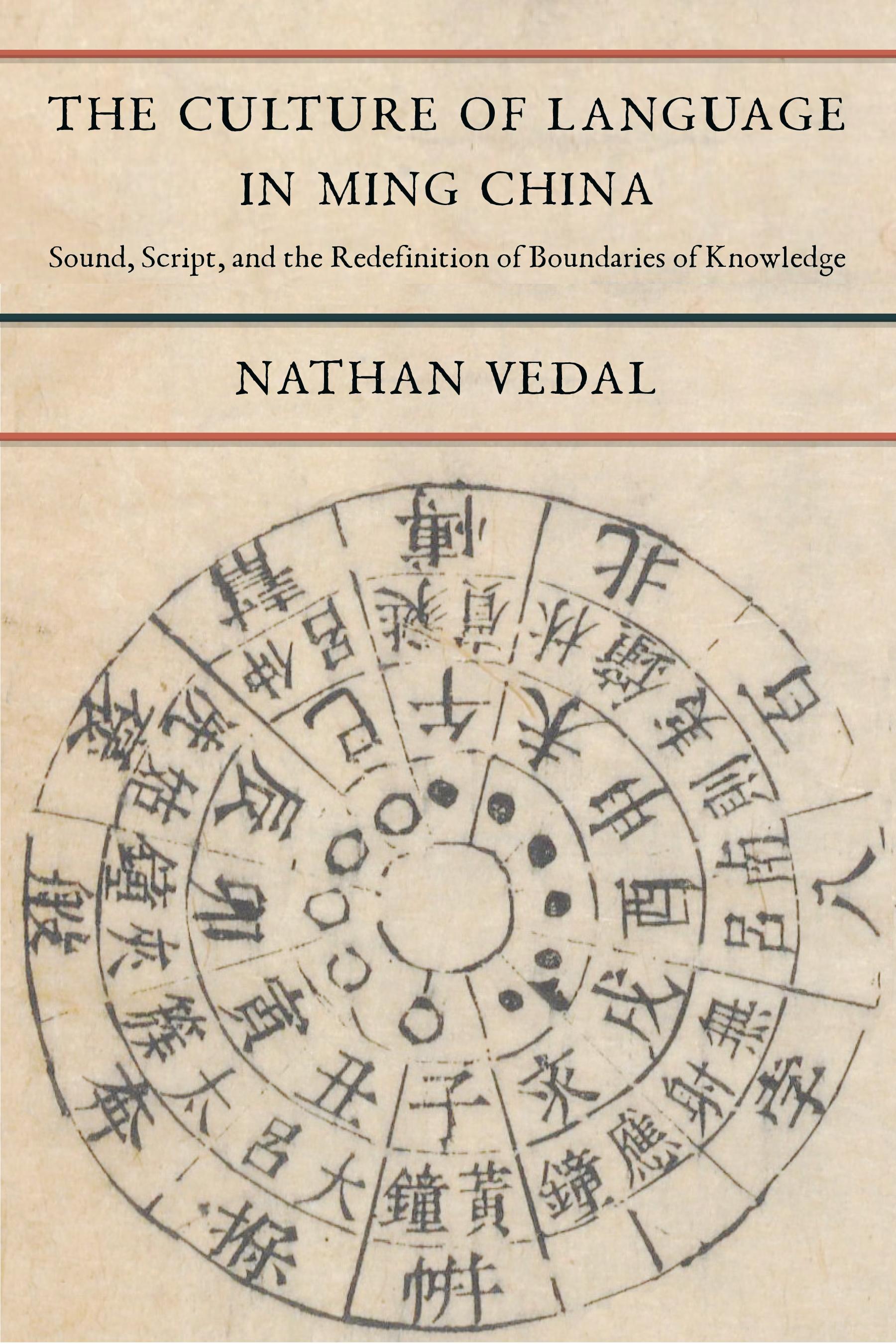
The scholarly culture of Ming dynasty China (1368–1644) is often seen as prioritizing philosophy over concrete textual study. Nathan Vedal uncovers the preoccupation among Ming thinkers with specialized linguistic learning, a field typically associated with the intellectual revolution of the eighteenth century. He explores the collaboration of Confucian classicists and Buddhist monks, opera librettists and cosmological theorists, who joined forces in the pursuit of a universal theory of language.
Drawing on a wide range of overlooked scholarly texts, literary commentaries, and pedagogical materials, Vedal examines how Ming scholars positioned the study of language within an interconnected nexus of learning. He argues that for sixteenth- and seventeenth-century thinkers, the boundaries among the worlds of classicism, literature, music, cosmology, and religion were far more fluid and porous than they became later. In the eighteenth century, Qing thinkers pared away these other fields from linguistic learning, creating a discipline focused on corroborating the linguistic features of ancient texts.
Documenting a major transformation in knowledge production, this book provides a framework for rethinking global early modern intellectual developments. It offers a powerful alternative to the conventional understanding of late imperial Chinese intellectual history by focusing on the methods of scholarly practice and the boundaries by which contemporary thinkers defined their field of study.
Betala smidigt med kort, Klarna, Apple Pay eller Google Pay. Är du inte nöjd har du alltid 14 dagars ångerrätt. Läs mer i våra villkor. Har du några frågor, mejla oss på hello@memmo.org.
Memmo gör det enklare att plugga – var du än är i världen. Hos oss samlar du kursböcker och smarta studieverktyg på ett och samma ställe: sammanfattningar, quiz, poddar och flashcards. Och så Ted, din studiekompis som svarar på allt du undrar. Över 50 000 studenter pluggar redan här – byggt för att du ska lära dig snabbare och stressa mindre.