
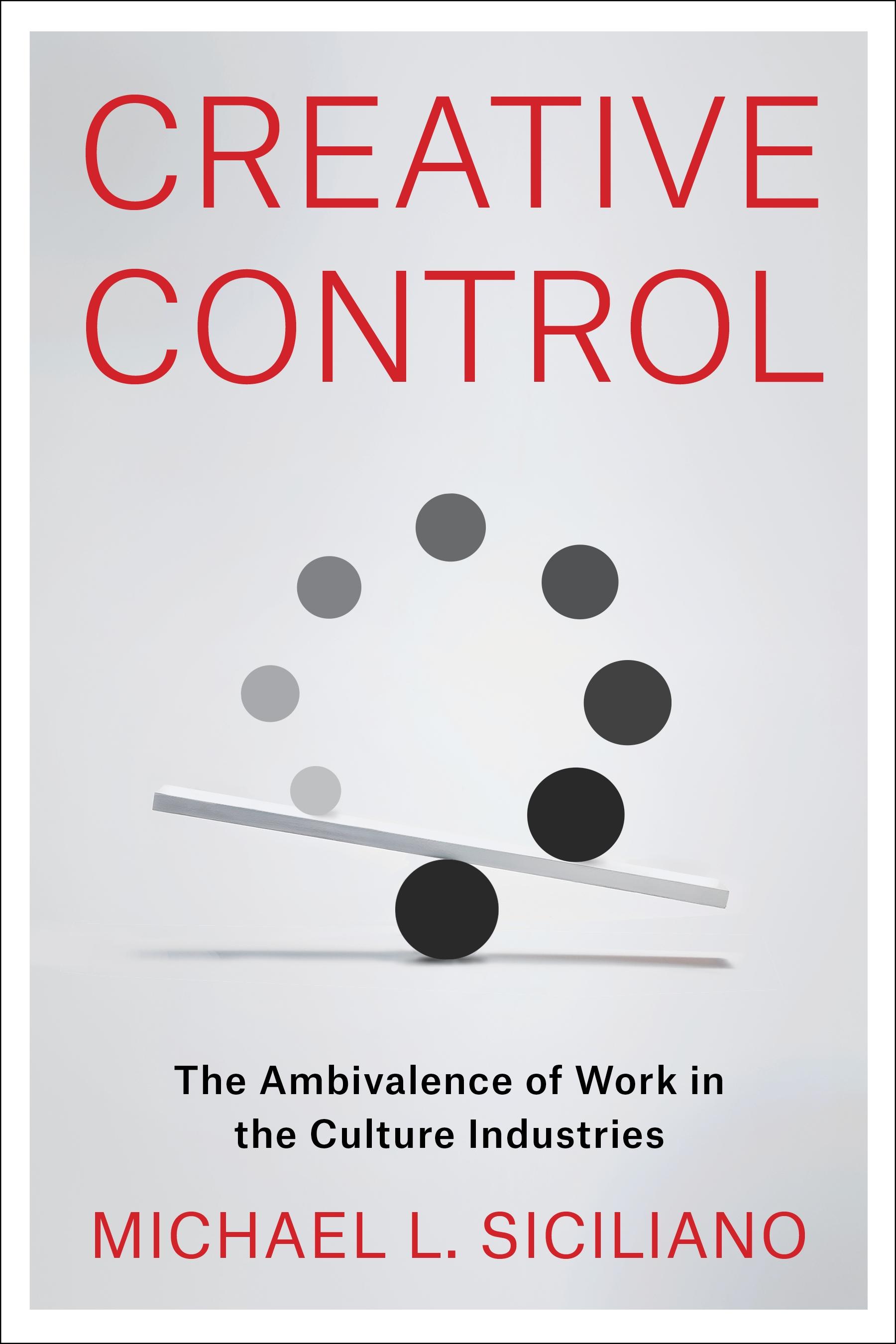
Workers in cultural industries often say that the best part of their job is the opportunity for creativity. At the same time, profit-minded managers at both traditional firms and digital platforms exhort workers to “be creative.” Even as cultural fields hold out the prospect of meaningful employment, they are marked by heightened economic precarity. What does it mean to be creative under contemporary capitalism? And how does the ideology of creativity explain workers’ commitment to precarious jobs?
Michael L. Siciliano draws on nearly two years of ethnographic research as a participant-observer in a Los Angeles music studio and a multichannel YouTube network to explore the contradictions of creative work. He details how such workplaces feature engaging, dynamic processes that enlist workers in organizational projects and secure their affective investment in ideas of creativity and innovation. Siciliano argues that performing creative labor entails a profound ambivalence: workers experience excitement and aesthetic engagement alongside precarity and alienation. Through close comparative analysis, he presents a theory of creative labor that accounts for the roles of embodiment, power, alienation, and technology in the contemporary workplace.
Combining vivid ethnographic detail and keen sociological insight, Creative Control explains why “cool” jobs help us understand how workers can participate in their own exploitation.
Betala smidigt med kort, Klarna, Apple Pay eller Google Pay. Är du inte nöjd har du alltid 14 dagars ångerrätt. Läs mer i våra villkor. Har du några frågor, mejla oss på hello@memmo.org.
Memmo gör det enklare att plugga – var du än är i världen. Hos oss samlar du kursböcker och smarta studieverktyg på ett och samma ställe: sammanfattningar, quiz, poddar och flashcards. Och så Ted, din studiekompis som svarar på allt du undrar. Över 50 000 studenter pluggar redan här – byggt för att du ska lära dig snabbare och stressa mindre.