
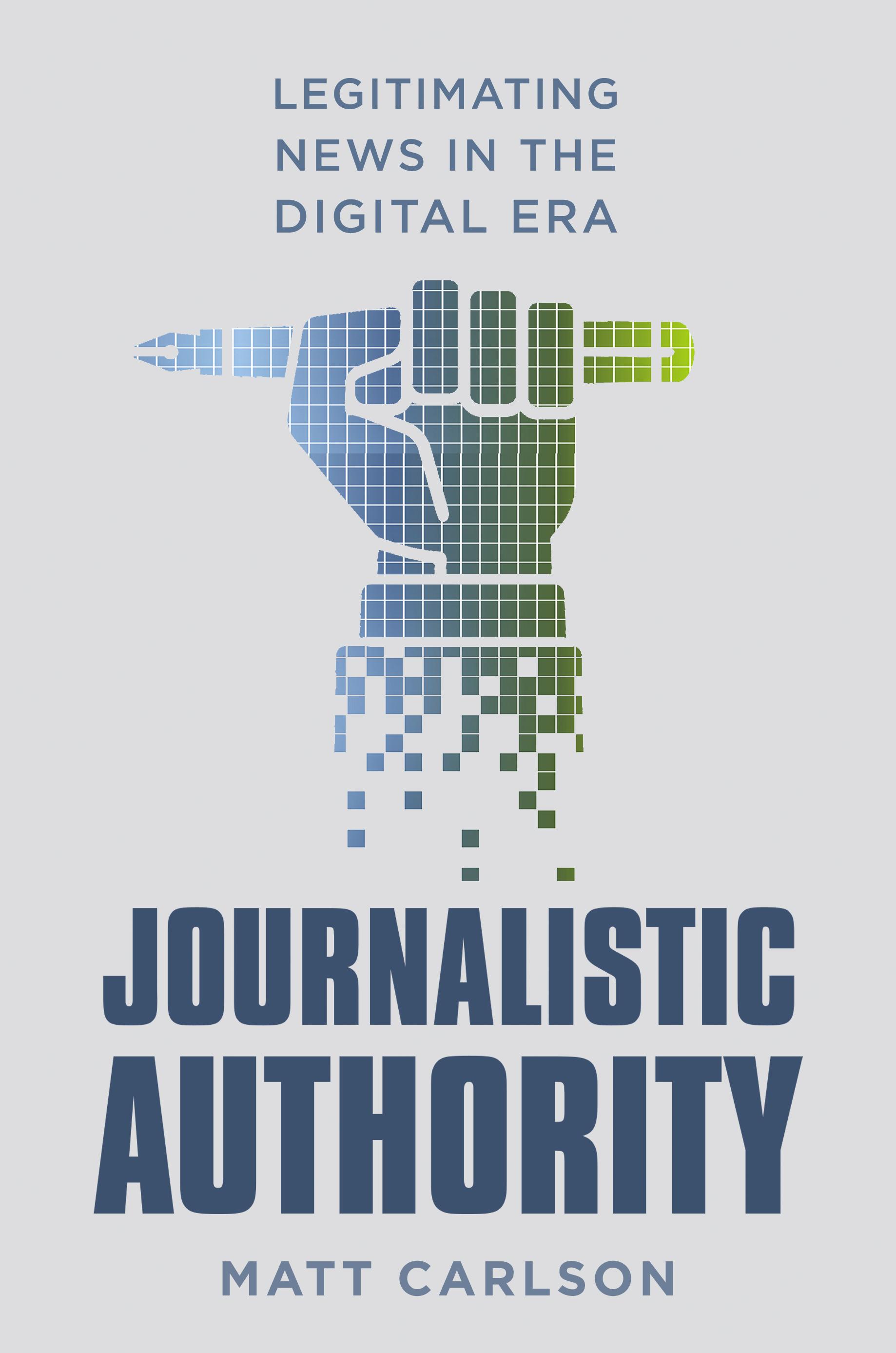
When we encounter a news story, why do we accept its version of events? Why do we even recognize it as news? A complicated set of cultural, structural, and technological relationships inform this interaction, and Journalistic Authority provides a relational theory for explaining how journalists attain authority. The book argues that authority is not a thing to be possessed or lost, but a relationship arising in the connections between those laying claim to being an authority and those who assent to it.
Matt Carlson examines the practices journalists use to legitimate their work: professional orientation, development of specific news forms, and the personal narratives they circulate to support a privileged social place. He then considers journalists' relationships with the audiences, sources, technologies, and critics that shape journalistic authority in the contemporary media environment. Carlson argues that journalistic authority is always the product of complex and variable relationships. Journalistic Authority weaves together journalists’ relationships with their audiences, sources, technologies, and critics to present a new model for understanding journalism while advocating for practices we need in an age of fake news and shifting norms.
Betala smidigt med kort, Klarna, Apple Pay eller Google Pay. Är du inte nöjd har du alltid 14 dagars ångerrätt. Läs mer i våra villkor. Har du några frågor, mejla oss på hello@memmo.org.
Memmo gör det enklare att plugga – var du än är i världen. Hos oss samlar du kursböcker och smarta studieverktyg på ett och samma ställe: sammanfattningar, quiz, poddar och flashcards. Och så Ted, din studiekompis som svarar på allt du undrar. Över 50 000 studenter pluggar redan här – byggt för att du ska lära dig snabbare och stressa mindre.