
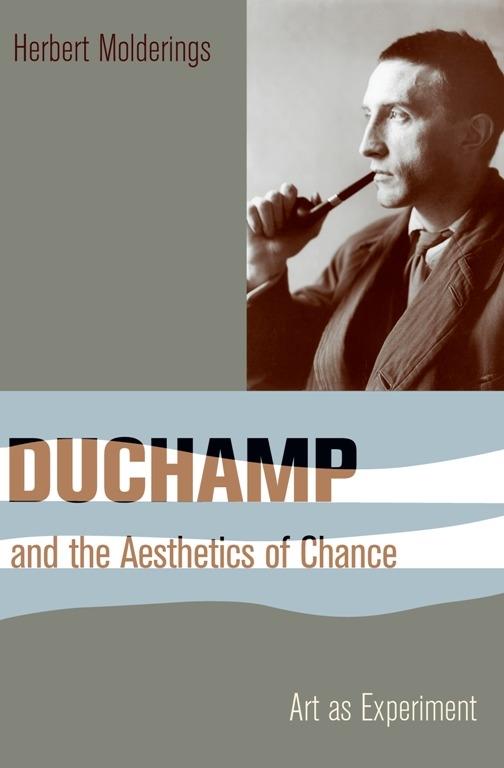
Marcel Duchamp is often viewed as an "artist-engineer-scientist," a kind of rationalist who relied heavily on the ideas of the French mathematician and philosopher Henri Poincaré. Yet a complete portrait of Duchamp and his multiple influences draws a different picture. In his 3 Standard Stoppages (1913-1914), a work that uses chance as an artistic medium, we see how far Duchamp subverted scientism in favor of a radical individualistic aesthetic and experimental vision.
Unlike the Dadaists, Duchamp did more than dismiss or negate the authority of science. He pushed scientific rationalism to the point where its claims broke down and alternative truths were allowed to emerge. With humor and irony, Duchamp undertook a method of artistic research, reflection, and visual thought that focused less on beauty than on the notion of the "possible." He became a passionate advocate of the power of invention and thinking things that had never been thought before.
The 3 Standard Stoppages is the ultimate realization of the play between chance and dimension, visibility and invisibility, high and low art, and art and anti-art. Situating Duchamp firmly within the literature and philosophy of his time, Herbert Molderings recaptures the spirit of a frequently misread artist-and his thrilling aesthetic of chance.
Betala smidigt med kort, Klarna, Apple Pay eller Google Pay. Är du inte nöjd har du alltid 14 dagars ångerrätt. Läs mer i våra villkor. Har du några frågor, mejla oss på hello@memmo.org.
Memmo gör det enklare att plugga – var du än är i världen. Hos oss samlar du kursböcker och smarta studieverktyg på ett och samma ställe: sammanfattningar, quiz, poddar och flashcards. Och så Ted, din studiekompis som svarar på allt du undrar. Över 50 000 studenter pluggar redan här – byggt för att du ska lära dig snabbare och stressa mindre.