
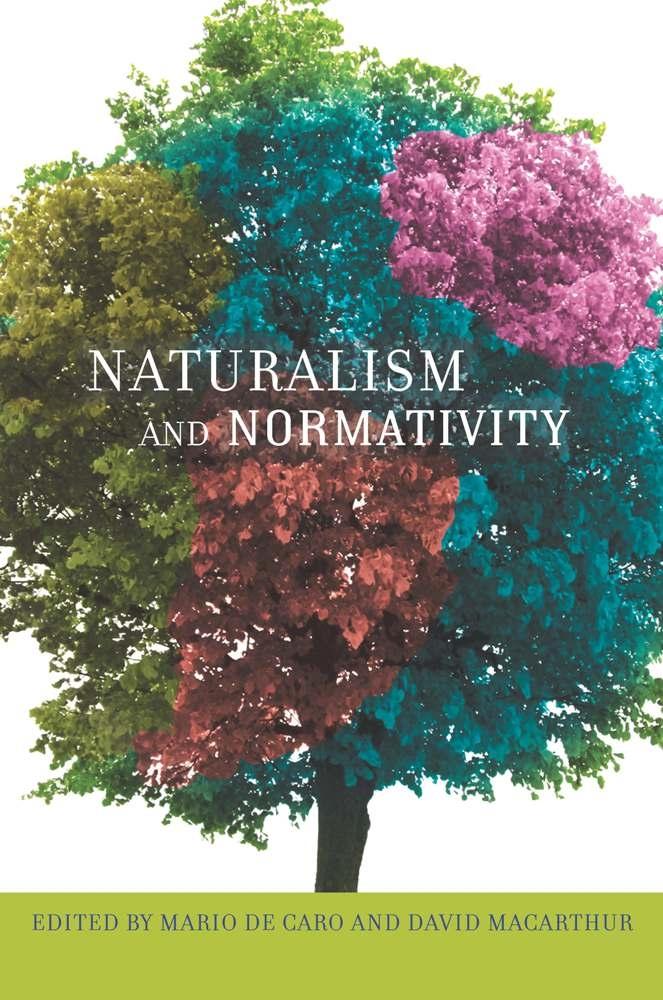
Normativity concerns what we ought to think or do and the evaluations we make. For example, we say that we ought to think consistently, we ought to keep our promises, or that Mozart is a better composer than Salieri. Yet what philosophical moral can we draw from the apparent absence of normativity in the scientific image of the world? For scientific naturalists, the moral is that the normative must be reduced to the nonnormative, while for nonnaturalists, the moral is that there must be a transcendent realm of norms.
Naturalism and Normativity engages with both sides of this debate. Essays explore philosophical options for understanding normativity in the space between scientific naturalism and Platonic supernaturalism. They articulate a liberal conception of philosophy that is neither reducible to the sciences nor completely independent of themyet one that maintains the right to call itself naturalism. Contributors think in new ways about the relations among the scientific worldview, our experience of norms and values, and our movements in the space of reason. Detailed discussions include the relationship between philosophy and science, physicalism and ontological pluralism, the realm of the ordinary, objectivity and subjectivity, truth and justification, and the liberal naturalisms of Donald Davidson, John Dewey, John McDowell, and Ludwig Wittgenstein.
Betala smidigt med kort, Klarna, Apple Pay eller Google Pay. Är du inte nöjd har du alltid 14 dagars ångerrätt. Läs mer i våra villkor. Har du några frågor, mejla oss på hello@memmo.org.
Memmo gör det enklare att plugga – var du än är i världen. Hos oss samlar du kursböcker och smarta studieverktyg på ett och samma ställe: sammanfattningar, quiz, poddar och flashcards. Och så Ted, din studiekompis som svarar på allt du undrar. Över 50 000 studenter pluggar redan här – byggt för att du ska lära dig snabbare och stressa mindre.