
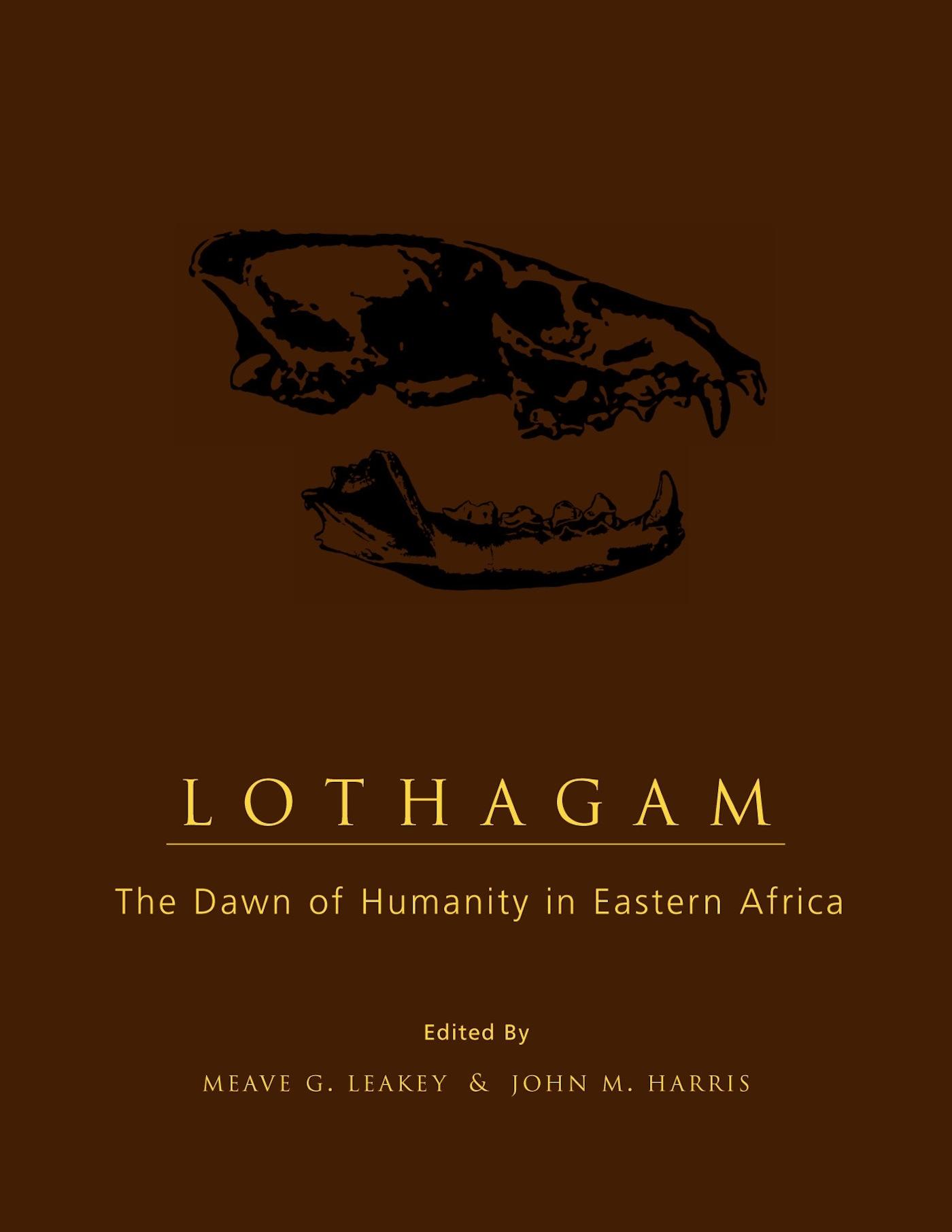
Located at the southwest corner of Lake Turkana in northern Kenya, Lothagam represents one of the most important intervals in African prehistory. Early human remains are restricted in distribution to Africa and the acquisition of an upright bipedal striding gait, the hallmark of humanity, appears to be at least circumstantially linked to the reduction of equatorial forests and the spread of grasslands on that continent. The diverse Lothagam fauna documents the end-Miocene transition from forested to more open habitats that were exploited by grazing horses and antelopes, hippos, giant pigs, and true elephants. It also includes spectacularly complete fossil carnivore skeletons and some of the oldest human remains.
Enlisting a team of highly qualified specialists, this book provides the geologic context and dating framework for the Lothagam fossiliferous sequences, describes the immense diversity of vertebrate fossils recovered from the Late Miocene and Early Pliocene sediments, and synthesizes the results to interpret the changing paleoenvironments that prevailed at this site. The book will interest anthropologists, paleontologists, geologists, and anyone interested in human origins.
Betala smidigt med kort, Klarna, Apple Pay eller Google Pay. Är du inte nöjd har du alltid 14 dagars ångerrätt. Läs mer i våra villkor. Har du några frågor, mejla oss på hello@memmo.org.
Memmo gör det enklare att plugga – var du än är i världen. Hos oss samlar du kursböcker och smarta studieverktyg på ett och samma ställe: sammanfattningar, quiz, poddar och flashcards. Och så Ted, din studiekompis som svarar på allt du undrar. Över 50 000 studenter pluggar redan här – byggt för att du ska lära dig snabbare och stressa mindre.