
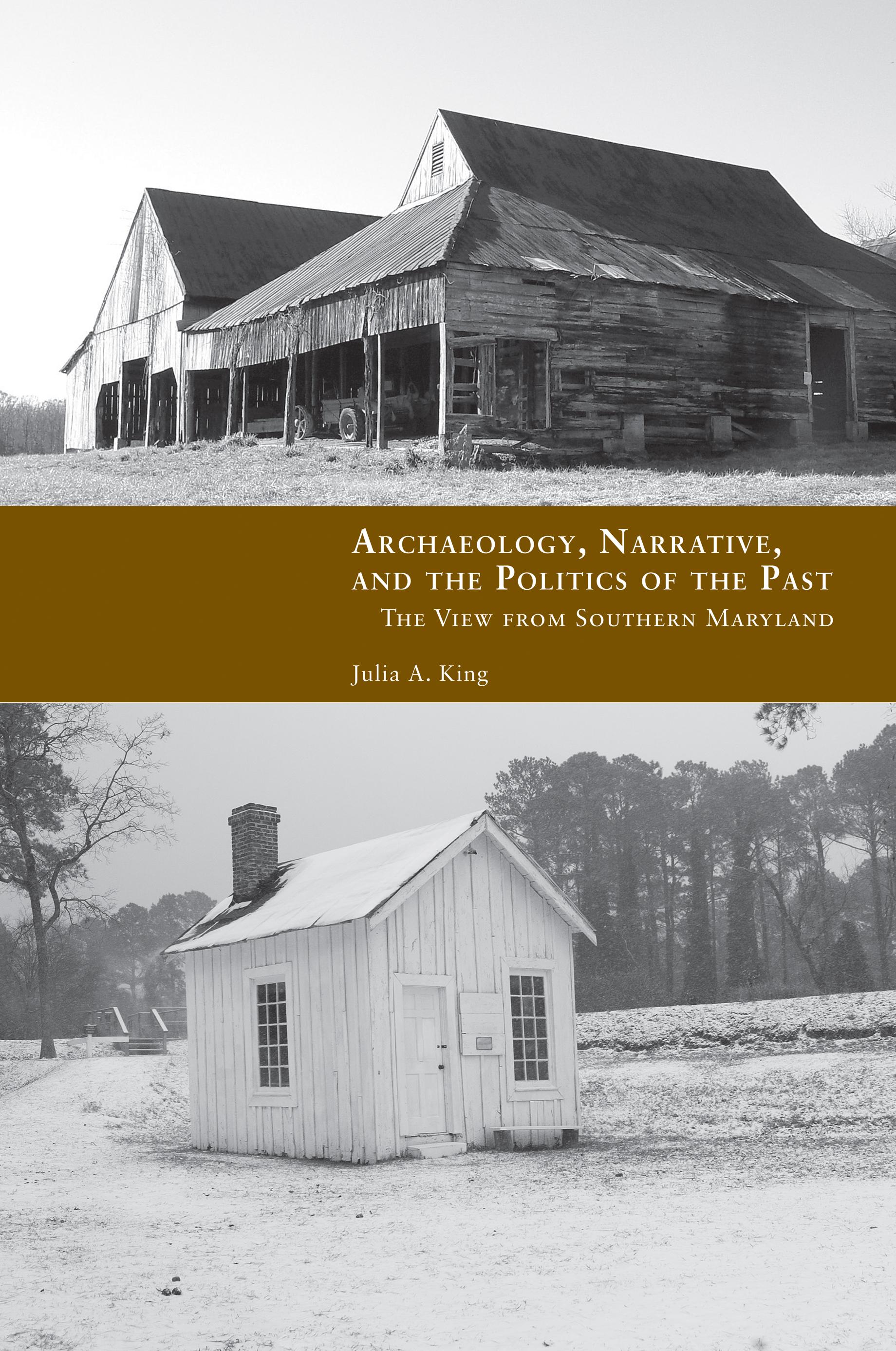
In this innovative work, Julia King moves nimbly among a variety of sources and disciplinary approaches—archaeological, historical, architectural, literary, and art-historical—to show how places take on, convey, and maintain meanings. Focusing on the beautiful Chesapeake Bay region of Maryland, King looks at the ways in which various groups, from patriots and politicians of the antebellum era to present-day archaeologists and preservationists, have transformed key landscapes into historical, indeed sacred, spaces.
The sites King examines include the region’s vanishing tobacco farms; St. Mary’s City, established as Maryland’s first capital by English settlers in the seventeenth century; and Point Lookout, the location of a prison for captured Confederate soldiers during the Civil War. As the author explores the historical narratives associated with such places, she uncovers some surprisingly durable myths as well as competing ones. St. Mary’s City, for example, early on became the center of Maryland’s “founding narrative” of religious tolerance, a view commemorated in nineteenth-century celebrations and reflected even today in local museum exhibits and preserved buildings. And at Point Lookout, one private group has established a Confederate Memorial Park dedicated to those who died at the prison, thus nurturing the Lost Cause ideology that arose in the South in the late 1800s, while nearby the custodians of a 1,000-acre state park avoid controversy by largely ignoring the area’s Civil War history, preferring instead to concentrate on recreation and tourism, an unusually popular element of which has become the recounting of ghost stories.
As King shows, the narratives that now constitute the public memory in southern Maryland tend to overlook the region’s more vexing legacies, particularly those involving slavery and race. Noting how even her own discipline of historical archaeology has been complicit in perpetuating old narratives, King calls for research—particularly archaeological research—that produces new stories and “counter-narratives” that challenge old perceptions and interpretations and thus convey a more nuanced grasp of a complicated past.
Płać wygodnie kartą, Klarną, Apple Pay lub Google Pay. Nie jesteś zadowolony? Zawsze masz 14-dniową gwarancję zwrotu pieniędzy. Więcej przeczytasz w naszych warunkach. Masz pytania? Napisz do nas na hello@memmo.org.
Memmo ułatwia naukę – gdziekolwiek jesteś na świecie. U nas znajdziesz podręczniki i sprytne narzędzia do nauki w jednym miejscu: streszczenia, quizy, podcasty i fiszki. A do tego Ted, Twój kumpel do nauki, który odpowie na wszystko, co Cię nurtuje. Ponad 50 000 studentów już tu się uczy – stworzone, byś uczył się szybciej i mniej stresował.