
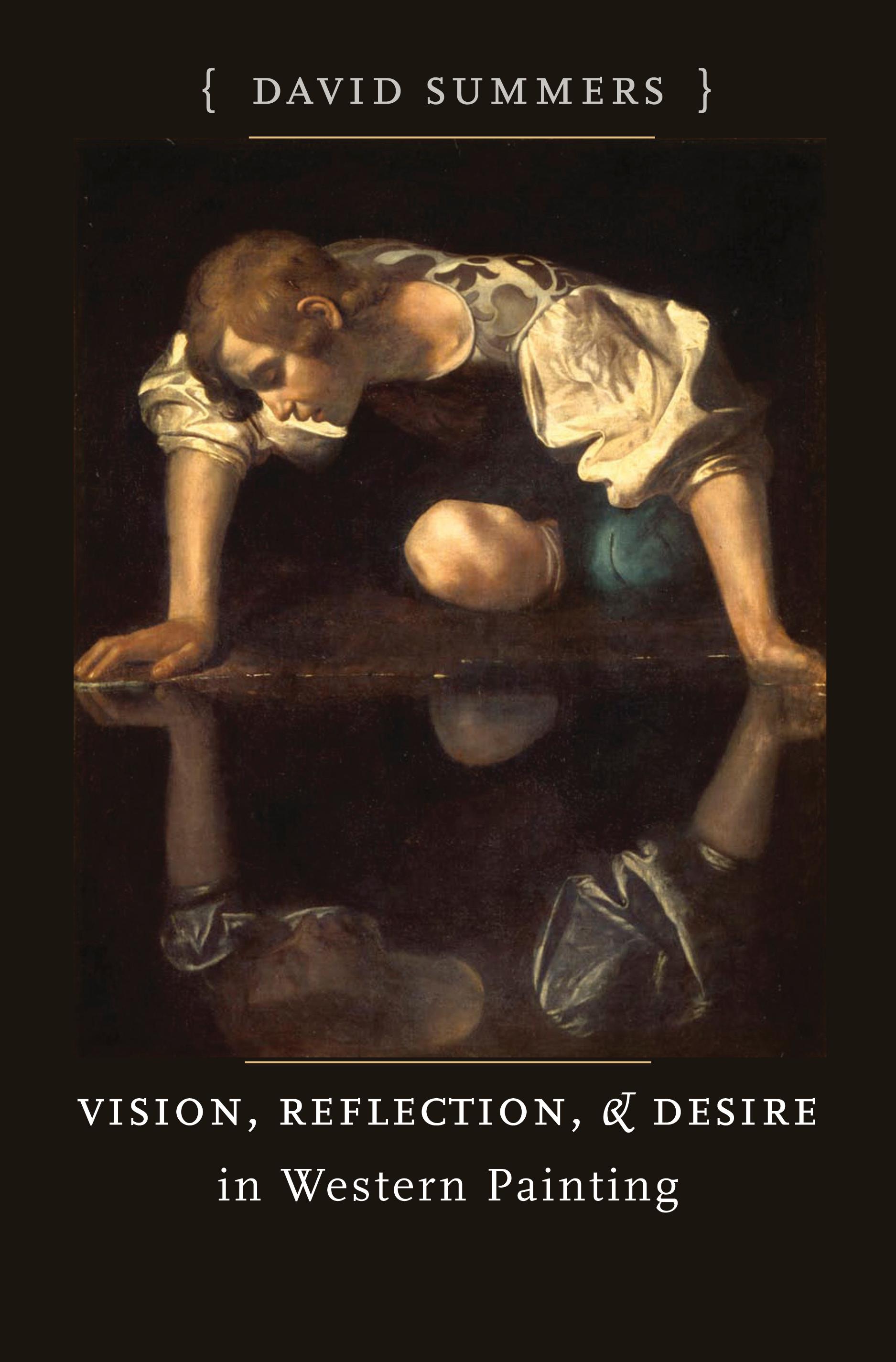
Spanning more than 2,500 years in the history of art, Vision, Reflection, and Desire in Western Painting demonstrates how the rise and diffusion of the science of optics in ancient Greece and the Mediterranean world correlated to pictorial illusion in the development of Western painting from Hellenistic Greece to the present. Using examples from the late Middle Ages and the Renaissance, David Summers argues that scene-painting (architectural backdrops) and shadow-painting (in which forms are modeled or shown as if in relation to a source of light) not only evolved in close association with geometric optics toward the end of the fifth century B.C.E., but also contributed substantially to the foundations of the new science.
The spread of understanding of how light is transmitted, reflected, and refracted is evident in the works of artists such as Brunelleschi, van Eyck, Alberti, and Leonardo. The interplay between optics and painting that influenced the course of Western art, Summers says, persisted as a framework for the realism of Caravaggio, Rembrandt, and Goya and continues today in modern photography and film.
The spread of understanding of how light is transmitted, reflected, and refracted is evident in the works of artists such as Brunelleschi, van Eyck, Alberti, and Leonardo. The interplay between optics and painting that influenced the course of Western art, Summers says, persisted as a framework for the realism of Caravaggio, Rembrandt, and Goya and continues today in modern photography and film.
Płać wygodnie kartą, Klarną, Apple Pay lub Google Pay. Nie jesteś zadowolony? Zawsze masz 14-dniową gwarancję zwrotu pieniędzy. Więcej przeczytasz w naszych warunkach. Masz pytania? Napisz do nas na hello@memmo.org.
Memmo ułatwia naukę – gdziekolwiek jesteś na świecie. U nas znajdziesz podręczniki i sprytne narzędzia do nauki w jednym miejscu: streszczenia, quizy, podcasty i fiszki. A do tego Ted, Twój kumpel do nauki, który odpowie na wszystko, co Cię nurtuje. Ponad 50 000 studentów już tu się uczy – stworzone, byś uczył się szybciej i mniej stresował.
Może Ci się spodobać
Kup książkę0