
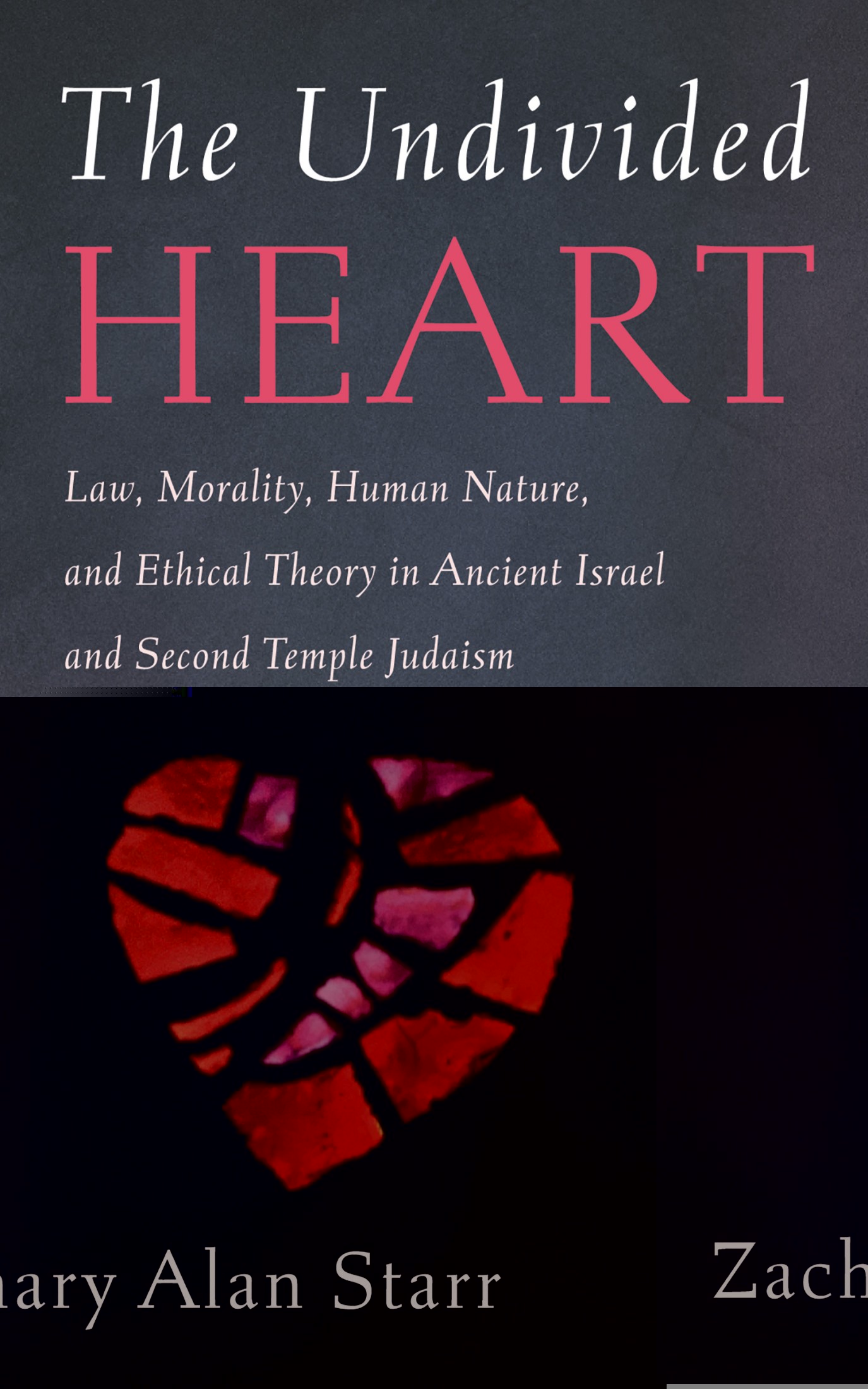
The Undivided Heart presents a history of legal and moral thought in Jewish civilization from the earliest times until 200 CE. It discusses Israelite wisdom literature, biblical law collections, the prophets, works of the Hellenic Jewish Diaspora, the apocrypha, apocalypses, the Dead Sea Scrolls, and the Mishnah, and it compares the moral teaching of the Pharisees/tannaim, the Essenes, and Jesus of Nazareth. Among the book's important insights is that ancient Israel experienced a fundamental moral change, from people esteeming qualities and conduct having competitive value to people esteeming qualities and conduct having cooperative value. These newly esteemed qualities and conduct were, moreover, not originally justified as being commanded by God but as promoting the nation's well-being. Another important insight concerns Jeremiah's belief that human beings would not be righteous until given a "single heart." Although Jeremiah is typically understood as envisioning the end of free will, this book argues that Jeremiah was actually envisioning the integration of human desires and emotions, and that a "single heart" is better translated an "undivided heart." The notion of an undivided and a divided heart was used throughout the Second Temple period to explain, respectively, moral rectitude and moral failure.
Płać wygodnie kartą, Klarną, Apple Pay lub Google Pay. Nie jesteś zadowolony? Zawsze masz 14-dniową gwarancję zwrotu pieniędzy. Więcej przeczytasz w naszych warunkach. Masz pytania? Napisz do nas na hello@memmo.org.
Memmo ułatwia naukę – gdziekolwiek jesteś na świecie. U nas znajdziesz podręczniki i sprytne narzędzia do nauki w jednym miejscu: streszczenia, quizy, podcasty i fiszki. A do tego Ted, Twój kumpel do nauki, który odpowie na wszystko, co Cię nurtuje. Ponad 50 000 studentów już tu się uczy – stworzone, byś uczył się szybciej i mniej stresował.
Może Ci się spodobać
Kup książkę0