
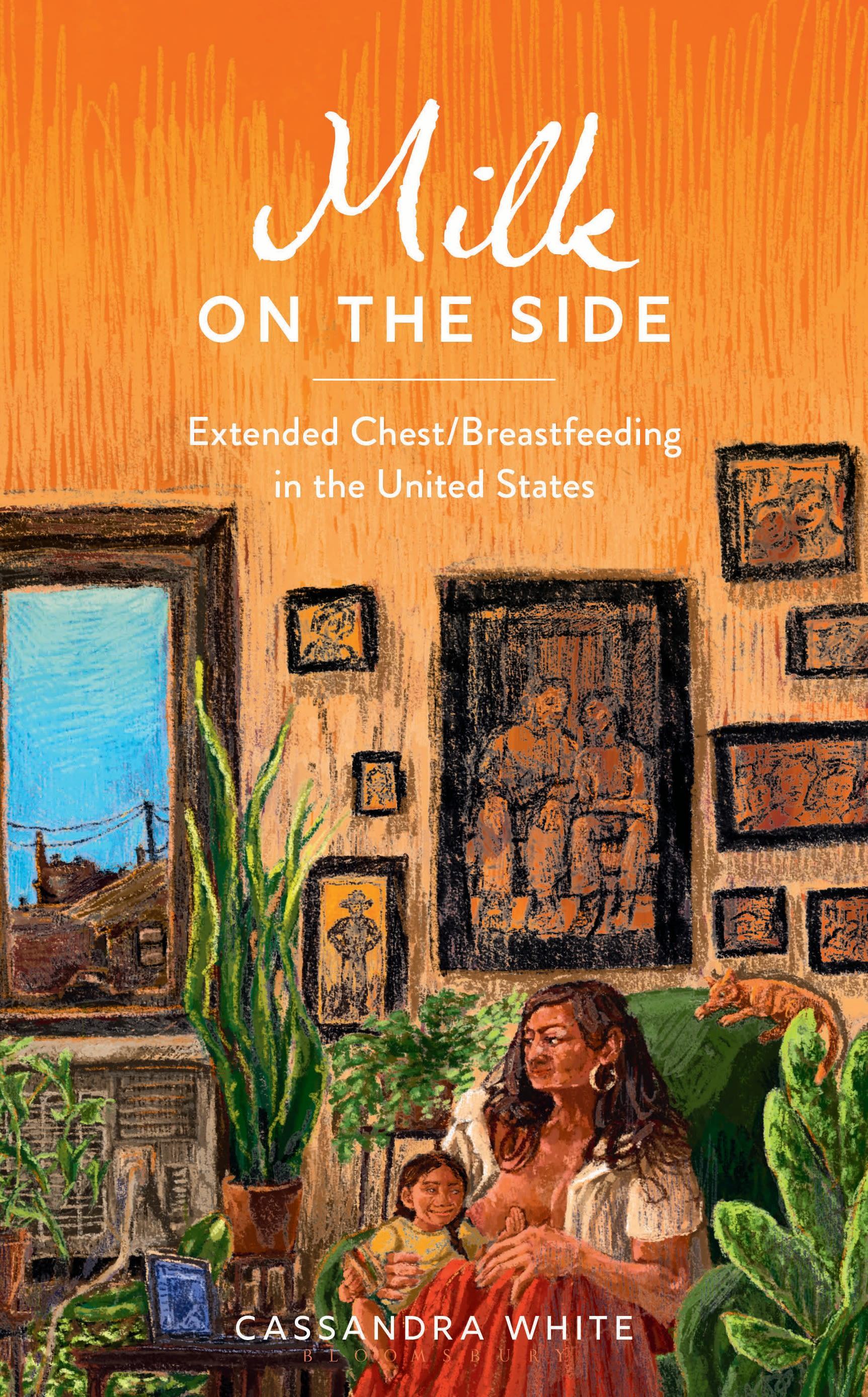
What does it look like for a child to be nursing beyond an age that is perceived as “normal”?
Chest/breastfeeding is a fraught topic both in the U.S. and in many other countries, particularly when parents continue nursing beyond a few weeks. Popular media representations and opinions of chest/breastfeeding are polarizing: parents who struggle to produce breastmilk are often made to feel inadequate by public health and media suggestions that “breast is best”. At the same time, those who practice extended nursing are often told that they are damaging their child's physical and psychological development.
Based on over a decade of research, Milk on the Side unfastens harmful myths about extended nursing- breastfeeding or chestfeeding a child beyond two years- while touching on the challenges and stigmatizing ideas that are associated with all chest/breastfeeding. The book explores the issue of chest/breastfeeding from many different contexts, including medical, policy, and familial pressures. Ultimately, readers will better understand why some parents practice extended nursing and how stigmas regarding child feeding impact all parents.
Chest/breastfeeding is a fraught topic both in the U.S. and in many other countries, particularly when parents continue nursing beyond a few weeks. Popular media representations and opinions of chest/breastfeeding are polarizing: parents who struggle to produce breastmilk are often made to feel inadequate by public health and media suggestions that “breast is best”. At the same time, those who practice extended nursing are often told that they are damaging their child's physical and psychological development.
Based on over a decade of research, Milk on the Side unfastens harmful myths about extended nursing- breastfeeding or chestfeeding a child beyond two years- while touching on the challenges and stigmatizing ideas that are associated with all chest/breastfeeding. The book explores the issue of chest/breastfeeding from many different contexts, including medical, policy, and familial pressures. Ultimately, readers will better understand why some parents practice extended nursing and how stigmas regarding child feeding impact all parents.
Płać wygodnie kartą, Klarną, Apple Pay lub Google Pay. Nie jesteś zadowolony? Zawsze masz 14-dniową gwarancję zwrotu pieniędzy. Więcej przeczytasz w naszych warunkach. Masz pytania? Napisz do nas na hello@memmo.org.
Memmo ułatwia naukę – gdziekolwiek jesteś na świecie. U nas znajdziesz podręczniki i sprytne narzędzia do nauki w jednym miejscu: streszczenia, quizy, podcasty i fiszki. A do tego Ted, Twój kumpel do nauki, który odpowie na wszystko, co Cię nurtuje. Ponad 50 000 studentów już tu się uczy – stworzone, byś uczył się szybciej i mniej stresował.