
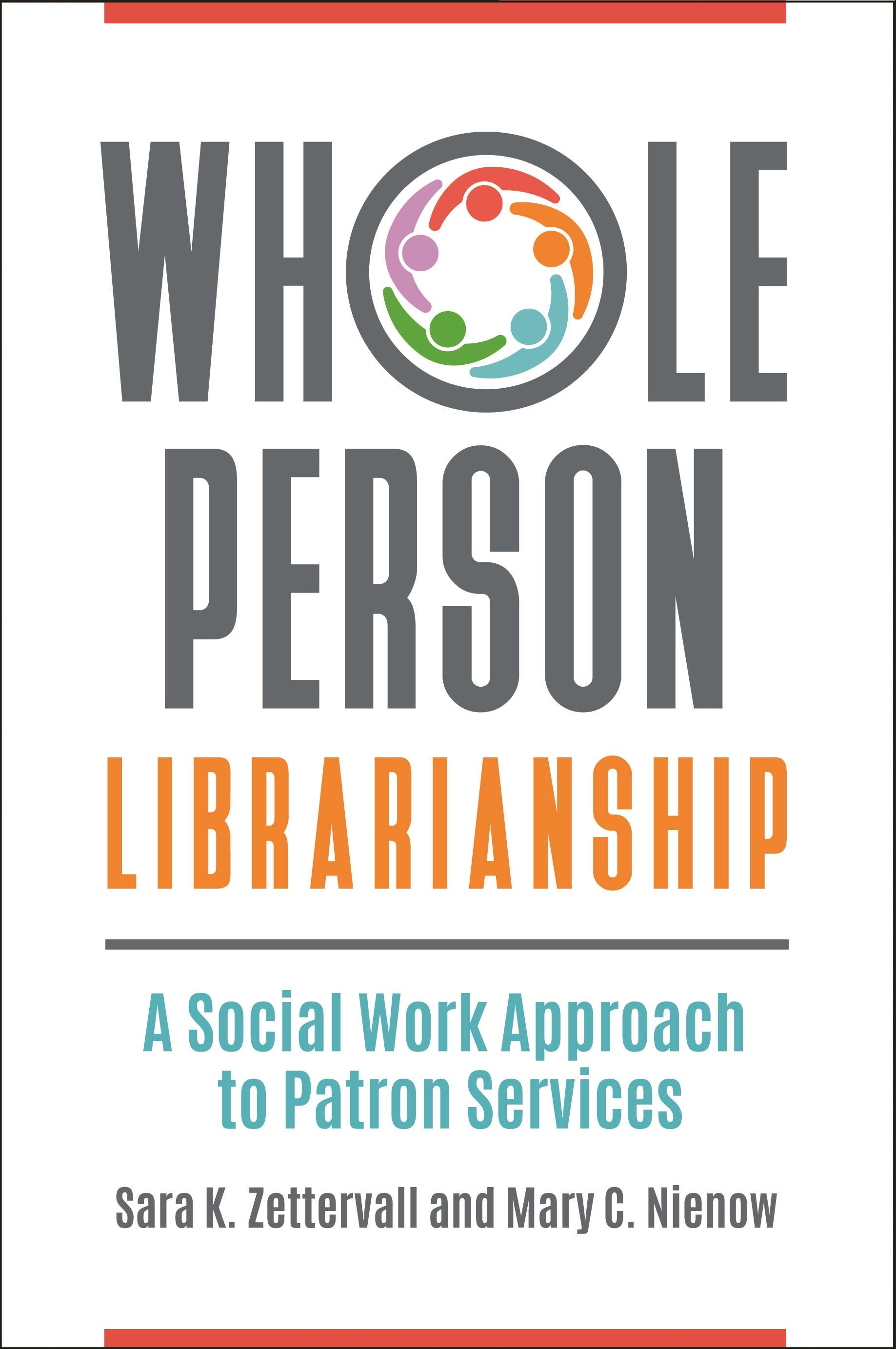
Whole Person Librarianship guides librarians through the practical process of facilitating connections among libraries, social workers, and social services; explains why those connections are important; and puts them in the context of a national movement.
Collaboration between libraries and social workers is an exploding trend that will continue to be relevant to the future of public and academic libraries. Whole Person Librarianship incorporates practical examples with insights from librarians and social workers. The result is a new vision of library services.
The authors provide multiple examples of how public and academic librarians are connecting their patrons with social services. They explore skills and techniques librarians can learn from social workers, such as how to set healthy boundaries and work with patrons experiencing homelessness; they also offer ideas for how librarians can self-educate on these topics.
The book additionally provides insights for social work partners on how they can benefit from working with librarians. While librarians and social workers share social justice motivations, their methods are complementary and yet still distinct—librarians do not have to become social workers. Librarian readers will come away with many practical ideas for collaboration as well as the ability to explain why collaboration with social workers is important for the future of librarianship.
Collaboration between libraries and social workers is an exploding trend that will continue to be relevant to the future of public and academic libraries. Whole Person Librarianship incorporates practical examples with insights from librarians and social workers. The result is a new vision of library services.
The authors provide multiple examples of how public and academic librarians are connecting their patrons with social services. They explore skills and techniques librarians can learn from social workers, such as how to set healthy boundaries and work with patrons experiencing homelessness; they also offer ideas for how librarians can self-educate on these topics.
The book additionally provides insights for social work partners on how they can benefit from working with librarians. While librarians and social workers share social justice motivations, their methods are complementary and yet still distinct—librarians do not have to become social workers. Librarian readers will come away with many practical ideas for collaboration as well as the ability to explain why collaboration with social workers is important for the future of librarianship.
Płać wygodnie kartą, Klarną, Apple Pay lub Google Pay. Nie jesteś zadowolony? Zawsze masz 14-dniową gwarancję zwrotu pieniędzy. Więcej przeczytasz w naszych warunkach. Masz pytania? Napisz do nas na hello@memmo.org.
Memmo ułatwia naukę – gdziekolwiek jesteś na świecie. U nas znajdziesz podręczniki i sprytne narzędzia do nauki w jednym miejscu: streszczenia, quizy, podcasty i fiszki. A do tego Ted, Twój kumpel do nauki, który odpowie na wszystko, co Cię nurtuje. Ponad 50 000 studentów już tu się uczy – stworzone, byś uczył się szybciej i mniej stresował.