
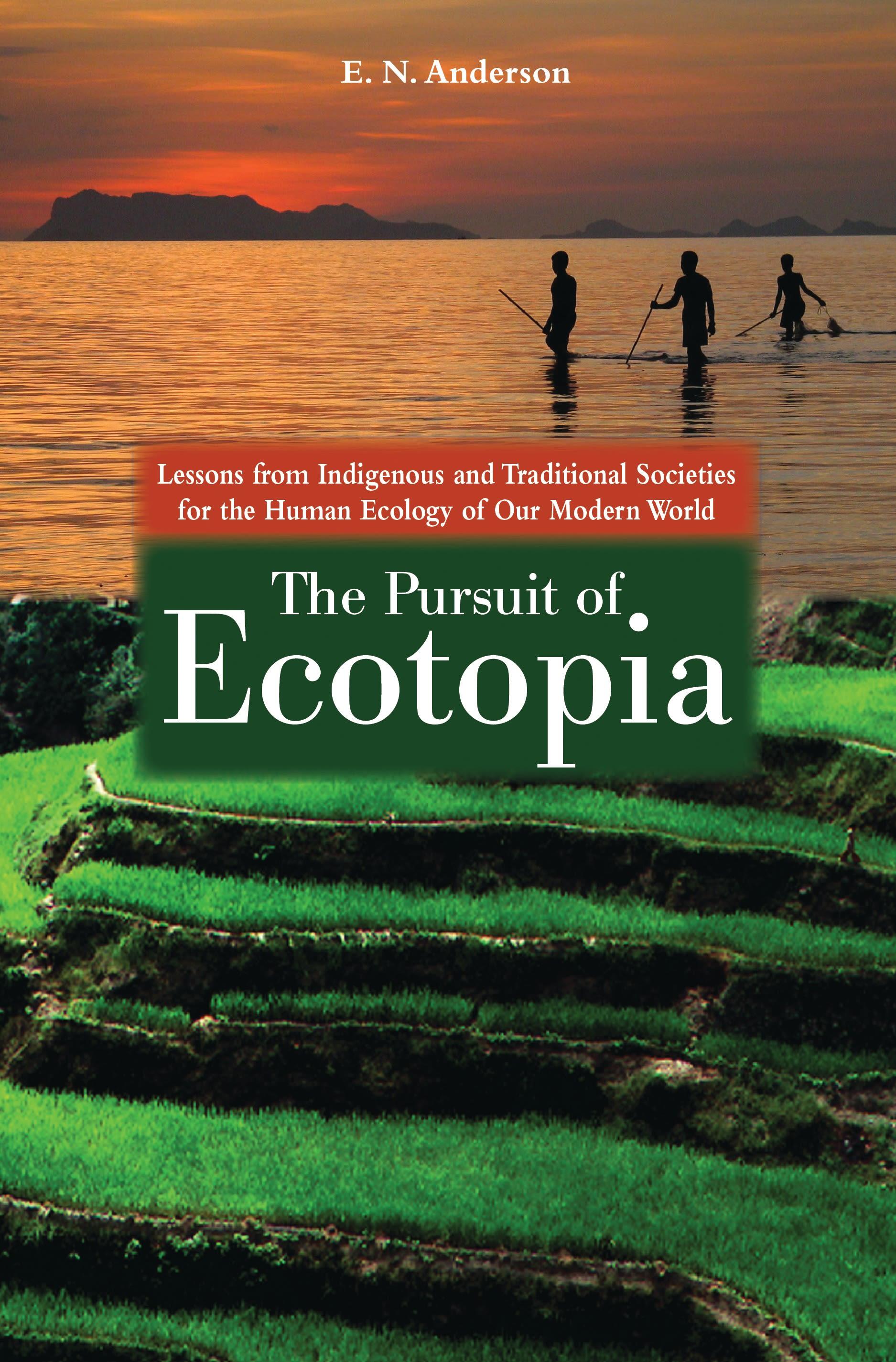
The world environmental and social justice crises brought on by our high-throughput global economy can be ameliorated only if we adapt the pragmatic ethics of social cohesion in traditional societies to the modern world.
Traditional societies have much to teach the modern world about conservation and environmental management. The Pursuit of Ecotopia: Lessons from Indigenous and Traditional Societies for the Human Ecology of Our Modern World argues that the root of our environmental crisis is that we have not devised modern ways to induce people with diverse interests to think and act cooperatively to secure shared interests. We take a short-term, narrow view of resource management and ethical conduct instead of a long-term, global view of "ecotopia"—a conception in which the destructive corollaries of consumerism are curbed by emotionally grounded policies and ethics of sustainability, social justice, and stewardship.
In this controversial and brilliantly written book, author E. N. Anderson maintains that the world can escape impending ecological disaster only by embracing a political and ethical transformation that will imbue modern societies with the same shared sense of emotional rationality practiced by traditional cultures. He draws lessons from ecologically successful traditional societies—and also draws cautionary tales from traditional societies that have responded maladaptively to disruption and failed ecologically as a result.
Traditional societies have much to teach the modern world about conservation and environmental management. The Pursuit of Ecotopia: Lessons from Indigenous and Traditional Societies for the Human Ecology of Our Modern World argues that the root of our environmental crisis is that we have not devised modern ways to induce people with diverse interests to think and act cooperatively to secure shared interests. We take a short-term, narrow view of resource management and ethical conduct instead of a long-term, global view of "ecotopia"—a conception in which the destructive corollaries of consumerism are curbed by emotionally grounded policies and ethics of sustainability, social justice, and stewardship.
In this controversial and brilliantly written book, author E. N. Anderson maintains that the world can escape impending ecological disaster only by embracing a political and ethical transformation that will imbue modern societies with the same shared sense of emotional rationality practiced by traditional cultures. He draws lessons from ecologically successful traditional societies—and also draws cautionary tales from traditional societies that have responded maladaptively to disruption and failed ecologically as a result.
Płać wygodnie kartą, Klarną, Apple Pay lub Google Pay. Nie jesteś zadowolony? Zawsze masz 14-dniową gwarancję zwrotu pieniędzy. Więcej przeczytasz w naszych warunkach. Masz pytania? Napisz do nas na hello@memmo.org.
Memmo ułatwia naukę – gdziekolwiek jesteś na świecie. U nas znajdziesz podręczniki i sprytne narzędzia do nauki w jednym miejscu: streszczenia, quizy, podcasty i fiszki. A do tego Ted, Twój kumpel do nauki, który odpowie na wszystko, co Cię nurtuje. Ponad 50 000 studentów już tu się uczy – stworzone, byś uczył się szybciej i mniej stresował.