
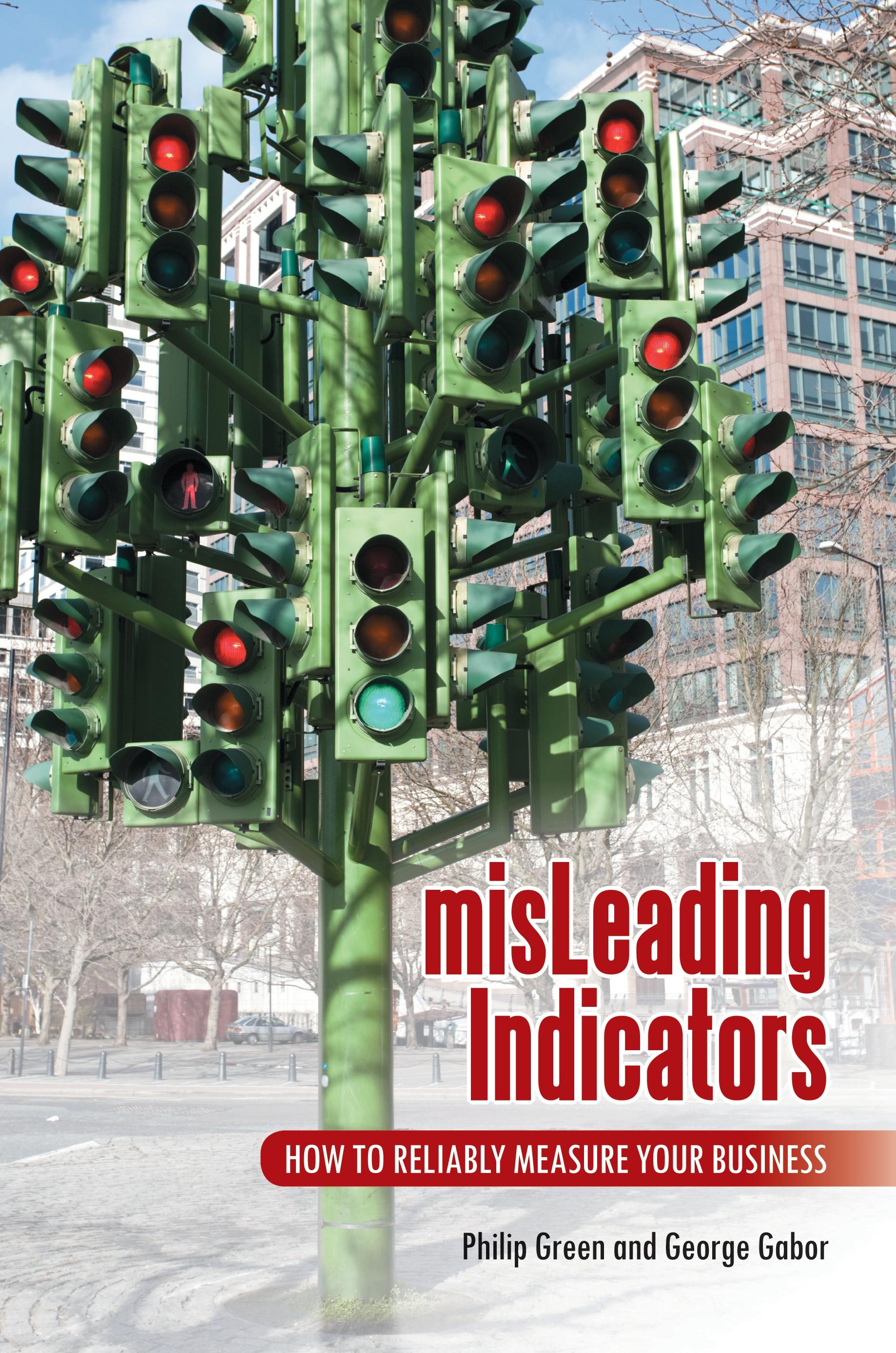
This book reveals the hidden and potentially misleading nature of measurements, empowering readers to avoid making critical business decisions that are harmful, unreasonable, unwarranted, or plain wrong.
Decision makers in business and government are more reliant than ever on measurements, such as business performance indicators, bond ratings, Six-Sigma indicators, stock ratings, opinion polls, and market research. Yet many popular statistical and business books and courses relating to measurement are based on flawed principles, leading managers to the wrong conclusions—and ultimately, the wrong decisions. misLeading Indicators: How to Reliably Measure Your Business provides something unique and invaluable: trustworthy tools for judging measurements.
Each chapter illustrates the four key principles for reliable measurements: sufficient background information, accuracy and precision, reasonable inferences, and reality checks in different situations. After the three fundamental methods of measuring are defined, the authors expand to the application and interpretation of measurements in specific areas, including business performance, risk management, process, control, finance, and economics. This book supplies essential information for managers in business and government who depend on accurate information to run their organizations, as well as the consultants who advise them.
Decision makers in business and government are more reliant than ever on measurements, such as business performance indicators, bond ratings, Six-Sigma indicators, stock ratings, opinion polls, and market research. Yet many popular statistical and business books and courses relating to measurement are based on flawed principles, leading managers to the wrong conclusions—and ultimately, the wrong decisions. misLeading Indicators: How to Reliably Measure Your Business provides something unique and invaluable: trustworthy tools for judging measurements.
Each chapter illustrates the four key principles for reliable measurements: sufficient background information, accuracy and precision, reasonable inferences, and reality checks in different situations. After the three fundamental methods of measuring are defined, the authors expand to the application and interpretation of measurements in specific areas, including business performance, risk management, process, control, finance, and economics. This book supplies essential information for managers in business and government who depend on accurate information to run their organizations, as well as the consultants who advise them.
Płać wygodnie kartą, Klarną, Apple Pay lub Google Pay. Nie jesteś zadowolony? Zawsze masz 14-dniową gwarancję zwrotu pieniędzy. Więcej przeczytasz w naszych warunkach. Masz pytania? Napisz do nas na hello@memmo.org.
Memmo ułatwia naukę – gdziekolwiek jesteś na świecie. U nas znajdziesz podręczniki i sprytne narzędzia do nauki w jednym miejscu: streszczenia, quizy, podcasty i fiszki. A do tego Ted, Twój kumpel do nauki, który odpowie na wszystko, co Cię nurtuje. Ponad 50 000 studentów już tu się uczy – stworzone, byś uczył się szybciej i mniej stresował.