
Recent advances in technology such as cloud computing, recent industry standards such as RFID, bibliographic standards like RDA and BIBFRAME, the increased adoption of open source integrated library systems (ILS), and continued shift in users' expectations have increased the complexity of the decision regarding ILS for all types of libraries.
Recent advances in technology such as cloud computing, recent industry standards such as RFID, bibliographic standards like RDA and BIBFRAME, the increased adoption of open source integrated library systems (ILS), and continued shift in users' expectations have increased the complexity of the decision regarding ILS for all types of libraries.
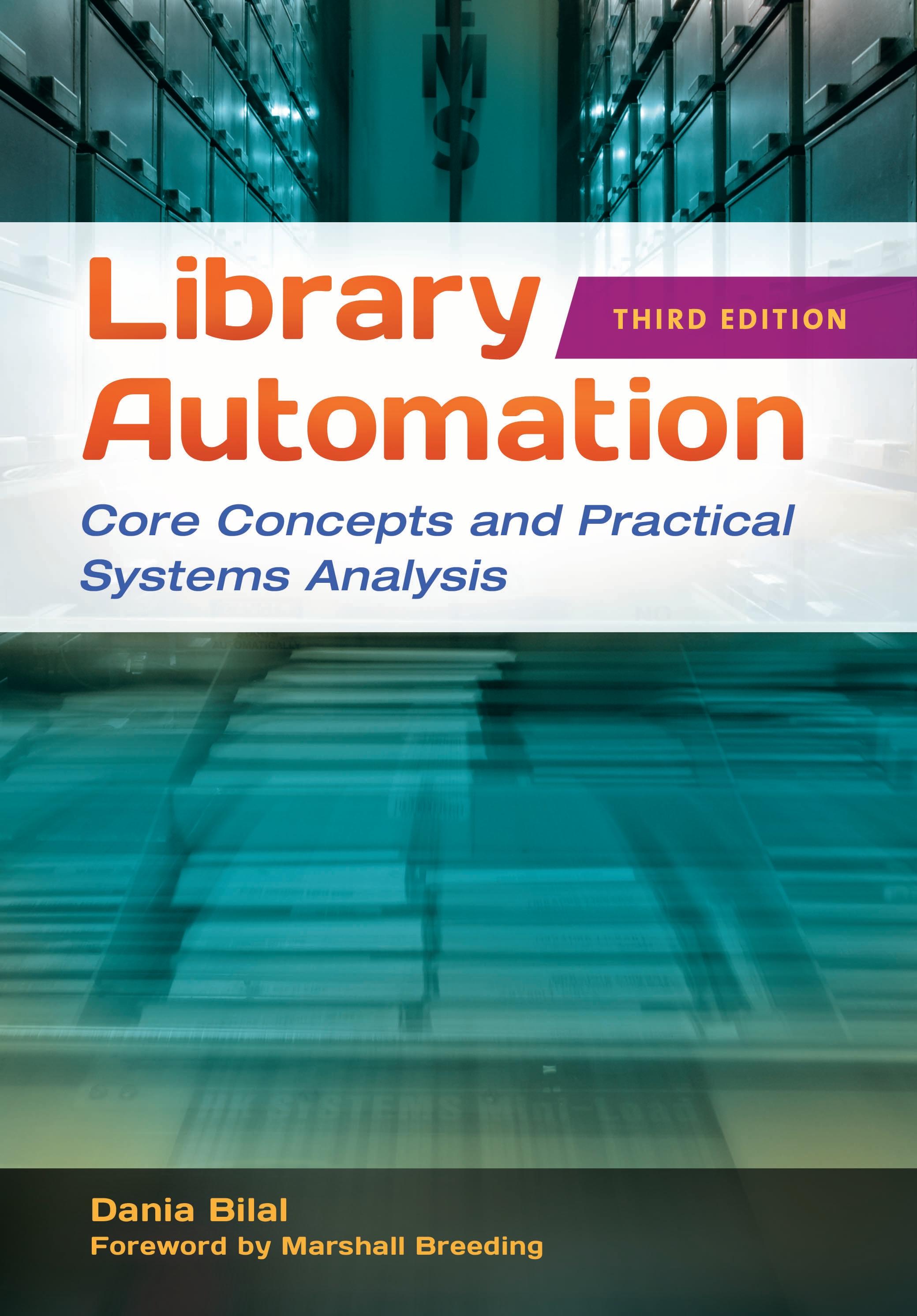
In a complete re-envisioning of the previous edition, Automating Media Centers and Small Libraries: A Microcomputer-Based Approach, Dania Bilal conceptualizes library automation in the Library Automation Life Cycle (LALC) that is informed by the systems development lifecycle (SDLC). She explains how the next-generation discovery services supported in the library services platforms (LSPs) provide a single point of access to library content in all types and formats, thereby offering a unified solution to managing library operations. The book covers methods of analyzing user requirements, describes how to structure these requirements in RFPs, and details proprietary and open-source integrated library systems (ILSs) and LSPs for school, public, special, and academic libraries. Up-to-date information is provided about ILS software installation and testing, software and hardware architecture such as single- and multi-tenant SaaS and Paas and IaaS, and usability assessment strategies for evaluating the ILS or LSP. The author concludes by describing what is likely coming next in the library automation arena.
Recent advances in technology such as cloud computing, recent industry standards such as RFID, bibliographic standards like RDA and BIBFRAME, the increased adoption of open source integrated library systems (ILS), and continued shift in users' expectations have increased the complexity of the decision regarding ILS for all types of libraries.
In a complete re-envisioning of the previous edition, Automating Media Centers and Small Libraries: A Microcomputer-Based Approach, Dania Bilal conceptualizes library automation in the Library Automation Life Cycle (LALC) that is informed by the systems development lifecycle (SDLC). She explains how the next-generation discovery services supported in the library services platforms (LSPs) provide a single point of access to library content in all types and formats, thereby offering a unified solution to managing library operations. The book covers methods of analyzing user requirements, describes how to structure these requirements in RFPs, and details proprietary and open-source integrated library systems (ILSs) and LSPs for school, public, special, and academic libraries. Up-to-date information is provided about ILS software installation and testing, software and hardware architecture such as single- and multi-tenant SaaS and Paas and IaaS, and usability assessment strategies for evaluating the ILS or LSP. The author concludes by describing what is likely coming next in the library automation arena.
Płać wygodnie kartą, Klarną, Apple Pay lub Google Pay. Nie jesteś zadowolony? Zawsze masz 14-dniową gwarancję zwrotu pieniędzy. Więcej przeczytasz w naszych warunkach. Masz pytania? Napisz do nas na hello@memmo.org.
Memmo ułatwia naukę – gdziekolwiek jesteś na świecie. U nas znajdziesz podręczniki i sprytne narzędzia do nauki w jednym miejscu: streszczenia, quizy, podcasty i fiszki. A do tego Ted, Twój kumpel do nauki, który odpowie na wszystko, co Cię nurtuje. Ponad 50 000 studentów już tu się uczy – stworzone, byś uczył się szybciej i mniej stresował.