
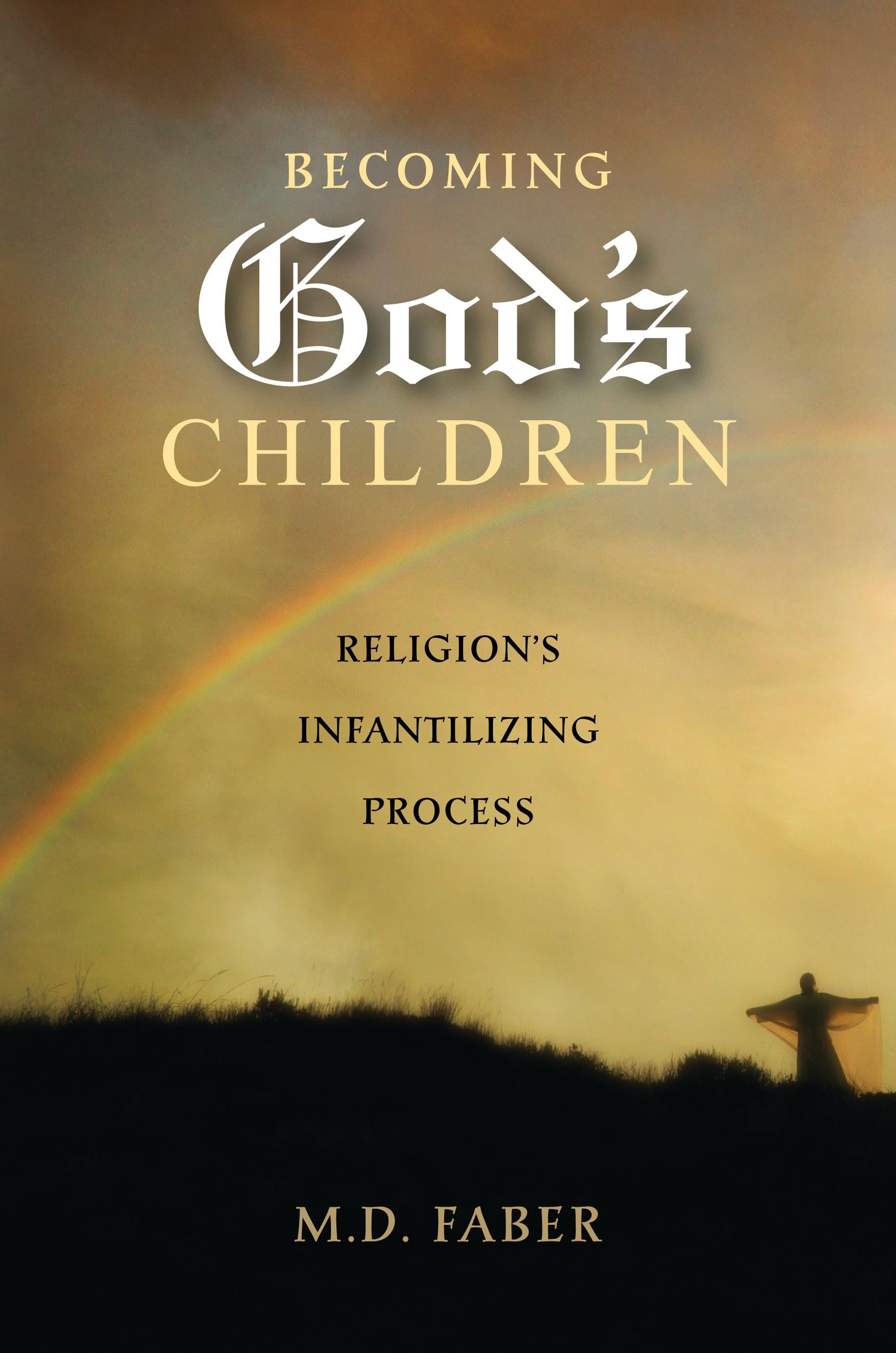
M. D. Faber presents a meticulous, unremitting inquiry into the psychological direction from which Christianity derives its power to attract and hold its followers.
Becoming God's Children: Religion's Infantilizing Process was written, its author says, to alert readers to the role of infantilization in the Judeo-Christian tradition generally and in Christian rite and doctrine particularly. Because religion plays such an important role in so may lives, it is essential to understand the underlying appeal and significance of religious doctrines.
To that end, Becoming God's Children offers the reader an in-depth account of human neuropsychological development, while unearthing the Judeo-Christian tradition's explicitly infantilizing doctrines and rites. This compelling perspective on the nature and meaning of religious behavior explores issues such as: to what extent religious faith is grounded in the mnemonic recesses of the worshipper's brain, whether believers are predisposed by both genetic makeup and environmental prompting to adhere to their religious convictions, and why some individuals are powerfully drawn to religious faith while others reject it. A final chapter explores the implications of religion's infantilizing process vis-a-vis the role of reason and scientific thought in the contemporary world.
Becoming God's Children: Religion's Infantilizing Process was written, its author says, to alert readers to the role of infantilization in the Judeo-Christian tradition generally and in Christian rite and doctrine particularly. Because religion plays such an important role in so may lives, it is essential to understand the underlying appeal and significance of religious doctrines.
To that end, Becoming God's Children offers the reader an in-depth account of human neuropsychological development, while unearthing the Judeo-Christian tradition's explicitly infantilizing doctrines and rites. This compelling perspective on the nature and meaning of religious behavior explores issues such as: to what extent religious faith is grounded in the mnemonic recesses of the worshipper's brain, whether believers are predisposed by both genetic makeup and environmental prompting to adhere to their religious convictions, and why some individuals are powerfully drawn to religious faith while others reject it. A final chapter explores the implications of religion's infantilizing process vis-a-vis the role of reason and scientific thought in the contemporary world.
Płać wygodnie kartą, Klarną, Apple Pay lub Google Pay. Nie jesteś zadowolony? Zawsze masz 14-dniową gwarancję zwrotu pieniędzy. Więcej przeczytasz w naszych warunkach. Masz pytania? Napisz do nas na hello@memmo.org.
Memmo ułatwia naukę – gdziekolwiek jesteś na świecie. U nas znajdziesz podręczniki i sprytne narzędzia do nauki w jednym miejscu: streszczenia, quizy, podcasty i fiszki. A do tego Ted, Twój kumpel do nauki, który odpowie na wszystko, co Cię nurtuje. Ponad 50 000 studentów już tu się uczy – stworzone, byś uczył się szybciej i mniej stresował.